Machine translation of the 1948–1954 Italian original. The original text is authoritative.
BOCCHERINI, LUIGI. – Musician, born in Lucca on 19 September 1743, died in Madrid on 28 May 1805. He first studied at the seminary of Lucca under Abbé Vannucci, and later in Rome. Having returned to his homeland, he left it for Spain; during his journey through Italy he enjoyed great success as a concert performer and composer. In Madrid (1769) he became chamber composer and virtuoso to the Infante don Luigi. He also worked extensively for the King of Prussia, Frederick William. He wished to return to Paris, but poverty prevented him from doing so. In 1927 his ashes were taken to Lucca and interred in the church of S. Francesco.
His sacred output, although not as extensive as his rich body of instrumental works, is made famous by several masterpieces which, like the Stabat Mater for 3 voices with 2 violins, viola, violoncello, and double bass (op. 61), are sufficient to bring glory to a name and to signify a style. This work,
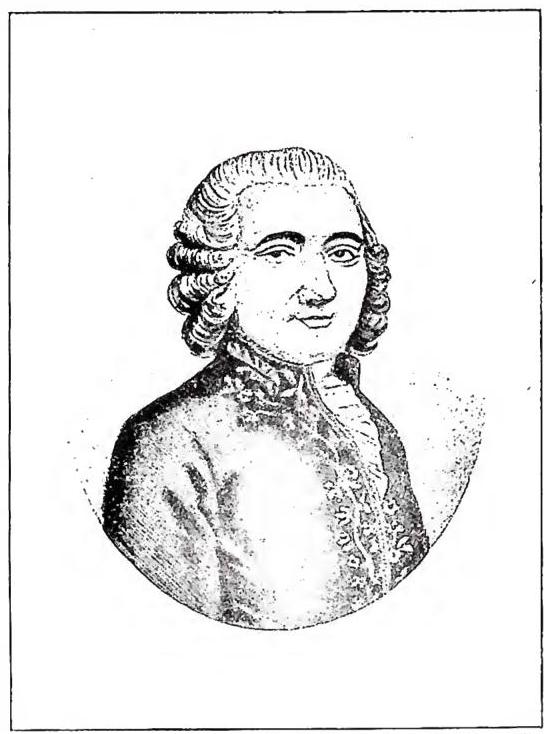
(from A. Bonaventura, B., Milan 1931) BOCCHERINI, LUIGI - Portrait.Composed in 1800 and called the “swan song,” it is of classical purity and at the same time possesses a pathetic color that brings it closer to the style of Pergolesi than to that of Rossini. In his early youth, in Lucca, B. also devoted himself to the oratorio with the Giuseppe riconosciuto and the Giose re di Giuda, performed in 1764; but, unfortunately, every trace of them has been lost. On the other hand, a Mass for four voices with all instruments obbligati (op. 59, unpublished) and a Contata al S. Natale di N. S. Iesu Christo, for four obbligato voices, chorus, and instruments, dedicated to the emperor of Russia (op. 63 [1803], unpublished), are preserved; and the following have recently been rediscovered: a Credo for four voices with orchestra (Parma, Bibl. Palatina), four motets and fragments of Masses (Einsiedeln), as well as four sacred songs (reported by Eitner). Besides the 1801 edition of the Stabat (Naples, G. Amiconi), there are three modern editions: Florence, Guidi; Milan, Ricordi; Leipzig, Breitkopf u. Härtel.
BIBL.: D. A. Cerù, Cenni intorno alla vita e alle opere di L. B., Lucca 1864; D. Bertini, Illustrazione dello « Stabat Mater » di L. B., Florence 1877; M. Schletterer, L. B., Leipzig 1882 (ed. Stabat Mater, Breitkopf u. Härtel); G. Malfatti, L. B., Lucca 1905; L. Picquot, B., Notes et documents nouveaux par Georges de Saint-Foix, Paris 1930 (reprint of the work of 1851).
Luisa Cervelli
Cite this article
“BOCCHERINI, LUIGI.” Enciclopedia Cattolica, vol. II (1949), p. 1004. Azione Romana digital edition, https://azioneromana.com/article/boccherini-luigi.