
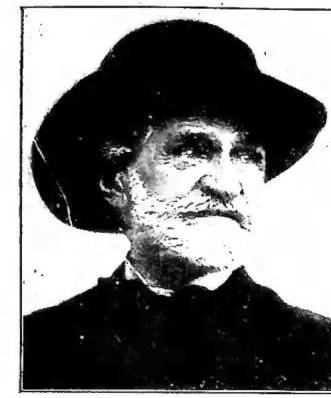
VERDI, GIUSEPPE. – Musician, born at Roncole near Busseto (Parma) on 10 October 1813, died in Milan on 27 January 1901.
He received the first rudiments of music from the organist of his native village, Baistrocchi, whom, at only 12 years of age, he was already able to replace competently at the organ. To indulge his passion for music, his parents sent him at the age of 10 to Busseto, where a friend of his father, A. Bareszi, took a liking to him and helped him; there the young Giuseppe, while continuing on feast days to go to Roncole to play the organ in the church and thus help his family, studied music ardently with canon F. Provesi and Latin with canon Seletti. Having failed the entrance examination for the Conservatory of Milan, he continued to study privately with Maestro V. Lavigna, devoting himself to attending the opera, transcribing pieces for the band, and conducting orchestral performances (among which that of Haydn’s oratorio The Creation deserves mention). In 1836 he obtained the position of music master of the Municipality and the Monte di Pietà of Busseto, where he wrote his first opera, Oberto conte di S. Bonifacio. After losing both children and his wife within the space of two years, he suffered profound anguish, but his strong spirit recovered and, with Nabucco (which drew its inspiration from the pages of the Bible, whose reading, since his youth, had instilled in his soul intense surges of emotion), he began his true and glorious theatrical career.
During his long and productive life he divided his time among Milan (1839–42), Florence, London, Paris, Rome,
After this powerful work, the minor sacred compositions will perhaps seem weaker, perhaps cold and somewhat mannered: the Pater Noster, on a text by Dante, for 2 sopranos, contralto, tenor, and bass; the Ave Maria, likewise in Dante’s Italian rendering, for soprano and strings, both performed at La Scala in 1880; and the Stabat Mater, for four-part choir and orchestra, performed at the Paris Opera on 7 Apr. 1877. Together with the Stabat, there were collected the Ave Maria on an enigmatic harmonic scale, for 4 voices; the Laudi alla Vergine Maria on texts taken from the final canto of Dante’s Paradiso, for 4 treble voices; and a Te Deum on an Ambrosian theme, for double choir and orchestra, all pieces performed at the Paris Opera in 1898. The collection was printed under the title Quattro pezzi sacri.
Among the occasional compositions, it will be interesting to recall one of his final pieces, the prayer Pietà, Signor, written for a single-issue publication benefiting those afflicted by the earthquake that had devastated Calabria and Sicily on 16 Nov. 1894. A student of the great figures of the past, especially Palestrina, he would often say... «it seems to me that the art of Palestrina and Marcello is also a great art... and it is ours». «There is the beautiful, Christian art of the century of Palestrina... the true prince of sacred music and the eternal father of Italian music». «Let us return to the ancient: it will be progress!» (v. R. Casimiri: G. V. e gli ideali ceciliani, in Boll. Ceciliano, 10 [1916], pp. 81-94).