Machine translation of the 1948–1954 Italian original. The original text is authoritative.
DANZANTI. — Followers of a fanatical sect that appeared in the second half of the fourteenth century in Flemish Belgium and the Rhineland. They were so called on account of the immoderate dances that characterized them. Numerous chroniclers of the period, among them Radolfo de Rivo (d. 1483), provide us with highly detailed information about this strange movement. These writers agree in reporting the presence of this sect for the first time at Aix-la-Chapelle around 1374.
It was a throng of persons of both sexes, coming from Upper Germany, who, seized by a furious mania for dancing, performed dances everywhere, even entering churches and profaning the altars. The contagious movement spread especially in the city of Liège and its surroundings, so much so that within a short time many thousands of d. could be counted. The common people immediately attributed the blame for these phenomena to the local concubinary clergy, accusing them of having administered Baptism improperly; nor was there any lack of fanatics who proposed the massacre of these priests. A highly effective remedy for curing these people was found by applying to them the Church’s exorcisms, preceded by the reading of the first chapter of St. Giovanni, or by showing them the consecrated Host, or by making them drink holy water. Combated in this manner, the movement almost disappeared after a short time, and phenomena of this kind became increasingly rare. At first these d. were called—
(photo: Vatican Library)
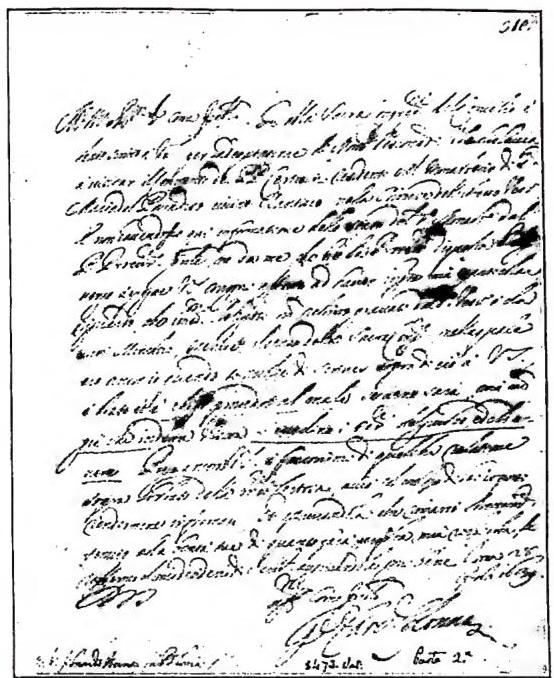
DANZICA — Letter of Cardinal Girolamo Colonna concerning matters relating to the Cistercian monastery of S. Maria del Paradiso in D., addressed to the apostolic nuncio Mario Filonardi (Rome, 28 Aug. 1639) — Biblioteca Vaticana, cod. Vat. lat. 8473, fol. 310.
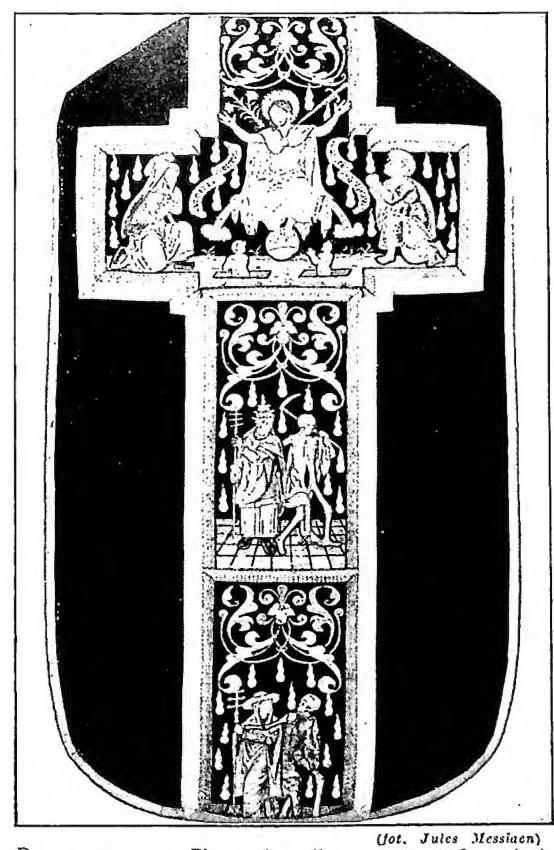
(phot. Jules Messiaen) DANZA MACABRA - Chasuble in black velvet with representations of the d. m. (16th century) - Mons, church of S. Nicola.called «d. di s. Giovanni»; from 1418 onward, however, they were called «d. di s. Vito», because, in order to cure them of their mania, they were brought into a chapel dedicated to this Saint, in the immediate vicinity of Saverne.
Some have mistakenly wished to classify these d. among the numerous heretical sects of that time: no specific heresy, in fact, can be attributed to them. Judging from the contagious nature of their dances, they should rather be regarded as sufferers from hysteria. It is very likely, however, that some of these phenomena represent cases of genuine diabolical possession, since the d. obtained a cure for their abnormal condition chiefly through exorcisms.
BIBL.: Radolfo de Rivo, Gesta Pontificum Leodiensium, inserted by J. Chapeauville in Gesta Pontificum Tongressium, Trajectorium et Leodiensium, III, Liège 1616, pp. 19–22; P. Fredericq, De secten der Gesselaars en der dansers in de Nederlanden, Brussels 1899; G. Bareille, Danseurs, in DThC, IV, cols. 134–36. Guglielmo Zannoni
Cite this article
“DANZANTI.” Enciclopedia Cattolica, vol. IV (1950), p. 721. Azione Romana digital edition, https://azioneromana.com/article/danzanti.