
HANKOW, ARCHDIOCESE of. — The apostolic vicariate of Hupeh, which from 2 April 1856 comprised the whole of the civil province of the same name in central China, was divided on 11 September 1870 into three distinct vicariates: of northwestern Hupeh, southwestern Hupeh, and eastern Hupeh, which on 3 December were respectively given the names of Laohokow, Ichang, and H. The latter underwent a first division on 12 December 1923, giving rise to Puchi (v.), Wuchang, Hanyang (v.); then a second on 18 July 1929, with the erection of the sui iuris mission of Hwangchow, today a diocese under the name of Kirchow; and finally a third on 17 June 1937, when the apostolic prefecture of Suihsiem (v.) was erected. With the establishment of the episcopal hierarchy in China on 11 April 1946, H. was elevated to a metropolitan archiepiscopal see of the ecclesiastical province of Hupeh, with the suffragan dioceses of Hanyang, Ichang, Kichow, Laohokow, Shihnan, and Wuchang. It is entrusted to the Order of Friars Minor, which sends Italian religious from the Venetian province there for apostolic work.
Within its present boundaries, the archdiocese of H. covers 12,120 sq. km. On 30 June 1948 the total population was approximately 3 million inhabitants, of whom 35,072 were Catholics and 12,206 catechumens; the remainder were pagans and followers of Buddhism (approximately 2 million), Taoism (approximately 600,000), and Confucianism (approximately 300,000). In addition to the archbishop, the missionary personnel included 14 Chinese diocesan priests and 56 Friars Minor; 5 Franciscan lay religious and 7 Marist Brothers. There were 48 students in the preparatory seminary, 2 in the minor seminary, and 2 in the regional seminary for Hupeh, which is located in H. and entrusted to the Friars Minor. The sisters, belonging to 4 different institutes, numbered 183, of whom 85 were Chinese; there were also 309 catechists, 335 teachers, 119 baptizers, 16 doctors, and 131 nurses. The territory was divided into 7 districts or vicariates forane, with 29 parishes, 92 primary stations, and 317 secondary stations, 29 churches, and 63 chapels. The institutions included 4 hospitals with 316 beds, 22 outpatient clinics, 3 orphanages with 183 residents, and 1 home for the elderly with 12 residents. The 34 elementary schools instructed 3,727 children, the 3 secondary schools 2,534 students, and the 18 schools of prayer and basic instruction 544 pupils.
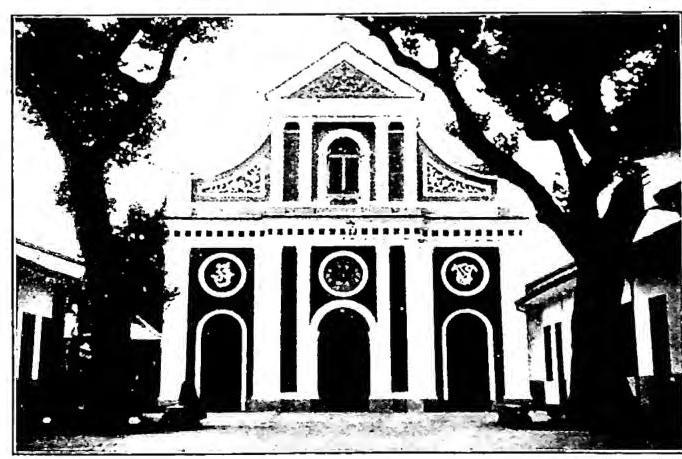
(phot. Fides)