
MICHELE ACOMINATO. — Metropolitan of Athens between 1175 and 1222, born at Chonia (ancient Choni, and therefore also called Choniates) around 1140, died on the island of Chios around 1222. He pursued his studies for a short time at the patriarchal school of Constantinople and was appointed secretary of the patriarchal chancery. Having become metropolitan of Athens, he displayed reforming zeal against disciplinary abuses and social charity in opposition to the burdensome tax system. After the Latins’ victory in 1204, he held a conference with the papal legate, Cardinal Benedetto, at Thessalonica, but he would not submit to the Pope; instead, he withdrew to the island of Chios, where he was able to work peacefully according to his literary tastes and to exercise considerable influence through his correspondence in favor of the dissident Byzantine Church.
M. left homilies, important speeches, letters, and poems (partially edited in PG 140, 323–84; 1227–72; more completely edited by Spiridione Lampros [2 vols., Athens 1879–80]), to which various additions were subsequently made.
His brother NICETA (born at Chona, died at Nicaea after 1210) was employed first at the Greek imperial court of Constantinople and, after 1204, at that of the Greek Emperor of Nicaea. He is known as a theologian of dissident Orthodoxy for his Thesaurus orthodoxae fidei, in 27 books, a historical and polemical work against all heresies, of great value for the history of the errors contemporary with him and for its citations from synods and fragments of Monophysite works, now lost (partially edited in PG 139, 1101–1444; 140, 9–281), dependent on the Panoplia dogmatica of Euthymius Zigabenus, but with additions and supplements (cf. F. Cavallera, Le trésor de la foi orthodoxe de Nicetas Aоминatos Choniates, in Bull. de Littér. eccles., 1913, pp. 124–37). He is even better known for his history of the Third Crusade in 21 books: Historia, which covers the years 1180 to 1206 (PG 139, cols. 287–1088, and in Corpus script. byzantin., edited by Bekker, Bonn 1885), followed by the history of the destruction of the statues by the “Latin barbarians” (De statuis, ibid.).
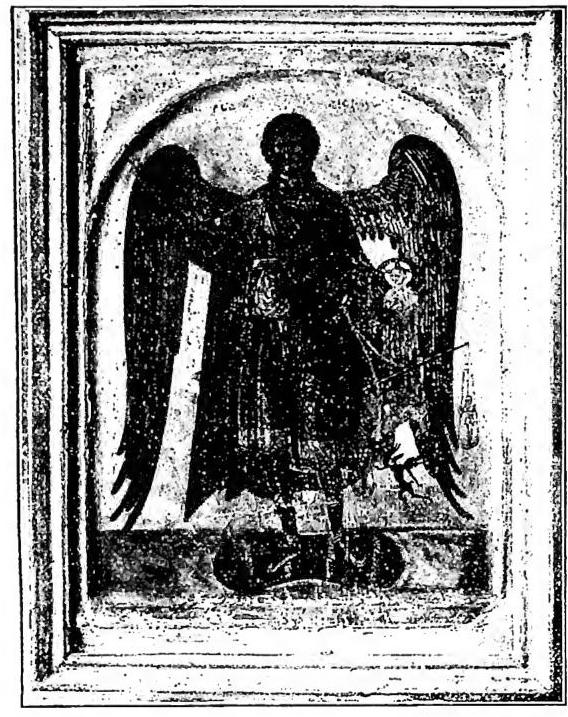
(phot. Gab. fot. nas.) MICHELE, ARCHANGEL — The archangel Michael weighs the souls. Byzantine icon by Manfredino Pistoiese (1282)—Pisa, Museo Civico.