Machine translation of the 1948–1954 Italian original. The original text is authoritative.
PENULA. — The paenula was among the Romans a dark-coloured cloak, perhaps of Celtic origin, closed also at the front and without sleeves, circular in shape, with an opening in the middle through which the head was passed; the hands were brought out beneath its raised edges.
It was used especially when travelling; in the city, in rainy and cold weather, with the addition of a hood (cucullus). It was made of thick cloth lined with fur (gausapa, paenula gausapina); there were also versions made of thin leather. A worn and open-fronted paenula was worn by servants over the exomis tunic. Because of its cut and the quality of its fabric, it was poorly suited to being draped elegantly like the other cloak called the lacerna, which was smaller, open at the front, and likewise always had the cucullus. A cloak of the paenula type (ρελένη) was requested by St. Paolo from Timoteo (II Tim. 4:13), having been left by him at Troas, with Carpo, together with some of his books. In the 4th and 5th centuries, a more practical form of p. became common, shortened and open at the sides to allow movement of the arms. From it, as used by the episcopi and presbyteri
(Int. Enc. Catt.)
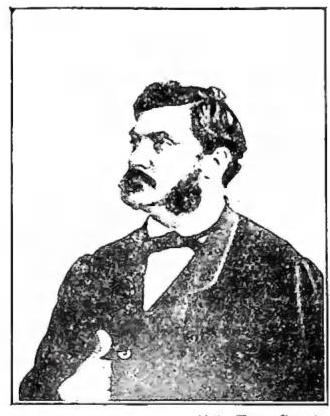
PEPOLI, FAMILY - Portrait of Carlo P. - Rome, Museo del Risorgimento.
…likewise in paintings near the tomb of St Cornelius, in the cemetery of Callistus (6th century), in the Ravenna mosaics (6th century), in the paintings of S. Maria Antiqua in the Roman Forum (8th century), and in those of the lower church of S. Clemente in Rome (11th century).
BIBL.: Wilpert, Pitture, pp. 73-78 and pls. 79; 111; 118, 1; 160, 1; 185, 2; 217; 233; 256; G. Braun, Die liturg. Gewandung, Friburgo in Br. 1907, p. 149 ff.; Italian trans., I paramenti sacri, Torino 1914, p. 96 ff.; Ch. Diehl, Ravenne, Parigi 1907, pp. 63, 71 ff.
Cite this article
“PENULA.” Enciclopedia Cattolica, vol. IX (1952), p. 706. Azione Romana digital edition, https://azioneromana.com/article/penula.