PERAMIHO, ABBAZIA NULLIUS DI

Image from page 707
Image from page 707

PERAMIHO, ABBAZIA NULLIUS of.

In the south-western part of the territory of Tanganyika, to the east of Lake Nyassa. Immediately subject to the Holy See, it is entrusted to the Benedictines of the Congregation of St. Ottilia.

It derives from the Apostolic Prefecture of Lindi, which was erected on 12 November 1913 by separation from the Apostolic Vicariate of Dar-es-Salam of that zone of the territory of Tanganyika which extends from Lake Nyassa to the Indian Ocean. On 15 December 1927, Lindi was elevated to an abbazia nullius, and on 23 December 1931, after the abbazia nullius of Nandana (v.) had been detached from it, it received its present name of Peramiho.

It has an area of about 66,000 sq. km. with a population of about 250,000 inhabitants, of whom 136,205 are Catholics, 7,740 catechumens, about 25,000 Protestants, about 20,000 Muslims, and about 73,000 pagans. Indigenous priests: 4; foreign priests: 64; brothers

Article illustration
(not. Fiden)

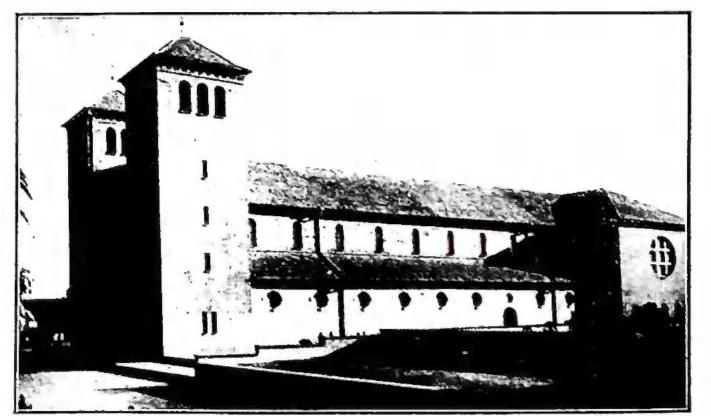
PERAMIHO, ABBAZIA NULLIUS of. - End of the abbatial church.

PERAMIHO — PERCEPTION

against the Turks and to preach the Crusade and the related indulgence for that purpose. He negotiated a peace among the princes of the West for this end; but he did not succeed in imposing a one-year tithe on the German churches and benefices. He worked with the King of France in 1488 and then at the Diet of Frankfurt in July 1489 and urged the princes and the King of Poland to the Congress of Rome in March 1490.

Despite an initial adherence by Frederick III and his son Maximilian, the Crusade could not be preached and nothing concrete was achieved. Appointed Bishop of Gurk (Carinthia) on 21 February 1493, at the instance of Frederick III he was created cardinal by Alexander VI on 20 September 1493. The following year he was in Rome (22 April) and the Pope sent him in November to Florence to negotiate with Charles VIII; but the P. sided with the King and accompanied him first to Rome and then also in April 1495 to the Mezzogiorno, hoping to induce him to the Crusade. Returning to Rome in February 1499, he was legate at Perugia and on 5 October 1500 was created legate to the Emperor; in 1501–1502 he traversed all Germany again preaching the Crusade without result. On 6 October 1501 he resigned the church of Gurk to obtain in commendam that of Toul.

Bibl.: J. Scheider, Die kirchliche und politische Wirksamkeit des Legaten R. P., Halle 1882; Pastor, III, p. 250 ff.; Eubel, II, passim; P. Paschini, Il catecismo fra il card. M. Barbo e G. Lorenzi, Città del Vaticano 1948, pp. 164, 171 ff. Pio Paschini