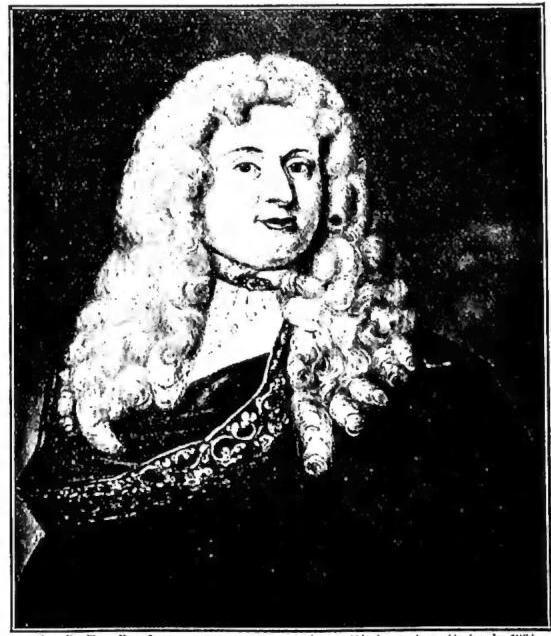
PUGINIER, PAUL-FRANÇOIS

Image from page 191
Image from page 191

PUGINIER, PAUL-FRANÇOIS. - Born on 4 July 1835 in Saix (Tarn, France), he entered the Seminary of the Foreign Missions in Paris on 19 July 1854. Ordained a priest on 29 May 1858, he departed on 29 August of the same year for western Tonkin, where he could only enter in 1862 due to persecution.

Article illustration

In November 1867 he was appointed coadjutor to Mgr. J. S. Theurel, vicar apostolic of western Tonkin, and was consecrated bishop of Mauricastro on 26 January 1868 in Hoang-Nguyen. On 3 November of that year he succeeded Mgr. Theurel. During the various expeditions of Francis Garnier (1872) and Rivière (1883), he gave advice of moderation to help pacify the country. His mission had been struck by two bloody persecutions, but he multiplied conversions and increased the indigenous clergy, personally ordaining more than 120 native priests. He died in Hanoi on 25 April 1892 and was buried in the church of Ke-so.

BIBL.: A. Launay, *Mémorial de la Société des Missions étrangères*, part 2, Paris 1916, pp. 533-36. Antonio Anoge.

---

PUGLIA. -

I. GEOGRAPHY

Historical region formed by the Adriatic slope of the Apennines to the SE of the Fortore and by the Salentine Peninsula.

Four distinct natural units are found here: the Tavoliere, a vast alluvial plain between the Ofanto, the Fortore, and the Gargano, where the original steppe populated by flocks of sheep has been transformed into a granary; the Gargano, a protruding limestone massif whose wooded ridges (M. Calvo, 1,056 m) slope down to the Adriatic in terraces, lined at the base with citrus groves (the Tavoliere and Gargano form the old Capitanata, or province of Foggia); the Murge (land, or province of Bari), a karst plateau, interrupted by hollows (dolines), and bounded to the east by a flat, fertile coastal strip; and the Salentine Peninsula, which continues this plateau southward between the Adriatic and Ionian Seas, descending toward the sea in similar steps with gentler hillocks (the Serre).

Extremely poor in surface water and with low average annual rainfall (less than 500 mm in the lower Tavoliere and the Tarentine coastal area), concentrated moreover in the autumn-winter period, Puglia is suited to pasture (Murge) and agriculture, with a clear predominance in the latter of tree crops (especially olive and vine) over herbaceous ones (wheat; oats: 1½% of national production; tobacco in the Salentine Peninsula). Puglia provides about one-third of the oil produced in Italy and holds first place in the national market for grapes and wine (quantity). Also notable is the production of dried fruit (almonds, figs), mostly destined for export. Industry, due to an absolute lack of energy and mineral raw materials, is limited to food processing (oil, wine, and milling); the only exception is mechanical industry concentrated in the military port of Taranto. Fishing and trade are active, favored by the extensive coastline and rail network.

The population, which is growing at a very rapid rate (it was 1.3 million in 1861), is unevenly distributed: highest density on the Bari coast, lowest in the Tavoliere and Gargano. Characteristic is the strong concentration (93.3%, the highest value among Italian regions) in large and small settlements; 77 municipalities exceed 20,000 inhabitants, of which two exceed 100,000 (Bari, Taranto), six exceed 50,000 (Foggia, Barletta, Andria, Lecce, Brindisi, and Molfetta), and thirteen exceed 30,000 (Cerignola, Corato, S. Severo, Bisceglie, Altamura, Trani, Martina Franca, Bitonto, Monopoli, Canosa, Ostuni, and Manfredonia).

PUGLIA - View of Manfredonia. In the background, the promontory of the Gargano.

| Province | Area in sq. km | Population Census 1936-11.1950 (in 1,000 inhab.) | Density per sq. km | Population of the chief town (in 1,000 inhab.) |
|----------------|----------------|--------------------------------------------------|--------------------|-----------------------------------------------|
| Bari | 5,129 | 987 | 1,166 | 227 |
| Jonio (Taranto)| 2,436 | 338 | 438 | 180 |
| Lecce | 2,759 | 514 | 599 | 62 |

BIBL.: C. Bertacchi, P., Turin 1926; C. Colamonico, La geografia della P., Bari 1926; A. Philipson, Apulien, in *Tijdschrift K. Nederlandsch Aardr Genootschap*, Amsterdam, 54 (1947), pp. 34-87; T.C.I., P. (in *Guida d'Italia*), Milan 1940.

Giuseppe Caraci