
TRIVET, NICHOLAS. – Dominican humanist, historian, philosopher, and theologian, b. in Norwich, ca. 1258, d. between 1328 and 1330.
Bachelor in the Dominican schools at Oxford in 1299–1300; regent master of theology there in 1302–1307. After an absence of seven years, during which he appears to have been in Paris, he was again at Oxford in 1314–15. In 1318 he worked in favor of John XXII; in 1324, he was lector at the Dominican convent in London.
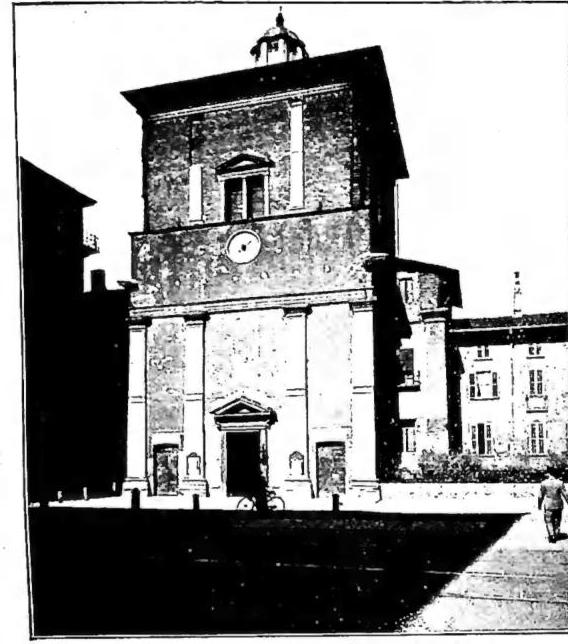
(photo: Gab. fot. naz.)
TRIVULZIO, FAMIGLIA — Façade of the T. family chapel, erected by B. Suardi, known as Bramantino (15th century) — Milan.
The tragedies of Seneca, Boethius’s De cons. philos. and the De discipl. scholarium of pseudo-Boethius. He also wrote De astronomia and the Canones de coniunctionibus appositionibus et eclipsibus solis et lunae. As a historian, he wrote the Annales sex regum Angliae qui a comitibus Andegai, originem traxerunt (ed. L. d'Achery, Spicilegium, VIII, Paris 1669, and Th. Hog, London 1845), a Hist. ab orig. mundi ad Chr. n., and several chronicles of the Heptarchy. As a philosopher and theologian, in addition to his commentary on the De cons. philos. and an Extractio ex Politicis Arist., he commented on various parts of the Bible and the first three books of the Sentences, wrote six Quodlibeta and several Questiones disputatae, a De officio missae and a Scutum verit. contra impugnantes statum perfectionis. He was a determined advocate of Thomism both within and outside the Order.