
CONGREGATION OF THE BODY OF CHRIST. — Monastic institute founded in 1328 by Bl. Andrea di Paolo (d. ca. 1345), marquis of Torre Andrea (near Assisi), who, after spending several years in the Benedictine abbey of Monte Subasio, obtained from Bl. Alessandro Vincioli, bishop of Nocera Umbra, permission to live according to the Cistercian Rule near Gualdo Tadino, where he built a monastery, called Corpus Domini, which became the center of the C. and the residence of the general abbot, to whom 12 other monasteries were subject.
The members of this C. were called White Monks, after their habit, or Brothers of the Most Holy Sacrament, after their office, because their institute was entirely oriented toward the Eucharist: preserving it with due decorum, preparing the faithful to receive it worthily, transporting it (by privilege) in processions, and above all solemnizing Corpus Domini with its attached octave, proclaiming the spiritual privileges granted by Urban IV and Martin V. Their coat of arms consisted of a chalice surmounted by a host supported by adoring angels. In 1377 they received the approval of Gregory XI. In 1395 Boniface IX transferred the dignity of general abbot to the superior of S. Maria in Campis of Foligno, because the monastery of Corpus Domini at Gualdo had been almost destroyed by wartime causes. At Foligno, toward the end of the 14th century, the women’s community of S. Maria di Betlemme was established; it joined the C. in its purposes and remained dependent on its general until 1461, when it was placed under episcopal jurisdiction. The C. existed for almost three centuries and developed only in Umbria (Gualdo, Nocera, Perugia, Umbertide, Todi, Foligno), with the exception of Camerino. In 1582, at the request of the general abbot, Gregory XIII united the C. with the Olivetans, who had had a monastery in Foligno since 1319. The last monk of the C. died in 1643. At Gualdo Tadino, in the municipal picture gallery, there is preserved a panel by Matteo da Gualdo depicting the founder of the C. kneeling behind the Virgin.
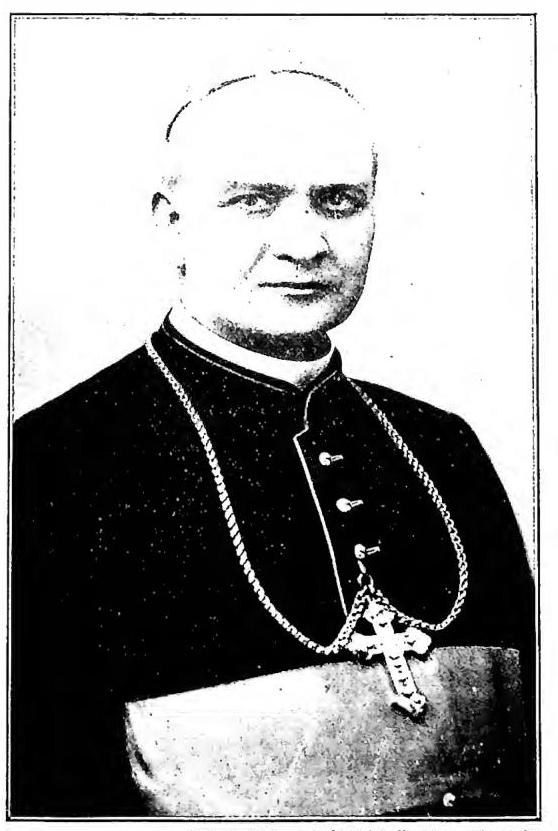
CONGREGATION OF THE MARIAN REGULAR CLERICS — Portrait of Msgr. Giorgio Natulevica, renewer of the Congregation.
CONGR. DEL CORPO DI CRISTO - CONGR. DELLA MISSIONE
ecclesiastical history of the municipality of Gualdo Tadino, Gubbio 1933, passim; P. Paschini, Naterelle eucaristiche. Per la vita religiosa italiana nel primo Rinascimento, Rome 1936, pp. 13–15; G. Barbiero, Le confraternite del SS. Sacramento prima del 1539, Vedelago (Treviso) 1944, pp. 72–78. Antonio Pislanti