
D'ONDES REGGIO, VITO. - Magistrate and statesman, born in Palermo on Nov. 12, 1811, died in Florence on Feb. 24, 1885.
Educated by the Piarists, he entered the judiciary at a very young age and was a judge in Chieti in 1848 when the Sicilian revolution broke out. Elected deputy, he col-
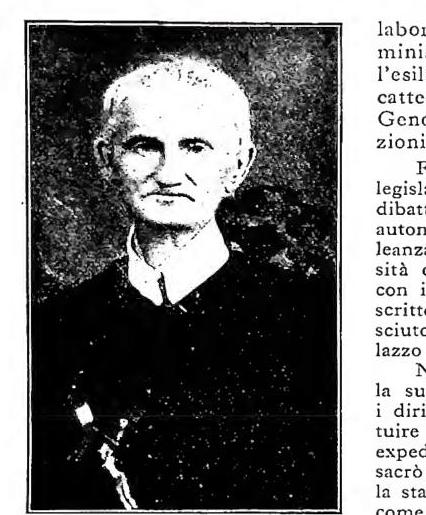
He was a member of the Italian Chamber for three successive legislatures (VIII, IX, and X), taking a prominent part in parliamentary debates. He advocated the granting of broad administrative autonomies to individual regions, defended the alliance with France, but above all maintained the necessity of resolving the Roman Question in full agreement with the Pontiff. A prolific orator, a highly skilled polemicist, and a fluent writer, he was, so to speak, the recognized leader of the Catholic Right at Palazzo Carignano and Palazzo Vecchio, especially in opposing anti-Catholic laws.
No longer a deputy after 1870, he did not cease his political activity for this reason, to the extent that he was acclaimed among the leaders of that Catholic party which was sought to be formed in 1879, should Leo XIII lift the "non expedit". He consecrated all his forces to the defense of religion and the Papacy, supporting his ideal through the press, the spoken word, and action, thus coming to be regarded as one of the preeminent figures of 19th-century Italian Catholicism.