GUSTAVO II ADOLFO, RE DI SVEZIA

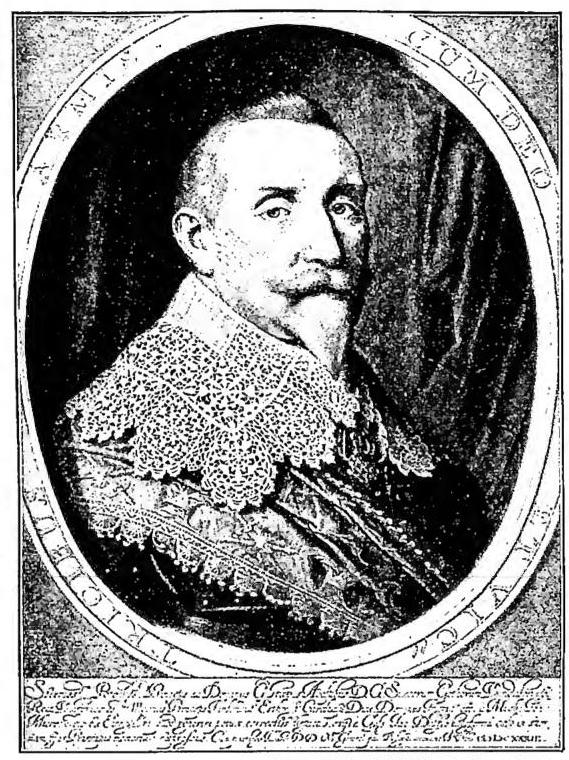
GUSTAVUS II ADOLPHUS, King of Sweden. — Born on 19 Dec. 1594 in Stockholm, died on 16 Nov. 1632 at Lützen, fighting against the troops of Wallenstein in retreat. Having succeeded his father Charles IX in 1611, while Sweden was at war with Denmark and Russia, the young monarch concluded the Peace of Knäred (1613) with the Danes and that of Stolbovo (1617) with the Russians. The peace with Christian IV was onerous, but it freed the king from Danish danger and allowed him to turn his full attention to the Baltic.

The Peace of Stolbovo, by which Russia was deprived of every outlet to the sea, laid the foundations for the future foreign policy of the king, who secured Swedish predominance over the Baltic after the victorious war with Poland that, at intervals, lasted a full nine years, until the Armistice of Altmark (1630). The Baltic had now become a Swedish lake: Poland had in fact acknowledged G. A.’s possession of Livonia and of some Prussian territories, as well as the right to levy duties at the mouth of the Vistula. The course of the Thirty Years’ War, which had meanwhile seen the defeat of Christian IV and the invasion of the imperial forces in the Jutland peninsula, prompted G. A. to intervene in Germany. Already in February 1629, at the conference of Ulfsbäck (southern Sweden), the King of Sweden had proposed an alliance to Christian IV. When this offer was rejected, G. A. landed in Germany, near Peenemünde, in the summer of 1630. France, which deemed it in its interest to weaken the House of Habsburg, granted subsidies to Sweden (Treaty of Bärwalde, Jan. 1631). Crossing the Elbe, G. A. advanced into southern Germany, defeating the imperial forces in repeated battles and occupying Mainz, Frankfurt, Augsburg, and Munich.

With G. A., Sweden became a great European power, and remained so until the death of Charles XII. The king’s intervention in the Thirty Years’ War saved Protestantism from dissolution as a political force, though it is doubtful whether the king was motivated by the purely ideal aim of defending the Lutheran faith, or rather intended to create a vast Swedish empire on the shores of the Baltic, extending to Norway, part of Denmark, Pomerania, Mecklenburg, and the lands on the Baltic ceded by Russia and Poland, and to assume the title of Emperor of Scandinavia.

BIBL.: For sources and works on G. A. cf. S. E. Bring, Sveriges historia till våra dagar. XV: Källor och litteraturförteckning, Stockholm 1934, pp. 371 ff. Also V. G. Droysen, Gustaf Adolf, 2 vols., Leipzig 1869-70; S. Ehses, Papst Urban VIII. und Gustav Adolf, in Historisches Jahrbuch, 16 (1895), pp. 336-341; D. Schäfer, Die Zusammenkunft Gustav Adolphs mit Christian IV, von Dänemark zur Ulfsbäck 1629, in Preussische Jahrbücher, 105 (1901), pp. 39-62; A. Leman, Urban VIII et la rivalité de la France et de la maison d’Autriche de 1631 à 1635, Paris 1920, passim; J. Paul, Gustaf Adolf, 3 vols., Leipzig 1927-1932; N. Ahnlund, Gustav Adolf den store, 2nd ed., Stockholm 1932; id., «Kejsardömnet Skandinavien», in Historisk Tidsskrift, 54 (1934), pp. 266-71; id., Axel Oxenstierna intill Gustav Adolfs död, Stockholm 1940; E. Marquardt, Das Bild Gustav Adolfs in den Augen der Zeitgenossen und der Nachwelt, in Die Welt als Geschichte, 7 (1941), pp. 155-59.

GUTBERLET, Constantine. — Theologian and philosopher, born at Geismar on 10 Jan. 1837, died at Fulda on 27 Apr. 1928. He completed his studies in Rome at the German College and the Gregorian University (1856-62), under the guidance of Fr. Liberatore and Fr. Perrone. Returning to his homeland, he devoted his activity as a professor to the diocesan seminary of Fulda, with which he shared the various vicissitudes during the Kulturkampf and remained actively connected until his death, successively teaching mathematics, natural sciences, exegesis, and philosophy.

His name is linked, with that of J. Pohle, to the foundation in 1888 of the Philosophisches Jahrbuch, the organ of the Görres-Gesellschaft to which, towards the end of the last century, the most lively currents of German Catholic philosophy looked for guidance. Through his vast scientific output, inspired by traditional realism and neo-scholasticism, he took a stand against the materialism and determinism that permeated the positivistic culture of the time.

Principal works: Lehrbuch der Philosophie (Münster 1878; 4th ed. 1910-1909); Das Gesetz von der Erhaltung der Kraft und seine Beziehung zur Metaphysik (1918-1885); Die Willensfreiheit und ihre Gegner (Fulda 1893; 2nd ed. 1910-1904); Der Mensch, sein Ursprung und seine Entwicklung (Paderborn 1896); Der Kampf um die Seele (1918-1908); Psychophysik (Mainz 1905); Der Kosmos (1918-1908).

BIBL.: K. A. Leimbach, K. G., eine Lebenskizze zu einem goldenen Preisträthulium entworfen, Fulda 1911. Autobiography in: R. Schmidt, Die Philosophie der Gegenwart in Selbstdarstellungen, IV, Leipzig 1932, pp. 47-74; B. Jansen, K. G., in Stimmen der Zeit, 115 (1928), pp. 385-87; A. Gemelli, C. G. e la rinascita filosofica tedesca, introd. to the work of G. L’uomo, trans. by L. Bongioanni, Turin 1927, I, pp. v-xv. Bianca Magnino.

Article illustration

GUTENBERG, Johannes. — Printer, inventor of movable-type printing, born in Mainz between the years 1395 and 1399; the original surname “Gensfleisch” was replaced by “Gutenberg,” derived from a paternal noble estate. Very little is known of his early years. Archival documents attest that in 1434 he was residing in Strasbourg, where he is believed to have been exiled from 1424 for political reasons. During the period 1436-39, G. was associated with three citizens of Strasbourg to put into operation certain industrial inventions; one of these concerned “a new art” of which he kept the secret. Tradition holds that the first experiments were conducted in the monastery of St Arbogast near Strasbourg, then in the house of Andreas Dritzehn, one of the partners, who died at this time. This was followed in 1439 by a lawsuit between the Dritzehn heirs and G., in which he obtained a favourable verdict; from the trial records it emerges that G. had set up a press and that in Dritzehn’s house there were formes, pages, and tools for printing books. Gutenberg’s stay in Strasbourg is documented until 1444, the year in which he is thought to have returned to Mainz, where the art of printing actually began.

According to G. Zedler, the first printed work of G. would be a fragment of the Ars grammatica of Aelius Donatus, a widely used medieval schoolbook, to which the date 1444 is assigned. According to tradition, however, the oldest printed product of G. would be a fragment of a German poem on the Last Judgment, called Weltgericht, or also Sibyllen Buch, discovered in Mainz in 1892 and dated to 1445. Slightly later would be other fragments of the Donatus dated between 1446 and 1447, and a supposed Astronomical Calendar calculated for the year 1448 and therefore believed to have been printed towards the end of 1447. Recent studies, conducted on the basis of some fragments of Mainz proof impressions, tend instead to identify the supposed Calendar as a Table of the Planets and consequently to date it to 1458 or 1459.

Around 1450 G. entered into partnership with Johann Fust, a wealthy Mainz citizen, who provided substantial financial backing for the printing ventures. The period 1450-55 saw the production of some small prints, including the so-called Indulgences containing a papal bull of Nicholas V, known in eleven different editions and representing the earliest dated typographical products.

Between the end of 1453 and the early months of 1456, the great two-volume Bible known as the 42-line Bible or the "Mazarine" Bible appears. Traditionally, and for the most part, it is considered the work of J. G. During its printing, a third partner, Peter Schöffer, a skilled technician, induced Fust to exclude G. from the workshop and his publishing ventures. This is confirmed by a lawsuit brought against G. for contractual breaches, in which he was found liable, as attested in a notarial deed dated 6 November 1455, known as the "Helmasperger Notarial Instrument."

According to tradition, G., with a modest supply of type that appears related to those of the aforementioned prints, continued his typographic activity alone, producing small booklets, some calendars, and another bull of Callistus III. Recent studies, however, tend to attribute these works to unknown Mainz printers, perhaps workers of G. and Fust, operating in competition and secretly. Controversial too is the attribution to G. of another Bible, the 36-line Bible, datable to the years 1457–58, in which the printer Albert Pfister of Bamberg seems to have played a notable part. A final book, the Catholicon of Johannes Balbus, printed in Mainz in 1460, has more reliable claims to being assigned to G. After this year, no further news survives of G.’s typographic activity; in 1465 he appears as a courtier of the Archbishop and Prince-Elector Adolph II of Nassau.

G. died in Mainz, probably on 3 February 1468, according to a manuscript annotation discovered by F. W. Roth in an incunable in 1915. His name does not appear in any of the works, booklets, or fragments attributed to him, yet the evidence, though scant and fragmentary, and the unanimous and constant tradition, designate him as the sole and true inventor of printing.

BIBL.: There is a copious Gutenberg bibliography, both ancient and modern, though never collected in a single volume. Fundamental is the work of A. Ruppel, J. G., sein Leben und seine Werke, Berlin 1939; new ed. ibid. 1947. For recent Italian contributions see M. Ferrigni, G., Milano 1940; G. Avanzi, G. G. e l'arte della stampa, Roma 1941. For editions from Mainz see S. De Ricci, Catalogue raisonné des premières impressions de Mayence (1445–67), Mainz 1911, a work in need of revision and updating. For new results in Gutenberg scholarship see C. Wehmer, Mainzer Probedrucke in der Type des sogenannten astronomischen Kalendarium, Gennetto Avanzi.