
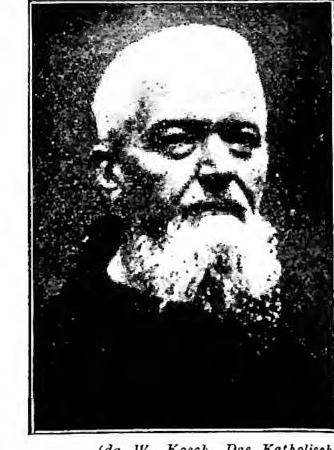
HETZENAUER, MICHAEL. — Capuchin, biblical scholar, born at Zell (Tyrol) on 30 November 1860, died in Rome on 4 August 1928. Professor of Sacred Scripture at the study house of his Order in Innsbruck from 1885 to 1904, in which year he was called by Pius X to the chair of biblical exegesis at the Pontifical Athenaeum of the Roman Seminary, where he taught until his death. From 1914 he was a consultor to the Pontifical Biblical Commission. He took an active and tenacious part in the anti-Modernist struggle. Remarkable for his industriousness, he occupied himself with the government and history of his Order, with asceticism, and above all with the biblical sciences, publishing articles and some fifty works, many of them of great scholarly seriousness.
The following should be remembered: Das Kapuzinerkloster zu Innsbruck (Innsbruck 1893); Novum Testamentum graece et latine (ibid. 1896–98: a critical edition, followed in 1899 and 1904 by separate editions); Wesen und Prinzipien der Bibelkritik auf katholischer Grundlage (ibid. 1900); Epitome exegeticae biblicae catholicae (ibid. 1903); De recognitione principiorum criticae textus Novi Test. sec. A. de Harnack (Rome 1920; Regensburg 1921); De annis magisterii publici Iesu Christi (Rome 1921). Fundamental, however, are the Theologia biblica of the Old Testament (Freiburg 1908; that of the New Testament, ready for printing, was lost), the Commentarius in librum Genesis, with an extensive introduction also issued separately (Graz 1910), and above all the critical edition of the Vulgate, in two different editions: the standard one, for scholars: Biblia Sacra Vulgatae editionis ex ipsis exemplaribus Vaticanis inter se atque
Although some element in H.’s scholarly work is obsolete (such as the periodical interpretation of the Hexaemeron), there nevertheless shine forth in it “an enlightened science and a sound doctrine” (L. Méchineau), clarity, vast erudition, and absolute precision.