
LIA (Hebr. Lē’ah, Gr. Acix). — Daughter of Laban and elder sister of Rachel (v.). Her father gave her in marriage to Jacob in place of Rachel, who was the chosen one and for whom he had served seven years, on the pretext that it was not customary in that country to marry the younger sister before the elder (Gen. 29:22-26). Jacob accepted her, but after a week he also obtained Rachel’s hand, by virtue of the permission then in force (later abolished by Mosaic law, cf. Lev. 18:18), to marry the sister of one’s first wife.
Less graceful than Rachel and defective in her eyes (it is difficult to determine the defect: according to the Vulgate, she had
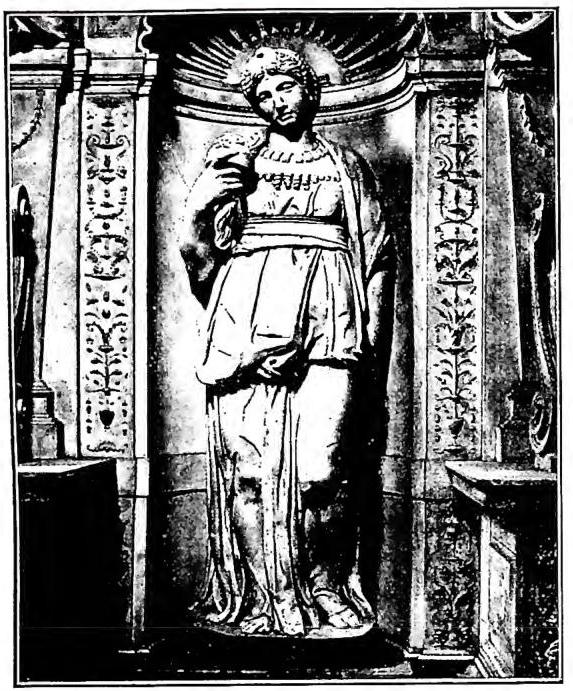
“bleary” eyes; according to the Septuagint, impaired vision), L. never enjoyed from her husband the same affection and consideration shown to her sister, as can also be inferred from the fact that, at the critical moment of the meeting with Esau, Jacob left Rachel and her son Joseph in a place of lesser danger, while placing L. and her children before them, in a more exposed position. Nevertheless, the Lord favored her more than her sister, granting her numerous offspring before the latter could have a single child. Her first sons were Reuben, Simeon, Levi, and Judah (Gen. 29:32-35): the names given to them attest to her piety and gratitude toward the Lord. Then, as Rachel had already done with her maidservant Bilhah, she gave her husband her servant Zilpah as a concubine or secondary wife; she bore two sons, Gad and Asher, who, according to the law then in force, were legally attributed to the mistress. She herself later gave birth to two more sons, Issachar and Zebulun, and to a daughter named Dinah. To the descendants of L. were reserved the most honorable prerogatives among the people of Israel: to the tribe of Judah, royal dignity and the messianic scepter (cf. Gen. 49:8-12), and to the tribe of Levi, the honor of the priestly lineage. Neither the place nor the date of her death is mentioned; it occurred before the Israelites’ entry into Egypt, since her name does not appear in the list of emigrants. Jacob buried her in the tomb of the patriarchs at Hebron (Gen. 49:31).
Dante recognized in L. the symbol of the active life (cf. St. Thomas, Summ. Theol., 2a-2ae, q. 179, art. 2), representing her in the Earthly Paradise as “a solitary woman, who went singing and gathering flower from flower” (Purg., XXVII, 97-108; XXVIII, 37-84). Gaetano Stano