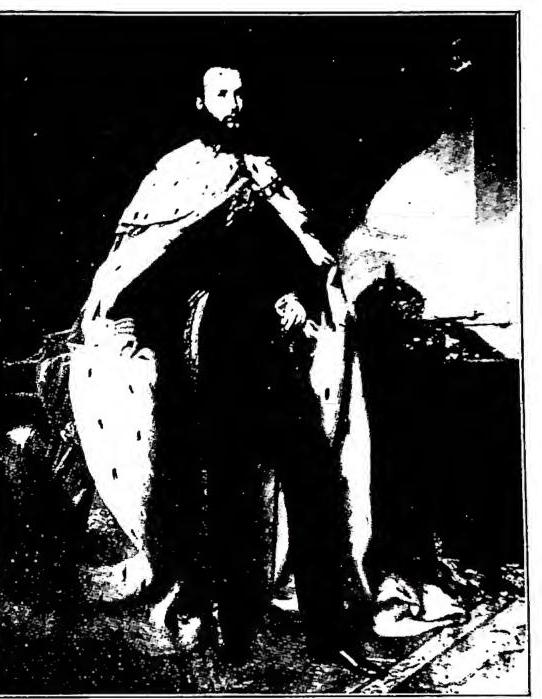
MASSIMILIANO II D'ASBURGO, IMPERATORE. – Son of Ferdinando I, brother of Carlo V, and of Anna Iagellone, born in Vienna in 1527. He spent many years of his youth at the court of his uncle, who between 1548 and 1550 entrusted him with the government of Spain on behalf of his cousin Filippo; for a time he appeared destined to become king of Germany.
In Madrid, in 1548, he married his cousin Maria, daughter of Carlo V. He then left Spain with a feeling of antipathy toward everything Spanish and toward his Spanish relatives. Although he had grown up in that rigidly Catholic environment, he very soon discovered within himself a strong sympathy for Lutheranism. His relations with his wife and with his father became difficult. Ferdinando at one point decided to deprive his firstborn son of all right of succession. But M. withdrew from the prospect of openly adhering to Lutheranism, considering that the Protestant princes would not support him: in 1562 he reached an agreement with his father, promising him that he would not abandon the Catholic faith and that he would consent to sending his sons Rodolfo and Mattia to the court of Filippo II to be educated there as Catholics; for himself, he reserved the right to follow his preferred religious views. Thus he was able to be crowned King of the Romans, and in 1564 succeeded his father in the Austrian States and in the Empire. A cultured man with intellectual interests, he nevertheless had unclear ideas about the situation: at the Diet of Augsburg in 1566 he put forward proposals for a religious agreement between Catholics and Lutherans. Subsequently he remained faithful to a policy of
tolerance, granting freedom of worship, but eventually displeased the Catholics who wanted a reaction and the Protestants
who accused him of ambiguity. He died in 1576 after