MATTEI GENTILI, PAOLO

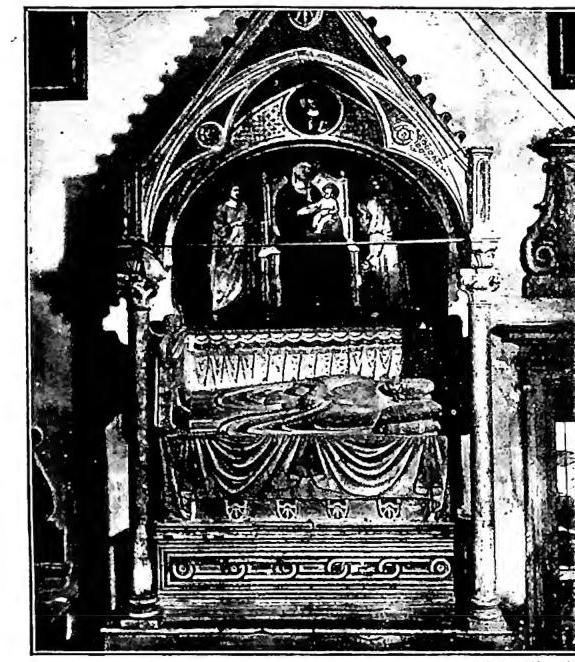
Image from page 299
Image from page 299

MATTEI GENTILI, PAOLO. - Journalist and politician, b. at Pennabilli (Pesaro) on 15 Oct. 1874, d. at Rome on 28 Nov. 1935. He entered, while still very young, the Catholic University Circle founded by R. Murri and collaborated with *La Vita Nova* and *Cultura Sociale*; later he took over the direction of *L’Ateneo*. After graduating in law, in 1907 he became director of *Corriere d’Italia*.

When the great grouping of Catholic journalism was formed, thanks above all to Count Giovanni Grosoli Pironi, he became its leader and founded *L’Italia* of Milan. He then resumed the direction of *Corriere d’Italia*, which he maintained until the paper’s closure in 1929. Entering political life, he was among the founders of the Democrazia Italiana, later the Partito Popolare Italiano. Deputy for Ancona in the 25th legislature, he represented the Marches also in the 26th, 27th and 28th legislatures. In 1923, during the debate on the electoral law, having dissented from the Party’s policy, he was expelled. In 1924, after the Aventine secession, he founded with E. Martire and Carapelle the Centro Cattolico Nazionale. In July 1924, as Under-Secretary

Ricca la sua produzione letteraria, di cui una parte notevole è conservata nei codici autografi delle biblioteche di Assisi e di Todi. Le opere scritturistiche comprendono alcuni Introitus, l'esposizione dell'Ecclesiaste, le Postillae in Ps. 1-50, in Job, in Apoc. Più numerose le opere a carattere teologico e filosofico: Comment. in I-II, IV Sent., Concordantiae II. Sent. per alphabetum, Breviloquium de S.ma Trinitate, Tract. de aeterna Spiritus S. processione, Quodlibeta VI, ecc. Si conservano pure di lui ca. 200 Sermones dominicales et festivi. Di tutta questa vasta produzione sono edite solo le Quaestiones de fide et de cognitione, Quaestiones selectae de Christo, Quaestiones de Gratia, nella Bibliotheca Franc. Schol. Medii Aevi, I-II, XI (Quaracchi 1903, 1914, 1934) e qualche altra questione pubblicata in studi speciali.

BIBL.: M. Grabmann, Die philosophische und theologische Erkenntnislehre des Kard. M. von A., Vienna 1906; E. Lonepre, S. V. in DTHC, X, coll. 375-89; P. Gloricux, Répertoire des maîtres en théologie de Paris au XIIIe siècle, II. Parisi 1934, pp. 102-107; V. Doucet, Fr. M. ab A. Quaest. disput. de gratia, cum introductione critica de magisterio et scriptis eiusdem Doctoris, Quaracchi 1935. Per la vita e l'attività politica: C. Ghirardacci, Dela historia di Bologna, I, Bologna 1605, p. 415 sgg.; C. Clementini, Raccolto istorico della fondazione di Rimino, parte 1, Rimini 1614, p. 522; A. Toti, La chiesa di S. Francesco in Siena ed i Piccolomini, in Bull. senese di storia patria, 1 (1894), p. 81; L. Oliwier, Alcuni documenti per la storia dell'Inquisizione francescana in Toscana, in Studi francescani, serie 3, 3 (1931), pp. 195-96 (due lettere di M. d'A.); V. Doucet, L'enseignement parisien de M. d'A., in Arch. Franc. hist., 28 (1935), pp. 568-70; B. Bughetti, ibid., 13 (1920), p. 135; B. Giodani, in Anal. Franciscana, IX, Quaracchi 1927, pp. 376 sgg., 395-67. Per la tradizione manoscritta dei sermoni: C. Piana, Assimilato B. V. M. apud scribitores saec. XIII, Sebenico-Roma 1942, p. XXII, nota 22; C. Balie, Codices manuscritos de las Biblioteca españolas en torno a la muerte y Asunción de la Virgen, in Actas del Congreso Mariano Franc. Español, Madrid 1948, p. 251. Per la dottrina: J. Auer, Die Entwicklung der Gnadenlehre in der Hochscholastik mit besonderer Berücksichtigung des Kard. M. d'A., Friburgo in Br. 1942. Celestino Piana