
RAIMONDO MARTINI. – Dominican theologian and missionary, born at Subirats (Catalonia) around 1220, died at Barcelona after July 1286. A religious from 1236, he was sent, together with a group of confrères, to Tunis to establish an Arabic school there (1250). On 27 March 1264, at Barcelona, King James of Aragon entrusted him with the task of examining the writings of the Jews. From 1268 to 1269 he was once again a missionary among the Moors, at Tunis. In 1281 he taught Hebrew at Barcelona.
A profound connoisseur of the languages and of the Arab and Jewish worlds, he devoted his entire life to their conversion. For this purpose he wrote several works: Explanatio symboli Apostolorum, completed in 1257 (edited by J. March in 1908, V. op. cit. in bibl.), in which he explains the Credo, with constant reference to the Jews and Saracens; Capistrum Judaeorum, written in 1267 (ms. Bologna, Bibl. Univ., cod. Lat. 1675; Paris, Bibl. naz., cod. Lat. 3643), provides proof of the messianic prophecies and answers the objections of the rabbis; Pugio fidei adversus Mauros et Iudaeos, completed in 1278 (Ortona 1518, Basel 1550, Frankfurt 1561), a kind of Summa apologetica. As for doctrine, in the Explanatio R. seems to draw more upon S. Agostino and Abelardo, whereas in the Pugio he draws upon S. Tommaso, specifically the Summa contra Gentiles, which he sometimes reproduces verbatim.
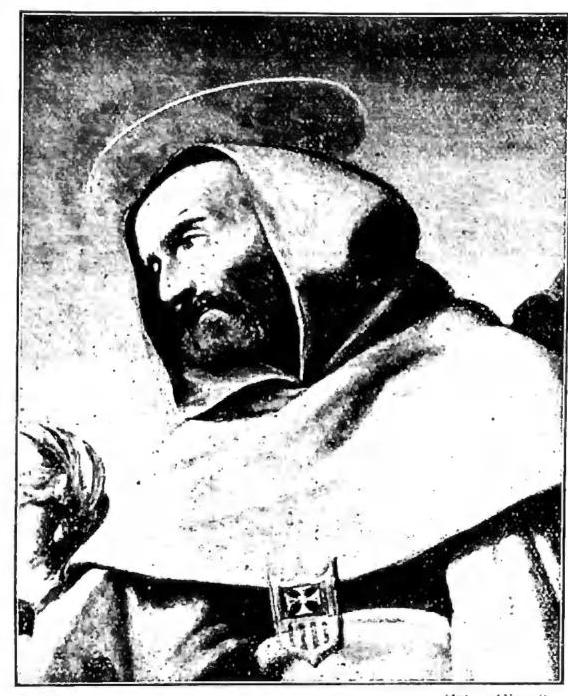
(Alinari photograph)
Alfonso D'Amato