
XEROFAGIA (ξηροφαγία). — Consumption of dry food alone (ξηρός) and water alone. According to St. Isidore, it is a form of fasting (Etymol. VI, 19, 70, ed. W. M. Lindsay, Oxford 1911): «X. dicunt, abstinentiam scil. ciborum humentium; unde nomen hoc datum, eo quod siccis quidam escis utantur».
X. was practiced among the ancient pagans (Athenæus, Deipnosophia, III, 79). The Therapeutae fasted on water, bread, and hyssop (Eusebius, Hist. ccl., XVII, 22). Clement of Alexandria recommends it to the young (Paedag., II, 2) and to everyone, so that «the soul may be pure, dry, and luminous; the dry soul is most wise, excellent, and suited to contemplation (ἐποπτική)» (id., ibid.: PG 8, 413, 424 ff.). The Montanists imposed X. upon themselves, abstaining from meat, broths, juicy fruits, and wine, and refraining from bathing, for two weeks each year, excluding Saturdays and Sundays (Tertullian, De ieiun. 15); through X. («siccantes cibum ab omni carne et omni iurulentia et uvidioribus quibusque pomis, ne quid vinositatis vel edamus vel potemus» (id., ibid., 1), they sought to obtain «revelations» (id., ibid., 12). As a reduced form of fasting, X. came to be identified (in the 3rd century) with fasting on bread and water, which Christians were already practicing in the 2nd century (Hermas, Pastor, sim. V, 3 and 7), and which St. Jerome (Ep. ad Nepotianum, 12) recommends as «fortissimum iciunium». St. Epiphanius (Haer., 70, 12, and 75, 3) states that X. was obligatory during the week before Easter; the diet was limited to bread, water, and salt (Didascalia, V, 18; the Constit. Apost. add legumes: ed. F. X. Funk, Paderborn 1935, pp. 288–89). The Synod of Laodicea (can. 50) prescribed X. for the entire Lenten season; St. John Chrysostom (Hom. ad pop. Antioch., 4, 6: PG 49, 68) attests that many spent the whole of Lent on bread and water. Many ascetics of the 4th and 5th centuries practiced X. (along with ὀδροποσία) throughout the year, reducing even the bread to a minimum (Rufinus, Hist. mon., 27; Cassian, Collat., II, 19–21). Related to it was omophagy (ὠμοφαγία): the use of herbs and legumes alone, uncooked, sometimes with a little oil, and, especially in Palestine, with the exclusion of bread (Palladius, Hist. Laus., 11, 18, 38, 52, 57; Cassian, De inst. coenob., IV, 22). Excesses were not lacking (Cassian, Collat., V, 5). Today in the East X. designates the use of Lenten foods.
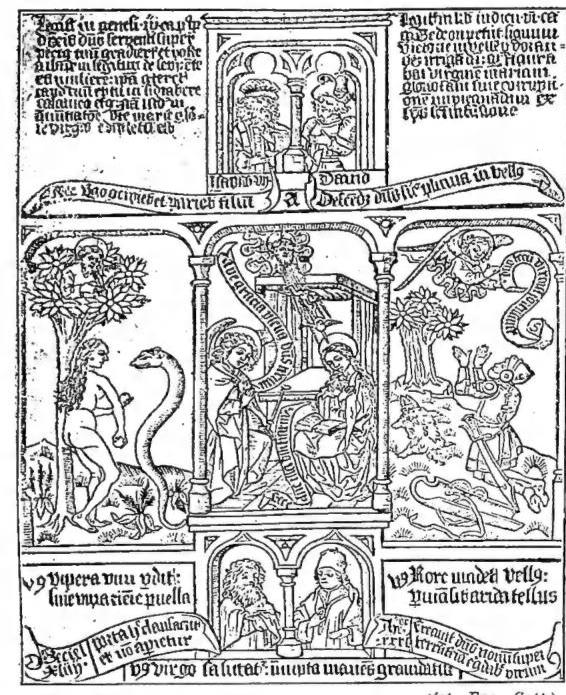
(photo Enc. Catt.)
XILOGRAFICI, LIBRI — Biblia pauperum, fol. 1 (2nd half of the 15th century), depicting Eve, the Annunciation, and Gideon with the fleece — Copy in the Vatican Library.