YANGCHOW, APOSTOLIC PREFECTURE of. — In the central-western part of Kiangsu province, in central China. It was erected on 9 June 1949 from 7 civil subprefectures of the diocese of Shanghai and was entrusted to the Jesuits of the California province.
It covers approximately 12,000 sq km. At the time of its erection, out of a total population of approximately 4,800,000 inhabitants, there were 3,002 Catholics and 256 catechumens, distributed among 7 districts equipped with a church, a missionary residence, and a school, assisted by 13 priests, 6 of whom were American Jesuits and the other 7 Chinese secular clergy, belonging to nearby missions and only temporarily assigned to Y., where the Sisters Auxiliary of Purgatory also worked.
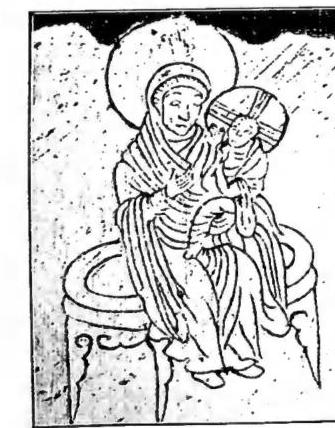
A Christian funerary stele discovered in Y. in 1952, reproducing the image of the Virgin with the Child, a Latin inscription in Gothic characters, and the date “June 1342,” provides historical proof of the existence of the Franciscan Catholic mission in Y. in the first half of the 14th century, as had until then been accepted on the basis of the account of the blessed Odorico da Pordenone. Before the Franciscans, Nestorian heretics preached there. After every Christian trace had subsequently disappeared, evangelization was resumed in the 17th century through the work of the Jesuits, foremost among them Fr. Giulio Aleni, who, among his various conversions, brought about that of a Chinese scholar from Y., baptized with the name Pietro. Fr. Francesco Saccani, the apostle of Nanjing, converted several young scholars at Hwaian and left a considerable number of neophytes there (1638). From 1660 Fr. Gian Domenico Gabiani preached fruitfully in Y.; twenty years later several thousand faithful were counted there.
The mission, almost annihilated during the persecution of the emperor Kang-hi, came back to life with the return of the Jesuits to China in 1842. Fr. Giuseppe Sackinger worked in Y. (1866) and at Hwaian (1868), where permanent residences were established respectively in 1881 and 1886, then at Kaoyu (1886), at Tsingkiangpu (1933), and in other principal centers beginning in 1921.