ACQUAFORTE

ETCHING. — (From the medieval name of nitric acid, *aqua fortis*). A print obtained by means of a copper plate in which the grooves that receive the ink are etched by acid rather than directly by the burin as in drypoint (v.). The plate is coated with a layer of wax mixed with resin and then blackened with soot; a fine point is used to scratch the subject so as to slightly expose the copper, and the plate is then immersed in a solution of nitric acid (the alchemists’ *aqua fortis*), which will bite only the exposed parts of the copper, etching grooves of varying depth. Once the varnish is removed, the plate is ready for inking and printing under a press. The first trial proofs are called “avant la lettre.” Zinc is easier to work than copper but less durable for large print runs. By inking multiple plates differently, colored etchings can be produced. Prints are usually signed in pencil.

Etching lacks the formal rigor and precise clarity of engraving with the burin; however, it allows for greater speed, a fresher effect, and a richer range of chiaroscuro. For these reasons, the burin is preferred for classical-style prints and precise reproductions.

---

ACQUAFORTE — ACQUARIANI

238

The stream Quintaluna flows through Acquapendente and then empties into the Paglia, a tributary of the Tiber. The city is mentioned in the donation made by Countess Matilda to the Holy See at the beginning of the 12th century; later it became a commune, until in the 15th century it was definitively incorporated into the Papal States.

P. P. Biondi, writing in 1588, tells us that by 1102 Acquapendente belonged to the diocese of Orvieto; but when Bishop Cristoforo Ciarda of Castro was assassinated in 1649, Innocent X had this episcopal see razed to the ground and made Acquapendente the seat of a new diocese, the boundaries of which were defined by the bull *In supremo* on 13 September of the same year. The former Benedictine monastery church of the Holy Sepulchre was chosen as the cathedral; except for its fine Romanesque crypt, it was completely remodeled in the 18th century in Baroque style. Damaged by wartime actions in 1944, it is currently undergoing restoration that will return it to its original form.

Acquapendente is a diocese immediately subject to the Holy See.

BIBL.: P. P. Biondi, *Istoria di A.* (1588), ed. M. Armellini, in *Cronachetta mensuale di archeologia e di scienze naturali*, 23 (1588), pp. 181–87 and 24 (1588), pp. 12–155; Ughalli, I, cols. 583–85; Cappelletti, V, pp. 549–81; N. Costanini, *Memorie storiche di A.*, Rome 1903. Benedetto Pesci

---

MILITARY ACTION AT A. — Acquapendente must also be remembered for the clash that took place there in the autumn of 1867 between some 200 Garibaldians, who on 30 September began guerrilla warfare to invade the Patrimony of St Peter, ending on 3 November at Mentana, and 30 papal gendarmes from the local station. The latter, barricaded inside the barracks, were forced to surrender after two hours of fierce fighting when the building’s roof collapsed. The next day, 19 October, a reinforcement of 230 troops under the command of Colonel Achille Azzanesi—comprising Zuavi and line soldiers—attacked the Garibaldians on the road to San Lorenzo, took about forty prisoners, and drove them back across the border.

BIBL.: Lombard-Martin, *Précis historique sur l'insurrection romaine*, Paris 1868; P. Mencacci, *La mano di Dio nell'ultima invasione contro Roma*, Rome 1868; F. Cavallotti, *Storia dell'Università di Roma nel 1867*, Milan 1869; G. G. Franco, *I crociati di S. Pietro*, I, Rome 1869–70; F. Gregorovius, *Passeggiate per l'Italia*, Rome 1907; G. Badii, s. V. in *Dizionario dell'Archivio Nazionale*, I, Milan 1931, p. 5; P. Dalla Torre, *L'Anno di Mentana*, Turin 1938. Paolo Dalla Torre

---

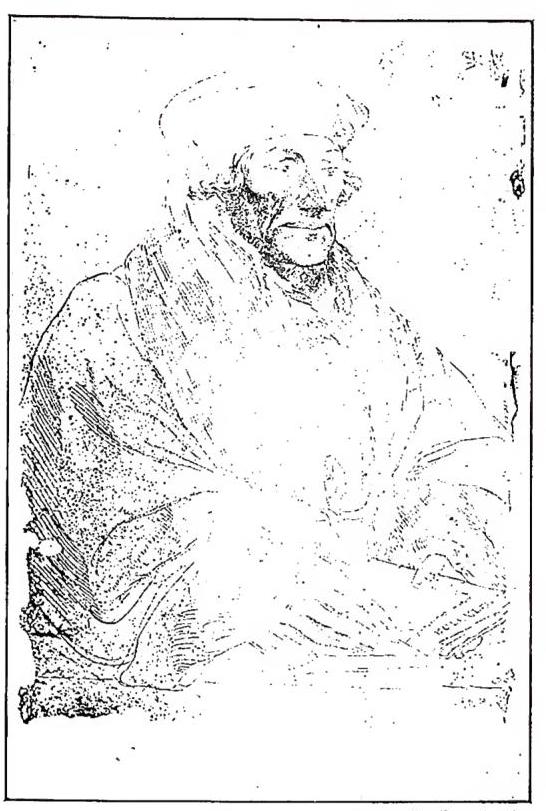
ETCHING — Initial state of an etching on copper by A. van Dyck, after a portrait of Erasmus of Rotterdam.

Raised to the highest dignity alongside Rembrandt—whose superb biblical prints are celebrated and much sought after—etching was practiced by Salvator Rosa for groups of brigands and soldiers, by Callot for small battle and fair scenes, by Berghem for pastoral subjects, by Tiepolo for ecstatic saints, by Goya for harsh depictions of war and bullfights, and by Piranesi for romantic visions of classical ruins.

To promote etching and engraving in general, Pope Clement XII established the Calcografia Camerale in 1738 by acquiring all the copperplates of the De Rossi family. While the use of etching in sacred art is limited to pictures of the *Via Crucis*, gloria charts, images of the crucifix for confessionals, etc., its application in the realm of devotional images has been and remains vast. — See Pl. XVIII.

BIBL.: F. Melis-Marini, *L'acquaforte*, Milan 1916; J. Laver, *A history of British and American etching*, London 1920; L. Bartolini, *Acqueforti*, in *Quadrivio*, 11 (1937–38); A. C. Coppier, *Acqueforti di Rembrandt*, Novara 1941. Corrado Mezzana