
GUERCINO, Giovanni Francesco Barbieri, called Il. - Painter, b. at Cento on 8 Feb. 1591, d. at Bologna on 22 Dec. 1666; he was called il G. because of the loss of his right eye, suffered at a very tender age. Raised and established in the Bolognese milieu, he was the most robust and gifted among the masters of that school and one of the major exponents of seventeenth-century painting in the peninsula. His teacher in adolescence the foundations of the reform of Gregorian chant, of which Solesmes became the driving center. To the liturgy G. devoted his first essays: Considérations sur la liturgie catholique (3 articles in Le mémorial catholique [1830], republished in the Mélanges de liturgie, d'histoire et de théologie, Solesmes 1887); De la prière pour le roi, 2 articles in l'Avenir (Oct. 1830, republished in the Mélanges, cit.); Les institutions liturgiques (3 vols., Paris 1840-42, 51); L'année liturgique (9 vols., Le was Benedetto Gennari the elder, a modest follower of the Carracci; but at about the age of twenty, having settled in Bologna, he was attracted by the works of these, especially those of Ludovico.
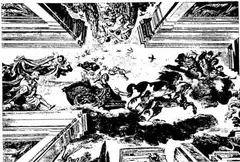
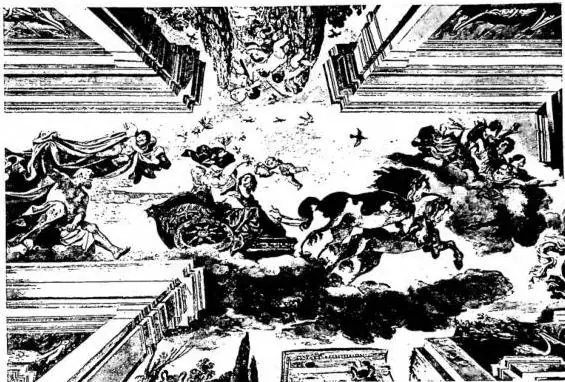
To the period 1615-17 belong some of his wall decorations, executed in the Pannini house in Cento and now at the home of Marquis Del Turco in Bologna; in them are revealed surprising qualities of landscape and rustic realism, but only in 1620 did the artist begin his happiest and most characteristic manner with the original St. William of Aquitaine (Pinacoteca of Bologna), rich in animated and velvety chiaroscuro effects and in warm ivory and brown tones. In the following years he was in Rome, where he absorbed the classicist ideals widespread in that milieu, but also deriving advantage from post-Caravaggesque manners. More than the monumental but somewhat forced canvas of the Burial of St. Petronilla (1621) in the Capitoline Gallery, the fancifully romantic decoration of the Aurora, frescoed in the casino of Villa Ludovisi and in which echoes of Dossi are felt, proves memorable. Having returned to Cento in 1623, he remained there until 1646, but in 1620 he was in Piacenza to fresco the dome of that cathedral. During the second Cento period he produced with tireless inspiration works of every subject, but not always persuasive, especially the large-scale canvases. One of his masterpieces of that period is the St. Bruno at the Feet of the Virgin (Pinacoteca of Ferrara), of extraordinary plastic and luministic power, which almost recalls the Spaniards, even in the types. Having moved to Bologna in 1642, he set out along the road already trodden by Reni, losing his native qualities of form and icastic content. There also remains by him an enormous number of drawings and sketches, in pencil, red chalk and pen, among which are counted authentic jewels of expressive immediacy. Of his pupils, besides the Gennari nephews, particular mention is deserved by his brother Paolo Antonio (b. at Cento in 1603 and d. at Bologna in 1649), an excellent author of still lifes. - See plate LXXXVII.
Bibliography6 works
Alberto Neppi