
GUÉRANGER, PROSPER-LOUIS-PASCAL. – Restorer of the Benedictine Order in France, born at Sablé-sur-Sarthe (France) on 4 April 1805, died at Solesmes on 30 January 1877. Ordained a priest in 1827, he redeemed the ancient priory of Solesmes in 1833 and made his profession at the Abbey of S. Paolo fuori le mura on 26 July 1837. On the following 1 September, after obtaining the canonical erection of the Benedictine « Congregatio gallica », he was elected abbot of Solesmes on 30 October of the same year.
In order properly to understand and assess his fruitful activity and publications, it must be borne in mind that French Catholics were then divided by profound disagreements: those faithful to the doctrine and tradition of the Church, wholly submissive to the Roman Pontiff, were designated by the title of « ultramontanes » by those who remained more or less infected by the pernicious current of the great errors of the preceding centuries, namely Jansenism, Gallicanism, naturalism, and liberalism. In the sphere of morality and piety, these errors curtailed the redemptive action of Grace and withered devotion, while in the sphere of ecclesiastical discipline they diminished the prerogatives of the Roman Pontiff; in philosophy they exalted reason to the detriment of faith and, in the historical field, diminished the supernatural by minimizing the intervention of Providence; finally, in politics, taking their starting point from the caesaropapism of the ancien régime, they not only accentuated the State’s usurping tendencies toward the Church, but also recognized freedom as an absolute good and the principal, if not the sole, remedy for all the ills of society.
The living faith of dom G., and his profound knowledge of the history of the Church, its institutions, and canon law, led him to intervene in the religious disputes of his time, bringing to them those sure solutions of Catholic doctrine suggested to him by his clear and secure discernment. This absolute fidelity to the Catholic Church and to its teachings was the entire reason for his life and explains its exceptional fruitfulness, wholly inspired by the defense of the Church and its doctrines.
The activity of dom G. was particularly important in the liturgical field. He headed the movement for the restoration of the Roman liturgy in all the French dioceses, which since the seventeenth and eighteenth centuries had followed particular liturgies not always free from Gallican or Jansenist influences; he gave a powerful impetus to liturgical scholarship and laid the foundations
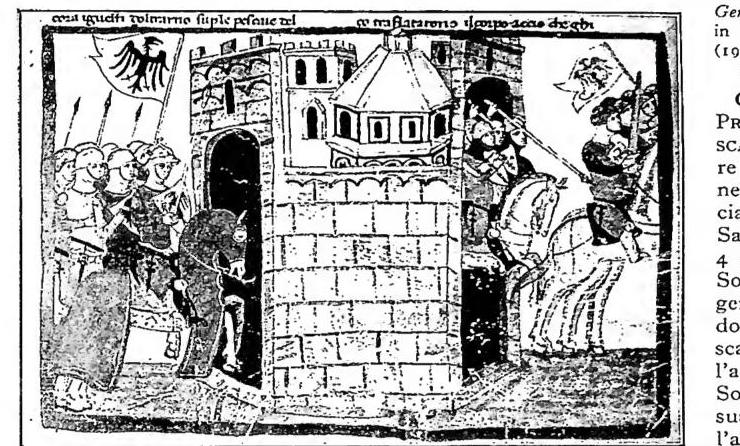
GUELFS AND GHIBELLINES – Expulsion of the Ghibellines from Florence. Miniature from the Chronicles of Villani – Vatican Library, cod. Chig. L. VIII 296, f. 80 (late fourteenth century).
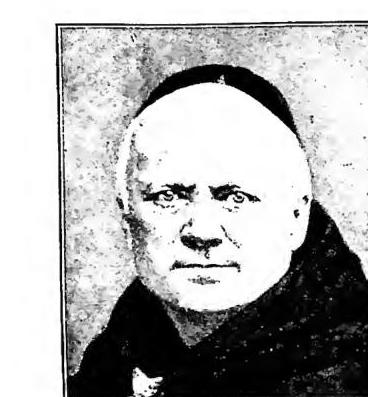
(from N. Rousseau, L'école grégorienne de Solesmes [1833-1918], Paris–Tournai 1918, vol. 1.)
Finally, there were his victorious responses to the efforts of those who sought in France to prevent the definition of the dogma of papal infallibility at the First Vatican Council: De la monarchie pontificale à propos du livre de mgr de Sura (Paris 1870) and Défense de l'Eglise romaine, contre les accusations du p. Gratry (ibid. 1870), which went through two editions during the Council itself; the author received praise from Pope Pius IX in the brief Dolendum profecto est of 12 March 1870.
Immediately after the death of dom G., Pope Pius IX expressed his regret, praising the deceased, who «had spent all the years of his long life courageously defending, through publications of great value, the doctrine of the Church and the prerogatives of the Roman Pontiff» (brief Ecclesiasticis viris, of 19 March 1875).