Machine translation of the 1948–1954 Italian original. The original text is authoritative.
### HELENA
Daughter of Izates, king of Adiabene. Instructed in the Mosaic religion by a Jew who lived at her court (Flavius Josephus, Antiquitates Iudaicae, XX, 35), she showed a deep attachment to Judaism. She moved with her son Izates to Jerusalem, where she built a palace in the highest part (the Akra) and an elegant mausoleum, recently identified through excavations. Her sympathy for the Jews was evident during the severe famine (mentioned in Acts 2, 28; v. AGABUS) of 44–45 A.D., when she personally arranged for the transport of grain from Egypt and figs from Cyprus to Palestine (Antiquitates Iudaicae, XX, 51 sqq., 101).
Angelo Penna
### HELENA (Flavia Iulia Helena Augusta), Saint
I. LIFE
Mother of the emperor Constantine, she is venerated as a saint in the Latin Church (Aug. 18) and in the Greek Church (May 21). She seems to have been of very modest origin (“stabularia,” says St Ambrose, De obitu Theod., 42) and was taken as a concubine by Constantius Chlorus, then a Roman officer stationed on the Danube.
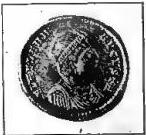
It was probably in 288 that Constantine was born to her at Naissus in Moesia (modern Niš). Five years later, when Constantius Chlorus was raised by Diocletian to the dignity of Caesar, he had to send her away in order to marry Theodora, stepdaughter of the emperor Maximian, and thus forge that kinship which was deemed useful to the stability of Diocletian’s tetrarchic system. The son, however, always held his mother in great honor, conferred on her the title of Augusta, placed her effigy on coins, and gave her name to a city in Bithynia. Eusebius (Vita Constantini, III, 47, a) asserts that it was the son who converted the mother to Christianity, which may perhaps correspond to the writer’s desire to heap merits upon Constantine.
E. displayed her piety through abundant alms and the construction of new churches at Rome (S. Croce in Gerusalemme or the Sessorian Basilica), at Constantinople (together with her son, the great Basilica of the Apostles), at Bethlehem (Basilica of the Nativity), and on the Mount of Olives (Basilica of Gethsemane). In her old age she went on pilgrimage to Palestine, where she is said to have sought and found the True Cross (q.v.). A portion of the holy wood she is believed to have brought back to Rome and placed in her Basilica of S. Croce. She died, it seems, in 335 at Constantinople, but according to Eusebius her body was transported to Rome and buried in the round-plan mausoleum known as Tor Pignattara on the via Prenestina, in the imposing porphyry sarcophagus found there and now in the Vatican Museums.
BIBL.: Sources: Eusebius, Vita Constantini; Zosimus, Historia, II, 8; Eutropius, Breviarium, X, 2; the coins bearing her effigy, in J. Maurice, Numismatique Constantinienne, I, Paris 1908, pp. 261, 408. Literature: A. M. Rouillon, S. E., Italian version, Rome 1908; J. Maurice, Ste Hélène, Paris 1929. On the foundations in Palestine cf. F. Nau, Les constructions palestiniennes dues à ste Hélène, in Revue de l’Orient chrétien, 10 (1905), pp. 162–88; A. Heuneberg, Grabschkirche und Apostelkirche, zwei Basilikon Kantantini, II, Die Apostel Kirche in Kantantinopel, Leipzig 1908; H. Vincent and F. M. Abel, Bethléem, le sanctuaire de la Nativité, Paris 1914; H. Vincent, in Comptes rendus de l’Académie des inscriptions, 1935, pp. 350–82 and in Revue biblique, 45 (1936), pp. 541–74; 46 (1937), pp. 93–121; R. Krautheimer, Corpus basilicarum christianarum Romae, I, fasc. III, Vatican City 1940, pp. 165–94; Martyrologium Romanum, p. 346.
Roberto Paribeni
II. ICONOGRAPHY
From earliest times she has been depicted wearing a diadem or crown and dressed as an empress, and her individual attribute is the Cross, whose discovery lies at the heart of her legend and cult. The prototype of the Eastern representations paired Saint Helena with Constantine beside the True Wood: probably created in connection with the Feast of the Exaltation of the Cross, it is transmitted in an 8th-century Syriac homiliary and in the Byzantine reliquaries of Gran and Nonantola (11th century), and survived into the late frescoes of Mount Athos and Wallachia (16th century) as well as in Russian icons. In Western art images of Saint Helena are equally widespread north and south of the Alps: German examples range from a 12th-century Salzburg miniature to two Romanesque frescoes in Cologne (S. Gereon) and paintings by L. Cranach the Elder and B. Bruyn; Italian examples extend from some 14th-century miniatures to works by Chiodarolo, Cima da Conegliano, Moretto and Palma Vecchio, from A. Rizzo’s marble group (Venice, S. Apollinare) to the statue by Bolgi
Cite this article
“ELENA.” Enciclopedia Cattolica, vol. V (1950), p. 149. Azione Romana digital edition, https://azioneromana.com/article/elena.