Machine translation of the 1948–1954 Italian original. The original text is authoritative.
FEDELE. - The ancient Christians called fidelis (in Greek πιστός) one who had received the sacrament of Baptism, who had obtained the grace of Faith "Fidem accepit" or "percepit"
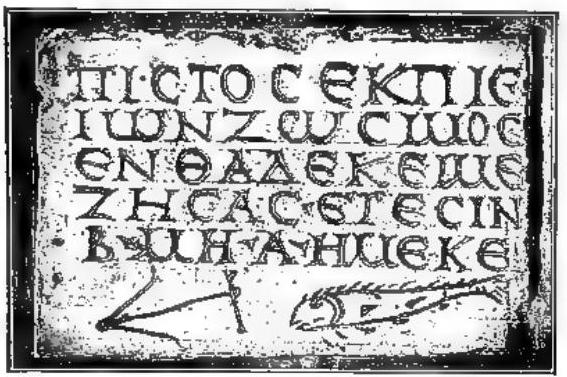
(Int. Enc. Cott.) FEDELE - Sepulchral inscription of Zosimus, son of a fideles (3rd century) - Rome, Museo Cristiano Lateranense. (E. Diehl, Inscriptiones Latinae Christianae veteres, Berlin 1924-31, no. 1529 A).An inscription from Catania records a certain Julia Florensia "pagana nata, fidelis facta" (ibid., no. 1549); while one from the Lateran mentions a Zosimus παντός ἐκπαν-σών, that is, a fidelis born of Christian parents (O. Marucchi, Monumenti del Museo Cristiano Pio Lateranense, Milan 1910, plate 57, no. 19). In the same Museum is preserved the inscription of a child Apronianus, whose grandmother, who loved him dearly, seeing him in danger of death, obtained from the Church that he might die as a fidelis "petivit de Ecclesia ut fidelis de saeculo recessisset".
The term is used at times, sporadically, in Rome, Trier, and Spain; it is frequent in Aquileia, and common in Christian sepulchral epigraphy of Africa.
BIBL.: H. Leclercq, Fidèle, in DACL, V, II, coll. 1586-92; E. Diehl, Inscriptiones Latinae Christianae veteres, I-III, Berlin 1924-31, V. indice. Enrico Josi
Cite this article
“FEDELE.” Enciclopedia Cattolica, vol. V (1950), p. 671. Azione Romana digital edition, https://azioneromana.com/article/fedele.