
FENICE. – A symbolic bird originally from India, according to the Physiologus (J. Strzygowski, Der Bilderkreis des griechischen Physiologus, Leipzig 1890, p. 4), and from Arabia, according to St Clement, who recounts its legend (I Cor. 25; PG 1, 261), and Tertullian (De resurr. curnis, 13; PL 2, 857–58), whereas for Eusebius it was «avis Aegyptia» (Vita Constantini, IV, 72; PG 20, 1228). For Christians it was a symbol of the resurrection and, as such, is also found represented with a radiate nimbus.
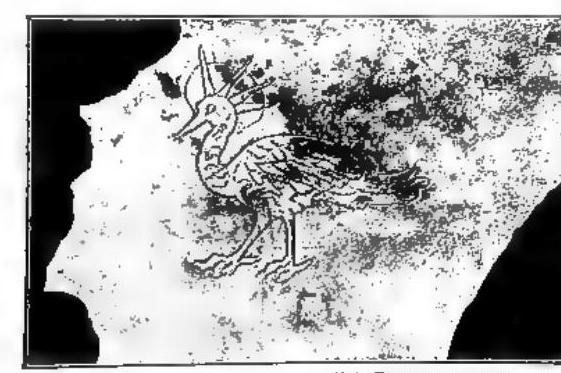
(feb. Post, Scottish archaeological commission)
FENICE – Marble engraving with a phoenix (4th century) – Rome, cemetery of S. Callisto.
It appears in the sarcophagus of Verona and in the one placed beneath the altar of the Madonna della Colonna in S. Pietro in Vaticano, reused to contain the remains of Popes Leone I and IV (id., loc. cit., I, p. 177, pl. 150, 2; p. 183, pl. 154, 4). In mosaics, the phoenix appears several times, either isolated, as in the dome of the baptistery of Naples (id., Mosaiken, pl. 20), or above the palm, placed behind the image of s. Paolo, as in the apses of SS. Cosma e Damiano (526–30), S. Cecilia, and S. Prassede (817–24); the phoenix is found even as a decoration on the cloaks of the archangels Michele and Gabriele in S. Apollinare in Classe at Ravenna (6th century), and in the lower part of the splendid Byzantine stole of s. Agnese in the apse of her basilica on the Via Nomenstana (625–38). It also appears in the mosaic pavement of the church of S. Genesio at Thiers (Puy-de-Dôme), dating from the Merovingian period (L. Brehier, Les mosaïques mérovingiennes de Thiers, in Faculté des lettres de Clermont Ferrand, Mélanges littéraires publics à l'occasion du centenaire de sa création, Paris 1910, pp. 69–85). In the destroyed fresco of the oratory of S. Felicita in the baths of Tyre, dated to the 6th century, the phoenix with the nimbus was painted at the top of a palm (G. B. De Rossi, Scoperta d'una cripta storica nel cimitero di Massimo ad sanctum Felicitatem sulla Via Salaria nova, in Bull. d'arch. christ., 4th series, 3 [1884–85], p. 157 supplement). Identified by its name, it is engraved on the architrave of the central door of the ancient basilica of S. Paolo, now in the cloister.