Machine translation of the 1948–1954 Italian original. The original text is authoritative.
GRÜNEWALD, MATHIS. — Born probably in Aschaffenburg in the second half of the 15th century, active from 1500 to 1528 in the cities of the Middle Rhine, especially Mainz, he was cited in 1531 by Melanchthon, alongside Dürer and Cranach, as one of the greatest German painters. Only one of his works is signed other than with a monogram, and only recently was the identification of the artist with Mathis Gothardt-Neithardt proposed, on the basis of several documents and the will.
His early works, including the Christ Mocked of 1503, which already reveals an absolute artistic coherence, show, especially in the use of light figures against a dark-blue background, analogies with the works of Holbein the Elder, traces of Mantegnesque and Leonardesque influences, almost certainly filtered through Flemish painting, with which G. seems to have been closely connected, particularly in his love of the macabre and the fantastic derived from Bosch.
(from E. Heidrich, Die Altdeutsche Malerei, Jena 1911, pl. 130)
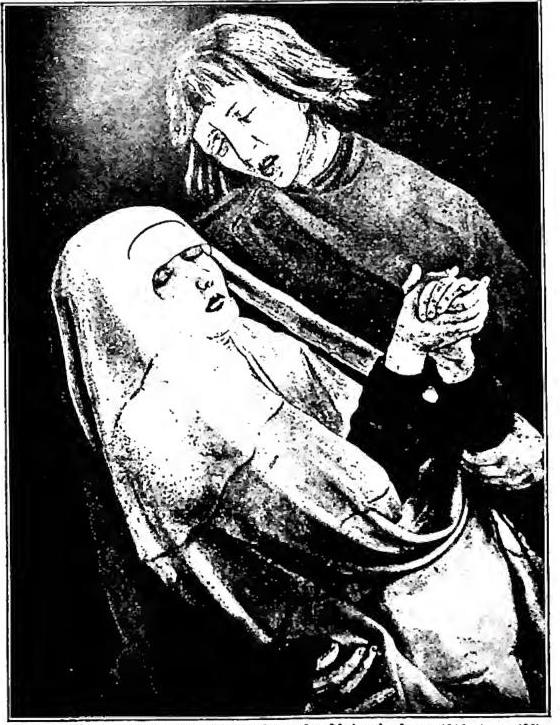
GRÜNEWALD, MATHIS - The Virgin and S. Giovanni. Detail of the Crucifixion of Isenheim (1512–16) - Colmar, Museum.
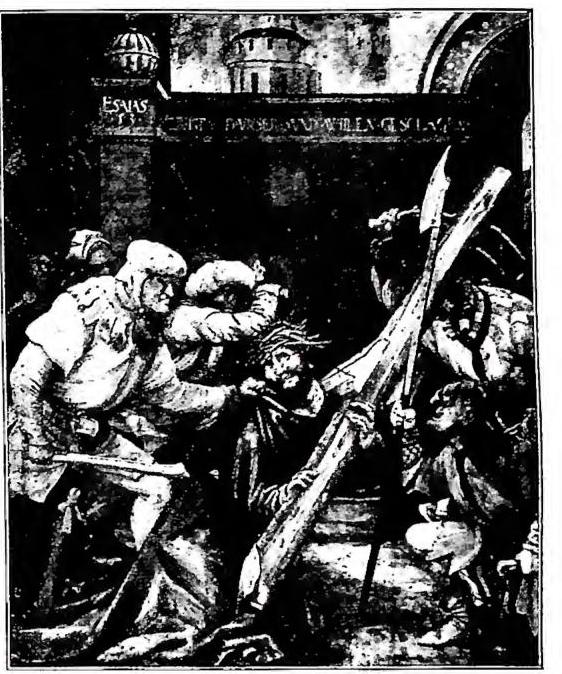
(courtesy of Dr. B. Degenhart) GRÜNEWALD, MATHIS - Christ Falling beneath the Cross, Karlsruhe, Picture Gallery.M. G. is, in a certain sense, the German painter most distant from the taste of the Italian Renaissance; his painting is characterized by vivid coloring, at times brutal realism, and exceptional expressive power. Several drawings and 14 panels of his works have survived, among them the deservedly celebrated winged altarpiece of the collegiate church of Isenheim (1511), the Madonna of Stuppach (1517–19), and the Crucifixion of Aachen (1520).
BIBL.: H. A. Schmid, s. V. in Thieme-Becker, XV, pp. 134–137 with bibliography: F. Knapp, G., Leipzig 1935; G. Nicco, Per l'interpretazione dell'arte di M. G., in L'arte, new series, 3 (1932), pp. 200–20. Eugenio Battisti
Cite this article
“GRÜNEWALD, MATHIS.” Enciclopedia Cattolica, vol. VI (1951), p. 713. Azione Romana digital edition, https://azioneromana.com/article/grunewald-mathis.