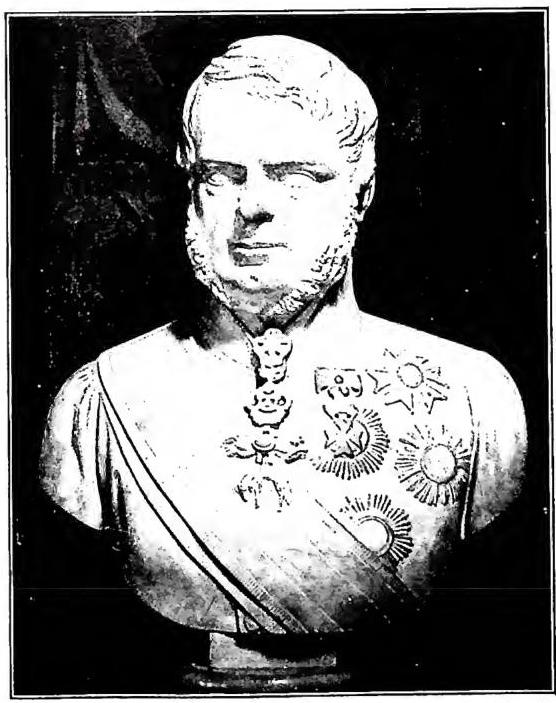
LEOPOLDO II, grand duke of TOSCANA. — Born on 3 October 1797 in Firenze, died on 29 January 1870 in Roma. Son of Ferdinando III and Maria Luisa Amalia di Napoli, he left Firenze with his family after the French invasion in 1799 and followed his father in his peregrinations abroad, to Salisburgo and Würzburg. Returning to his homeland after the fall of Napoleon, upon the death of Ferdinando III in 1824 he became grand duke. Well prepared for public administration, L. proved to be a sovereign of uncommon gifts.
Deeply concerned with the welfare of his subjects and the country’s economic well-being, he granted hospitality to those who, persecuted elsewhere, sought refuge in Toscana. L. allowed the first congress of Italian scientists to be held in Pisa in 1839, a gathering of not only academic but also political character, in support of the national idea. In 1848 L. granted a constitution and consented to Toscana’s participation in the first war of independence; however, unwilling to sanction the law on the Italian Constituent Assembly, he withdrew to Gaeta, where Pio IX was already residing. Upon his return, he continued negotiations with the Holy See for the conclusion of a definitive concordat (some preliminary articles had already been agreed upon on 30 March 1848), signed in Roma on 25 April 1851. The constraints of Leopoldo I’s jurisdictional legislation were partially relaxed, to the benefit of good relations between Church and State. In 1859 L., having lost the grand duchy, settled in Austria. He went to Roma in November 1869 to escape the rigours of the northern climate, and died there a few weeks later.