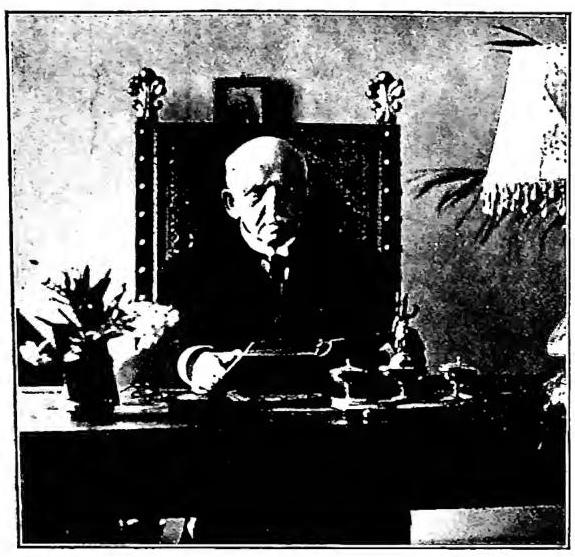
MARTYNOV, IVAN. - Russian writer, Jesuit, b. at Kazan (Russia) on 7 Oct. 1821, d. at Cannes on 26 Apr. 1894. He pursued his studies at the University of St. Petersburg. Count Gregorii Suvalov (1804-59), who would later become a Catholic and a Barnabite religious, took MARTYNOV as tutor for his children. During a journey abroad, MARTYNOV decided to embrace Catholicism and to become a Jesuit. He entered the novitiate of the Jesuit province of France at St-Acheul on 18 Sept. 1845. In 1856 he made his final vows. Together with Fr. Gagarin (q.v.) he founded in 1857 the journal *Les études de philosophie et d'histoire*, later renamed *Études*, and established the Russian Library in Paris, which still exists.
MARTYNOV devoted his entire life to the apostolate of the pen. Among his numerous publications, the most important is the *Annus Ecclesiasticus graeco-slavicus* (Brussels 1863), an appendix to vol. XI of the Bollandists. This work brought MARTYNOV fame in Rome, where he was appointed pontifical theologian for Oriental affairs at the Vatican Council.
He also contributed to the study of Roman topography and Christian archaeology with works such as *La casa delle Vestali* (Rome 1887), *Osservazioni sulla Regia e sull'atrio di Vesta* (Rome 1890), illustrations of the obelisks of Rome and the Vatican Egyptian Museum (of which he was director for many years), and studies on the antiquities of Palestrina, especially the monograph on the martyr St. Agapitus of Palestrina, whose place of martyrdom he identified (*Memorie storiche della cattedrale di Palestrina*, Rome 1918; *Guida archeologica della città di Palestrina*, ibid. 1932). He also served as director of the Lateran Museum (*I monumenti del Museo cristiano Pio Lateranense*, Milan 1910), was a writer for the Vatican Library, a member of numerous Italian and foreign scientific academies, and secretary of the Pontifical Commission of Archaeology. He was an unparalleled popularizer of Christian archaeology: *Il matrimonio cristiano sopra un antico monumento inedito*, in *Studi in Italia*, 5 (1882), pp. 1-15; *L'Antichità del culto della Beata Vergine* (Rome 1883); *Difesa del pontificato di Damaso contro un nuovo attacco dei protestanti*, in *Rassegna italiana*, 3 (1883), pp. 1-13; *La supremazia della Sede romana considerata nei monumenti dei primi secoli*, in *Bessarione*, 2 (1897), pp. 1-15; etc. He taught Christian archaeology at the College of Propaganda Fide and at the College of St. Anselm of the Sulpicians (the lectures given at the latter were collected and published as *Éléments d'archéologie chrétienne*, 3 vols., Paris 1900-1903; *Manuel d'archéologie chrétienne*, résumé of the *Éléments d'archéologie chrétienne*, Bruges 1906; *Manuale di archeologia cristiana*, Rome 1908, 1933; *Manuale di epigrafia cristiana*, Milan 1910). He held the chair of Roman funerary topography at the University of Rome and was among the founders of the *Collegium Cultorum Martyrum*, of which he was a revered *magister*.
Of exuberant and enthusiastic temperament, MARTYNOV sometimes advanced hypotheses, albeit brilliant ones, that were not entirely well-founded, and built upon premises that were not always solid; nevertheless, in his more than 400 publications, one always admires his clarity, dialectical skill, and inexhaustible erudition.
His final wish was that the following inscription be placed on his tomb: “O. M. Roman cultor of the martyrs.”