Machine translation of the 1948–1954 Italian original. The original text is authoritative.
MODESTIA and IMMODESTIA. — Modesty (from the Latin modestia) is a moral virtue, attached to temperance, which moderates (hence its name) or regulates human acts that present little difficulty: acts, gestures, and external goods of the body, as well as the internal acts presupposed by them. Opposed to it is the vice of immodesty, which is the voluntary lack of moderation in the acts just indicated. Not infrequently, this word denotes impurity.
Four species of modesty are distinguished, two concerning internal acts and two concerning external acts and goods; opposed to them are multiple forms of immodesty:
a) Humility, which leads one to evaluate and love human lowliness according to reason and faith, and to moderate the desire for superiority. b) Desire for knowledge (studiositas), a virtue which, on the one hand, reasonably stimulates the search for truth (and in that case is rather a part of fortitude), and on the other restrains the desire to know what is beyond or exceeds the subject’s capacity. c) Modesty in bearing or in conduct, which leads one to perform ordinary acts decently and honestly
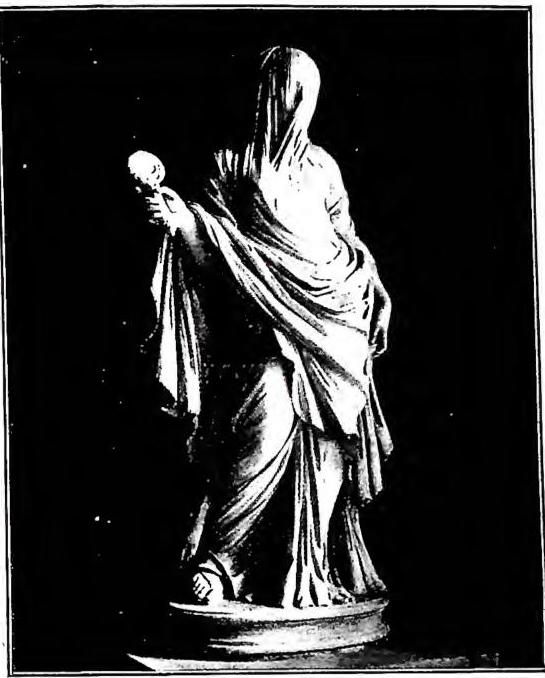
MODESTIA ED IMMODESTIA - La M. Sculpture in marble by G. Sammartino (18th century) - Naples. Museo nazionale.(decentia, if it regulates these acts according to the requirements of the agent; bona ordinatio, if according to the requirements of other persons, of time, place, etc.), and play (eutrapelia). This is modesty in its most obvious and common sense, rendered sacred by the fact that the human body is a member of Christ and human members are temples of the Holy Spirit (I Cor. 5, 15 and 19; cf. Eccl. 19, 26). It therefore requires respect for one’s own body and that of others, and civility in every act; and it forbids every form of disorderliness, such as soft and effeminate behavior, rigidity and affectation in standing, leaning, moving, eating; as regards the eyes (cf. Mt. 6, 22-23), it requires not only that guilty or dangerous glances be avoided, but in general that they be kept composed and curiosity to see be restrained; as regards hearing and speech, that nothing harmful or useless be listened to or said (cf. I Cor. 15, 33; Iac. 1, 26). d) M. nell'ornamento (m. ornatus, cultus, apparatus exterioris), which moderates the use of clothing, accessories, dwellings, banquets and the like, according to the requirements of persons, times, places and customs.
BIBL.: s. Bernardo, Tractatus de gradibus humilitatis et superbiae: PL 182, 941-72; Summ. Theol., 2ᵃ-2ᵃᵇ, q. 120, s. 2, ad 3; q. 143; q. 160; q. 168, s. 1; s. Francesco di Sales, Introduzione alla vita divota, part 3ᵃ, S. Pier d'Arena 1912, pp. 160-349; P. Lumberras, De fortitudine et temperantia, Roma 1939, nn. 159 e 307-63; Vl. Iankélévitch, Traité des vertus, Parigi 1949, pp. 298-356. Giuseppe Pistoni
Cite this article
“MODESTIA ED IMMODESTIA.” Enciclopedia Cattolica, vol. VIII (1952), p. 723. Azione Romana digital edition, https://azioneromana.com/article/modestia-ed-immodestia.