PIZARRO, FRANCISCO. — Spanish conquistador of Peru, born around 1475 at Trujillo (Cáceres, Extremadura), died on 26 June 1541 at Lima. The illegitimate son of Gonzalo P., he received no education, nor did he learn to read or write, and his father employed him as a swineherd.
The marvelous stories about the New World strongly stirred his imagination, and P. seized the first favorable opportunity to go there. Having embarked at Seville (though it is not known in what year), he is recorded as residing in Hispaniola (S. Domingo) in 1509, when he left that island together with Alonso de Ojeda to sail toward the mainland, where he participated in the founding of the colony of S. Sebastiano, in the Gulf of Uraba, remaining there as Ojeda’s captain and lieutenant until disease and the hostility of the Indians forced him to withdraw. Subsequently he accompanied Balboa on the expedition that led to the discovery of the Pacific Ocean, and Pedro Arias Davila to Veragua, and settled in Panama. There he received from Pascual de Andagoya, who had traveled along the coasts of the South American continent, detailed information about a very wealthy Empire in those regions. P. reached an agreement with the captain and colleague Diego de Almagro and with the priest Fernando de Luque to organize an expedition to those distant lands. Financed by Fernando de Luque, P. departed from Panamá in Nov. 1524, but after many hardships and fierce battles with the Indians, he had to abandon the undertaking; nevertheless, the gold and silver received as gifts from or taken from the natives made a second expedition possible in 1526–27. This brought P. as far as Túmbez, on the borders of the Inca Empire, whose emperor Huayna-Capac he heard praised for his exploits and power. Having obtained definitive certainty of the existence of the wealthy Empire, P. went to Spain in 1528 to secure Charles V’s support for the conquest of the country. By the capitulation of Toledo, on 26 July 1529 the Emperor granted him the lifelong governorship and captaincy-general of New Castile (the name by which Peru was then designated); Almagro was granted the alcaldía of the fortress of Túmbez and the right of succession to P. in the event of the latter’s death, while Fernando de Luque received the bishopric of Túmbez and the office of general protector of the Indians of the region. Having returned to America, he sailed from Panamá in Jan. 1531 with three ships for the definitive conquest of the Empire, which was facilitated by a civil war raging in the country. Having captured Atahualpa, who had usurped the throne of the Indians, by a stratagem at Cajamarca, P. occupied Cuzeo, the capital of the Empire, on 15 Nov. 1533, obtaining there an immensely rich booty. On 18 Jan. 1535 P. moved to Lima, where he established the capital of New Castile. Subsequently, disagreements arose between P. and Almagro, who claimed direct government of part of the conquered lands according to the agreements concluded before P.’s departure for Spain. P.’s brother, Fernando, brutally suppressed Almagro’s claims, having him condemned to death and hanged. This summary act of justice earned P. the hatred of Almagro’s numerous followers, who decided to seize the opportune moment to take revenge. On 26 June 1541 the conspirators, led by Juan de Rada, succeeded in entering P.’s palace and killed him despite his fierce defense.
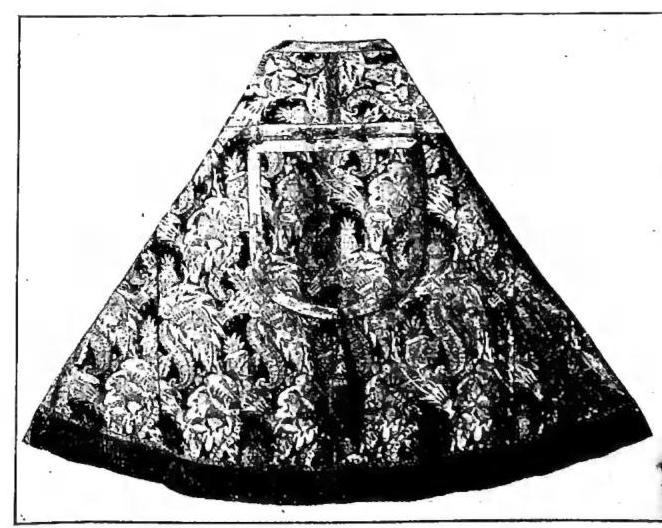
(photograph: Bildarchiv d. O. Nationalbibliothek) PIVIALE — P. no. A. 28 with monogram C. VI (Carlo VI, 1711–40) — Vienna, Geisl. Treasury.