Machine translation of the 1948–1954 Italian original. The original text is authoritative.
PLYMOUTH, DIOCESI di. – City and diocese in England constituted as an independent entity in 1850; it comprises the counties of Devonshire, Cornwall, Dorsetshire, and the Scilly Isles. It contains 126 parishes, served by 117 secular priests and 84 religious. There are 58 convents, 8 male religious communities, 121 public churches, 32 others, 73 schools, 6 hospitals and institutions. The total population (1931 census) is 1,290,167 inhabitants, of whom approximately 33,275 are Catholics. In 1948 there were 360 conversions, 1,284 infant baptisms, and 592 marriages (including mixed marriages).
Devonshire and Cornwall, together with the Scilly Isles, were part of the ancient diocese of Exeter, whose last bishop, James Turberville, died in 1570; Dorsetshire belonged to that of Salisbury, whose last bishop was Cardinal Peto, who died in 1558. The bishop since 1947 has been Mgr. Francis Joseph Grimshaw, whose predecessors were George Errington (1851–55), William Vaughan (1855–1902), Charles Graham (1902–11), John Keily (1911–28), John
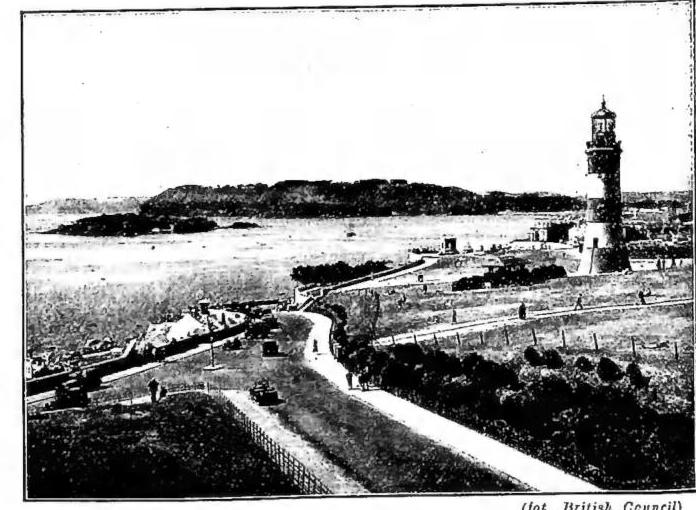
PLYMOUTH, DIOCESI di – Lighthouse and view of the coast. (photo British Council)P. Barrett (1928–46). The cathedral was begun in 1856. In 705 the episcopal see of Wessex was established at Sherborne (Dorset), from which the new diocese of Crediton (Devonshire) was detached in 910; it was transferred to Exeter in 1049, comprising Devonshire and, after 1049, also Cornwall, formerly a diocese whose cathedral was at St. Germans. The Protestant diocese of Truro was founded in 1876. In 1075 Sherborne was transferred to Salisbury. This region abounds in very beautiful ancient churches, for example, Exeter Cathedral, St. Germans (formerly a cathedral), Wimborne, Ottery St. Mary, and at Lanceston. Ruins of abbeys are found at Tor, Buckland, Ford, Milton, Tavistock, and elsewhere. In the sixteenth century Devonshire and Cornwall heroically opposed the national apostasy, especially in the Western Rebellion of 1549, which was suppressed with great ferocity with the aid of continental mercenaries, among whom were also many Catholics. Their leader, Sir Humphrey Arundell, a confessor, was killed at Tyburn on 27 January 1550. The diocese gave martyrs to the Church: the bb. Richard Reynolds (1535), Cuthbert Mayne, protomartyr of the seminarians (1577), Thomas Ford (1582), Thomas Hemerford (1584), William Way (1588), John Cornelius or O’Mahony, the son of Irish parents (1594), and the venerables John Griffith (1539), John Adams (1586), and John Hambley (1587). The birthplace of the b. John Slade is uncertain. Among the faithful families, the Arundells of Lanherne deserve mention; their house became a Carmelite convent in 1794, as did those of Weld of Lulworth and Clifford of Ugbroke. At Lulworth, where King George III was a guest in 1789 and 1791, John Carroll, the first bishop of Baltimore and the first Catholic bishop in the United States, was consecrated in 1790. Among the oldest missions are Ugbroke (1671), Chidcock (1810), and Sclerdor (1843). Among converts from the nineteenth century onward, mention should be made of Sir Henry Trelawny (d. 1834), Robert Stephen Hawker, the poet (d. 1875), and Mary St. Leger Harrison, daughter of the Protestant Charles Kingsley, who died in 1931.
In 1882 the ancient abbey of Buckfast was acquired by a community of French Benedictines (Cassinese Congregation), who celebrated the first Mass there in October of that same year and began to rebuild the abbey in the style of the twelfth century. The magnificent work was completed and the church consecrated in 1932.
BIBL.: R. A. McElroy, Blessed Cuthbert Mayne, London 1929; C. M. Graham, s. V. in Cuth. Doc., XII, pp. 171–72; The Catholic Directory 1930, London 1930, pp. 385–95. Enrico G. Rope
“PLYMOUTH, DIOCESI DI.” Enciclopedia Cattolica, vol. IX (1952), p. 986. Azione Romana digital edition, https://azioneromana.com/article/plymouth-diocesi-di.