
HUMERAL VEIL. — A long strip of silk or linen placed over the shoulders, with the two ends hanging down over the chest, used to cover the hands while holding sacred objects.
The following are distinguished: 1) the humeral veil of the subdeacon, made of silk in the color prescribed for Holy Mass, ordinarily without ornamentation: a) for carrying the chalice prepared for the Offertory to the altar; b) for holding the paten from the Offertory until the “Pater noster”; 2) that of the acolyte who carries the mitre or the pastoral staff during pontifical functions (of linen or unornamented silk, white or in the color prescribed for the pontifical function); 3) that of the priest during Benediction of the Eucharist, in Eucharistic processions, and also when carrying the Eucharist or viaticum to the sick (always of white silk and richly ornamented).
At first the acolyte “paternarius” held the paten with the “sindon” from the Offertory until the “Pater noster” (Ordo roman., I [Andrieu], 91). This “sindon” was a ceremonial cloth intended to prevent the paten from being touched directly with the hand, perhaps in the form of the present humeral veil (“sub humero habens sindonem in collo ligatam”). The office of the acolyte “paternarius” (which survived in France and England until the 18th century) was replaced in the 12th-12th century by the subdeacon, who at first held the paten with the same “mappula” which, called the “offertory,” (Ord. Rom.
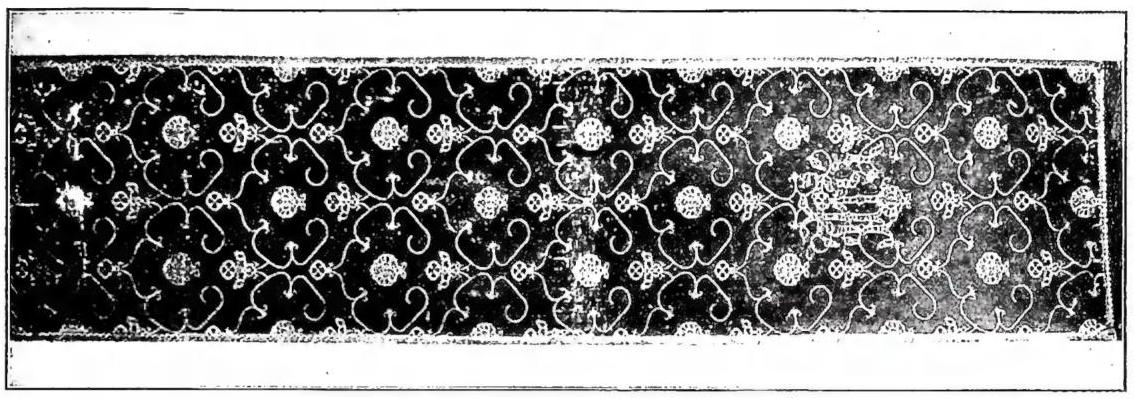
The veil used for Eucharistic benediction came into use in the 14th century (Ord. Rom., XIV [Mabillon], 77); it was made of silk and was initially worn like the subdeacon’s veil (the end hung over the left shoulder «sibi pendet super humerum sinistrum»), and subsequently like the V. o.