Machine translation of the 1948–1954 Italian original. The original text is authoritative.
BALDOVINO
I, emperor of CONSTANTINOPLE. — Sixth count of Hainaut and ninth count of Flanders, born at Valenciennes in 1171, died, perhaps at Adrianople, around 1205. In 1185 he married Maria, daughter of Henry of Champagne. Upon the death of his mother, Margaret of Alsace, in 1194, he inherited a large part of Flanders and, upon the death of his father, Baldwin VIII, in 1195, became count of Hainaut. He joined England in the struggle against Philip Augustus and succeeded in conquering Tournai, Aire, and Saint-Omer. He took part in the Fourth Crusade: on 26 June 1202, having entrusted his possessions to his brother, the count of Namur, and to his uncle William of Flanders, he set out for Venice and participated in the capture of Zara. He fought valiantly both in the first and in the second occupation of Constantinople, and on 16 May 1204 was solemnly consecrated in S. Sofia as Latin emperor of the East. He thus found himself ruler of a vast territory, whose actual conquest, however, still remained to be completed. Before long the Latin barons lost interest in the empire and, considering themselves independent, began
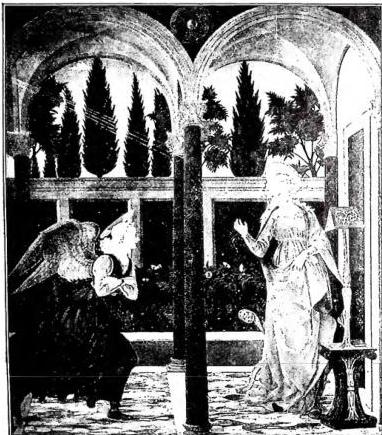
BALDOVINETTI, ALESSIO – The Annunciation – Florence, Uffizi Gallery.civil wars among themselves. The Greeks and Slavs knew how to take advantage of this situation and, under the command of the king of Bulgaria, provoked a violent revolt in Thrace. The crusaders besieged Adrianople, but on 14 April 1205 they suffered a terrible defeat. B. fought with the utmost courage, but was wounded and taken prisoner. Nothing more was ever learned of him, despite the persistent requests made by Innocent III to the king of Bulgaria.
BIBL.: M. Thil-Lorrain, Baudouin de Constantinople, fondateur de l'empire latin, Bruxelles 1882; E. Gerland, Geschichte des lateinischen Kaiserreichs von Konstantinopel, Amburgo 1905, passim (v. indice); A. Luchare, Innocent III et la Question d'Orient, Parigi 1907, pp. 130 ff., 170 ff. and passim; W. Norden, Der IV. Kreuzung, Berlino 1908; R. de Clari, La conquête de Constantinople, Parigi 1924; E. Bréhier, Les croisades, 2ᵉ ed., Parigi 1928, pp. 167–81.
Cite this article
“BALDOVINO I, IMPERATORE DI COSTANTINOPOLI.” Enciclopedia Cattolica, vol. II (1949), p. 442. Azione Romana digital edition, https://azioneromana.com/article/baldovino-i-imperatore-di-costantinopoli.