
CAMERUN. – Region of Equatorial Africa extending from the head of the Gulf of Guinea to Lake Chad, the Logone, and the lower course of the Congo. On the eve of the First World War, the German colony of the same name covered an area of 745,000 sq. km. By the Treaty of Versailles (28 June 1919; Articles 119–158), the eastern territories (on the left bank of the Logone; 225,000 sq. km.) ceded to German C. in 1911 were returned to France (A.E.F.), while the remaining territories were formed into two mandates. The larger, entrusted to France, covers 451,500 sq. km. and has 2.8 million inhabitants (of whom 1.6 million are Bantu, 800,000 Sudanese, and approximately 4,000 Europeans); the smaller, comprising the western strip of the country, was assigned to Great Britain (88,266 sq. km. with 926,000 inhabitants), which administratively annexed it to neighboring Nigeria.
The coastal zone, low-lying and marshy, has a hot, extremely humid, and unhealthy climate; inland, the terrain rises into hills and then into a plateau (800–1,500 m.) with a less extreme climate and a dry season, and is more densely inhabited. Equatorial forest and savannas dominate the landscape, but the soil is suitable for highly varied crops (cocoa, peanuts, sesame, bananas, coffee, tobacco, etc.) and capable of great development. Unfortunately, the population
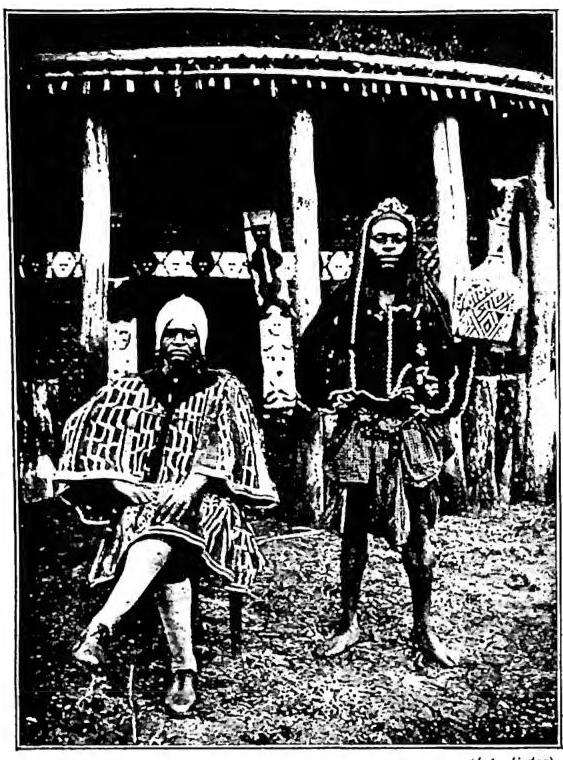
The missionaries’ activity first extended to the coastal region and then to the interior, with the result that in 1913—one year before the outbreak of the European war—the mission counted 28,469 Catholics and 17,650 catechumens, distributed among 14 principal stations and cared for by 34 fathers, 36 brothers, 29 sisters, and 223 catechists. The educational activity
was highly developed (200 schools with 20,000 pupils), as were the written apostolate (catechisms, prayer books, linguistic studies) and agricultural and economic work. In 1907 the apostolic experience of those years was, as it were, codified in the norms of the Synod. Shortly before the war (1912), the eastern interior region (Nuovo C.) was detached from the vicariate to form the apostolic prefecture of Adamana, entrusted to the priests of the Sacred Heart, while the region of Butiko, in the south, was entrusted to the German fathers of the Congregation of the Holy Spirit. The war also broke out in C., and the mission suffered the destruction of churches and stations and the deportation of several missionaries to England, while others were imprisoned. The missions in the French part passed to the French fathers of the Holy Spirit, and those in the English part to the fathers of the English Institute of Mill Hill. At present the missions of C. are as follows: Douala (v.), Yaoundé (v.), Foumban (v.), Garoua (v.) in French C., Buea (v.) in British C., with a Catholic population approaching half a million.
Giovanni B. Tragella