
INTERSTIZI. — Intervals of time established by the Church between Orders, for the testing and formation of clerics and the exercise of each Order.
The discipline of the i., which was not always uniform, dates back to the earliest centuries and originated from the fixed times of ordinations and from the obligation to exercise oneself in the lower Orders before ascending to the higher ones. The i., observed at first by custom, were later sanctioned by laws. The Council of Sardica (can. 10) contains the first prescription that the episcopate should be reached through the lower grades
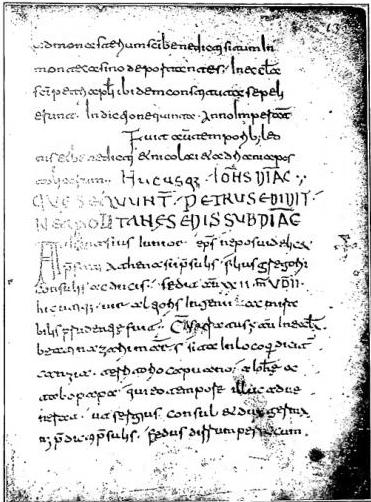
lower; the popes subsequently established this as a general norm. Siricius (epist. I, 9-10: PL 13, 1142-43) and Zosimus (epist. IX, 3: PL 20, 672-73) established distinct and lengthy intervals of time between the Orders. The primitive discipline was strict, but there were no lack of exceptions, due to the candidate’s virtue, ambition, and intrigues. When the recruitment of the clergy became difficult because of the devastation caused by war and famine, Gelasius I provisionally reduced the i. (epist. IX, 1-3: PL 59, 48-50). These reductions subsequently became the norm in many councils of Gaul and Spain. In the Decretals the law assumed a more stable and less severe form concerning the number and duration of the i. It was permitted to receive the four minor Orders on the same day, but not the subdiaconate as well; nor could two sacred Orders be received on the same day or on two consecutive days. The Council of Trent (sess. XXIII, chaps. 11, 13, 14) revived the ancient law of the i., tempering it with the powers granted to the bishop. It prescribed an interval between the individual minor Orders, for the cleric’s exercise and progress in virtue, unless the bishop deemed otherwise appropriate. Between the acolytehood and the subdiaconate, and between the individual sacred Orders, it established one year, provided that necessity or usefulness, in the bishop’s judgment, did not require otherwise. It nevertheless prohibited conferring two sacred Orders on a cleric on the same day.
The CIC mitigates these prescriptions (can. 978). The i. between the first tonsure and the office of porter, and between the individual minor Orders, is left to the prudent judgment of the bishop, but it is not lawful to confer the first tonsure together with a minor Order, or all four minor Orders together, upon the candidate. Contrary custom is not excluded, but it is debated whether such custom is legitimate. At least one year is prescribed between the acolytehood and the subdiaconate, and at least three months between the individual sacred Orders. If he judges it necessary or useful for the Church, the bishop may dispense, but without the permission of the Roman Pontiff he may not confer, on the same day, the minor Orders together with the subdiaconate upon the candidate, nor two sacred Orders, any contrary custom being rejected. Five years are prescribed between the priesthood and the episcopate (cann. 331 § 1, n. 3).