Machine translation of the 1948–1954 Italian original. The original text is authoritative.
LAMORMAINI, WILHELM. – Jesuit, confessor to Emperor Ferdinando II, born at La Moire Mannie in Luxembourg (hence his surname, which properly was Germay or Germeau) on 29 December 1570, died in Vienna on 22 February 1648. He was a highly esteemed professor of philosophy (1598–1604) and theology (1606–12) at Graz; rector at Graz (1613–21) and Vienna (1622–24); thereafter confessor to Ferdinando II (1624–37); then once again rector at Vienna (1639–43) and provincial of Austria (1643–45).
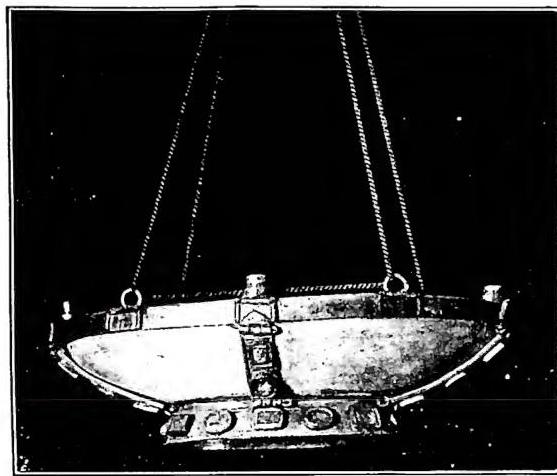
(phot. Alinari) LAMPADA – L. in ivory mounted in gilded silver with ancient gems set into it (10th century) – Venice, Basilica of S. Marco, Treasury.In his office as confessor he was not only the Emperor’s beloved and effective adviser, but also contributed greatly to the restoration of the Catholic religion in Austria. He favored the edict of 1629, by which the Protestants were required to return to the Catholics the ecclesiastical property they had usurped; he openly defended religious toleration toward heretics, advised the establishment of various houses of his Order in the Empire, and played a principal part in the Catholic reform in Austria, Styria, Bohemia, and Moravia. On the other hand, his position, so influential and so well regarded, inevitably created fierce adversaries for him, who accused him of having accepted money in exchange for maintaining silence, of having urged his confrères to deceit and falsehood or to respond with violence against heretics; they went so far as to falsify letters and documents of his and of others, and even made him the hero of disreputable novels. All these accusations were unfounded, and he knew how to defend himself against them; they left intact his reputation as a learned, pious, upright, and unassuming person (“verus et omnibus numeris absolutus Jesu Socius,” Urban VIII said of him).
He wrote: Ferdinandi II, Romanorum imperatoris virtutes (Vienna 1638), in which some flattery of the Emperor and some unfavorable and unjust judgment concerning the memory of Wallenstein are apparent.
BIBL.: L.’s Autobiography was published by F. Ch. Khevenhüller, in Annales Ferdinandei, XI, Leipzig 1723, pp. 595 ff.; part of his correspondence in B. Dudik, Korrespondenz Kaiser Ferdinand II. und seiner erleuchten Familie mit p. M. Breanus u. W. L., Kaiserl. Beichwüttern S. J., Vienna 1876. – For his life: E. Staël, Vita et virtutes p. Guglielmi Germani I., composed in Vienna in 1648 and remaining in manuscript in the archives of the Order; B. Duhr, Wallenstein in seinem Verhältnis zu den Jesuiten, in Hist. Jahrbuch, 13 (1892), pp. 80–99; R. Stiegele, Beiträge zu einer Biographie der Jesuiten W. L., ibid., 28 (1907), pp. 551–69, 849–70; id., Gesch. der Jesuiten in den Ländern deutscher Zunge, II, II, Freiburg im Br. 1913, pp. 691–723. On the falsifications of documents V. Duhr, Jesuitenfabeln, 4th ed., ibid. 1904, pp. 602–603, 684–87; Italian translation, II, Florence 1908, pp. 51–52, 203–205. Celestino Testore
Cite this article
“LAMORMAINI, WILHELM.” Enciclopedia Cattolica, vol. VII (1951), p. 533. Azione Romana digital edition, https://azioneromana.com/article/lamormaini-wilhelm.