
MACARIO di MAGNESIA. — At the “Synod of the Oak” (403), a bishop M. of Magnesia accused Eracle of Ephesus, a friend of St. Giovanni Crisostomo (Fozio, Bibl., cod. 59). This M. is in all probability identical with M. Magnes, to whom a book bearing the title Ἀποκριτικὸς ἢ Μονογενὴς πρὸς Ἕλληνες has been attributed, a work cited by the patriarch Niceforo in his Antirretica (v. J. B. Pitra, Spicilegium Solesmense, I, Parigi 1852, p. 307).
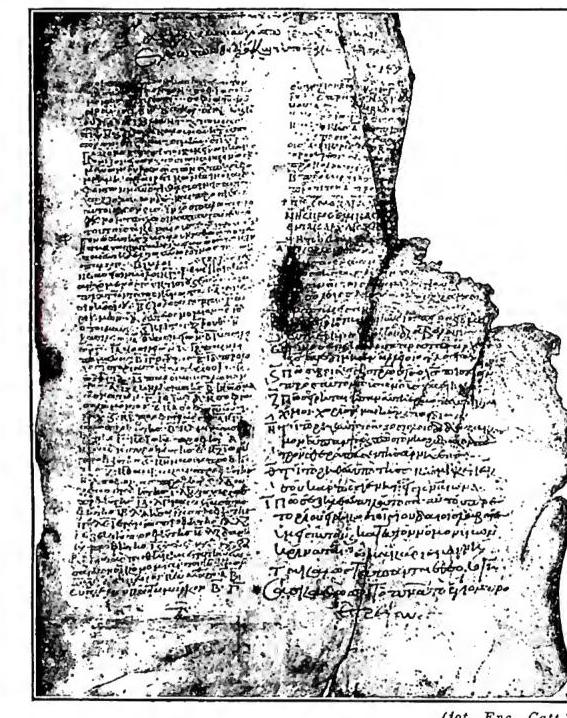
At the end of the 15th century, two manuscripts of this work still existed in the Salentine peninsula (v. G. Mercati, Nuove note di letteratura biblica e cristiana antica [Studi e testi, 95], Città del Vaticano 1941, p. 49 and n. 2); one manuscript was recorded by Laskaris in Venice in 1524, and an extract was copied by Francesco Torres (or Turriano) in 1552 for polemical purposes against the Protestants; another complete manuscript appeared in Epiros, at Athens, and was copied by Blondel. All these original manuscripts have been lost, but recently Cardinal Mercati discovered in a Vatican codex the indices (πίνεχες) of the first 3 books of M. (v. Mercati, loc. cit., p. 49 ff). Through these tables of books I and II, about fifteen questions raised against the pagan adversary are now known, of which nothing had previously been known. Nothing certain is known about the person of the pagan adversary whom M. attacks in his reply to objections concerning certain biblical texts. It seems that the pagan adversary made use of Porphyrius’s great work against the Christians. M. was not a strong apologist when confronted by the Greek polemicist. His theology, however, has not yet been properly studied. Probably
Luhaskaten des Niketas V. Heraklea [Texte und Untersuchungen 22],
Lipsia 1902, p. 90 ff. to 107) is still under study (v. Mercati, loc. cit., p. 52, n. 1).