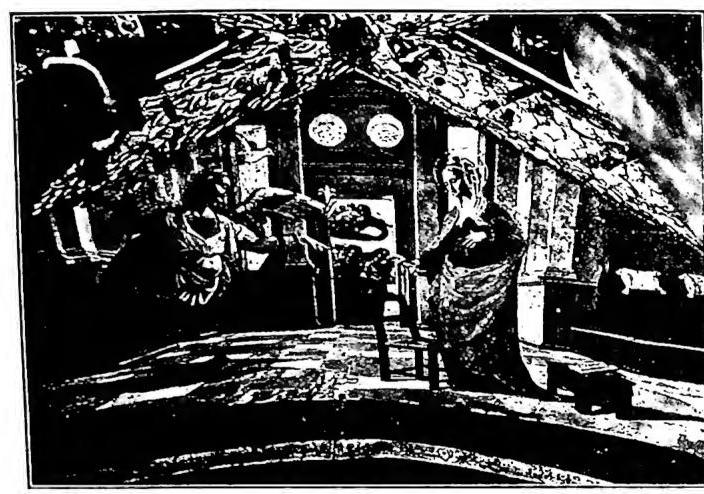
MARCIAΝO, EMPEROR OF THE EAST. — Born perhaps in Thrace around 390, of humble origins, he made his way, as was customary at the time, through military service, and his extraordinary fortune gave rise to a great many stories, predictions, dreams, and prodigies.
Genseric, king of the Vandals, by whom he had been taken prisoner, is also said to have released him after receiving a revelation of his brilliant future. The truth is that he won the esteem of the powerful magister militum Flavius Ardabur and of his son Aspar, and remained close to them not only on the battlefields but also at the court in Constantinople, where the need for a strong personality was increasingly felt. Indeed, the prestige of the memory of Theodosius I had led Ravenna and Constantinople to tolerate two ineffectual descendants, on whose behalf two women had governed to a greater or lesser extent: Galla Placidia, mother of Valentinian III, at Ravenna, and Pulcheria, sister of Theodosius II, at Constantinople. When Theodosius II died in 450, Pulcheria, knowing that she could not remain alone at the head of the State, chose the sixty-year-old M. as her husband, on the condition that he respect her vows of virginity. Aspar must certainly have approved the choice: being a barbarian, he would not easily have been tolerated on the throne of Rome, whereas M. had at least been born within the borders of the Empire.
M. immediately displayed the characteristics that marked his government: a lofty sense of the dignity of the Empire and upright Christian faith. He notified Attila, king of the Huns, that the Empire no longer intended to pay the tribute that Theodosius II had agreed to pay, and deferentially communicated his election to Pope Leo I. Although he had lived among arms, he declared that he wished, as far as possible, to preserve peace, and he adhered to this programme, even though he did not fail to march against the Huns, in order to ease their pressure on the western regions of the Empire, and defended the frontiers of the provinces of Syria and Egypt against the Saracens and the Blemmyes of Nubia. The suspension of the tribute to the Huns made it possible to reduce the taxes, which were extraordinarily burdensome for this age. Relations with the western part of the Empire were, as usual, not entirely cordial, partly through the fault of the petty Augusti of the West, and partly because M. sought to assert his own primacy in the defence of the Empire, a claim also justified by the catastrophe of the sack of Rome at the hands of Genseric.
Toward the Church of Rome M. was highly deferential, as was certainly desired by the most devout woman who had called him to the Empire, and as was expressed by the epithets with which he was hailed: Christianisimus Imperator, Studiosissimus ecclesiasticæ pacis, Custos fidei. Indeed, in order to remedy the violence of the Council of Ephesus (v.) of 449 (the I. rocinium Ephesinum, as Pope Leo I called it), he wished Chalcedon (v.), at which the Monophysite heresy of Eutyches was condemned and the dogmatic directives sent by Pope Leo I to Flavian, Patriarch of Constantinople, received full recognition (the tomos of Leo I). But in Palestine and Egypt the decisions taken against Eutyches provoked violent opposition.