
ORSOLA, saint, martyr. — She is commemorated in the Roman Martyrology on 21 October together with other unnamed virgins as martyrs of Cologne. The notice derives from an erroneous interpretation of texts, which gave rise to a fantastic legend.
(photo Brockwell)
(from Catalogo dei Muro)
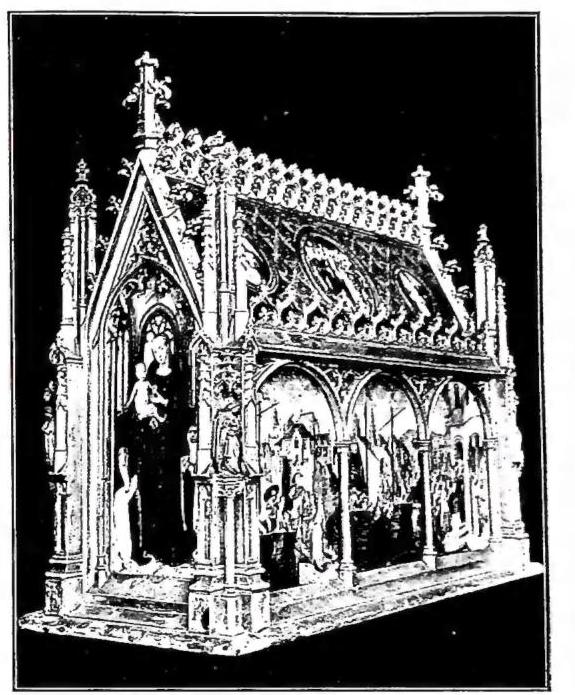
ORSOLA, saint, martyr — Reliquary chest of St. O. with paintings by Hans Memling (ca. 1489) — Bruges, S. Jean Museum of H. Memling.
exorbitant number may have derived from the Roman numeral XI, read as eleven thousand according to medieval usage, or also from a tradition that made O. the eleventh daughter of her family, hence the second name undecimilla (cf. Quintilla, Octavilla, etc.), which was erroneously interpreted. Toward the end of the tenth century a Passio was also written, according to which O. was the daughter of a king of Britain: beautiful and good, she had been raised as a Christian. Asked in marriage by the son of a pagan tyrant, and fearing for her faith, she requested three years in which to consider the matter. During this time, together with eleven thousand girls from the country, she practiced virtue and games, until one day they all suddenly fled. They landed at Tyle and continued on to Cologne. Returning from their pilgrimage to Rome by way of Basel, they found Cologne under siege by the Huns. Attacked by the barbarians, they were all slaughtered except O., who, spared because of her beauty and status, was asked in marriage by the barbarian king. When she refused, she too was killed. A terrible vision put the besiegers to flight, and the inhabitants of Cologne were able to bury all those bodies; Clematius then built the church. Stripped of every legendary superstructure, the story of O. thus reduces itself to the existence of a church dedicated, in Cologne, to several virgins about whom nothing precise is known.
ICONOGRAPHY. — The legend of St O., which flourished in Cologne, inspired numerous works of art, both depicting the Saint, generally accompanied by some of her companions, and presenting in several scenes the romantic story of her life. The former variously portray the young princess with the arrow, the instrument of her martyrdom, or with the cross-bearing standard, or with her mantle opened to protect the faithful. Worthy of mention are the triptych by Stefano Lochner (c. 1440), with the Glorification of ss. O. and Gereone, patrons of Cologne (Cologne, Cathedral), and, among the Italian paintings, that attributed to Niccolò di Pietro (Metropolitan Museum, New York), that by Antonio Vivarini (Seminary, Bre-
(courtesy of the Superior General of the O. of the Roman Union)
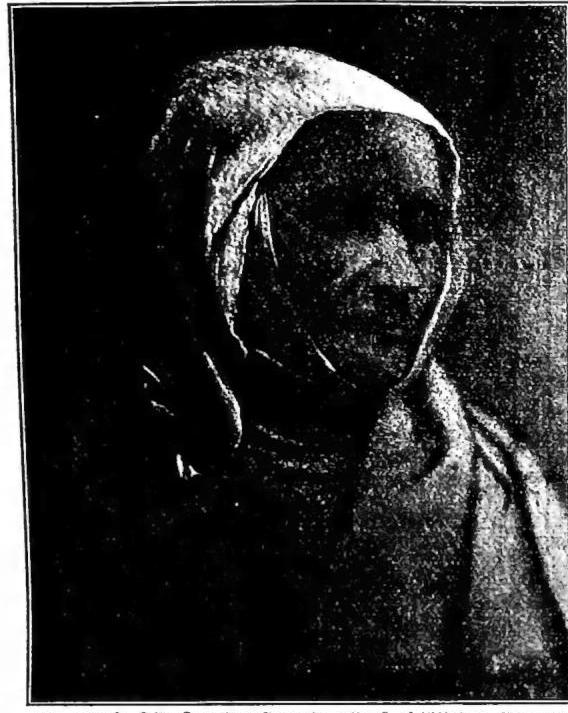
ORSOLINE - S. Angela Merici, foundress of the O. (1474-1540). Portrait by Moretto da Brescia taken from the Saint’s body in 1540 - Rome, General House of the O. of the Roman Union.
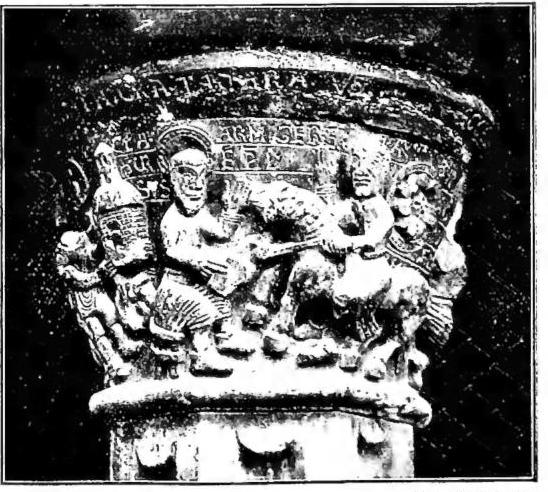
(scia), another by a fourteenth-century Pisan artist (Museum, Pisa), the painting by Moretto (Castle Museum, Milan), and Tintoretto’s altarpiece (S. Lazzaro dei Mendicanti, Venice). The cycles with several episodes follow the various versions of the legend, sometimes also being enriched by the artists’ personal imagination. The earliest illustrations seem to be those engraved on two bronze cups for liturgical use, of Rhenish workmanship (11th-12th centuries), one preserved in a private collection and the other in the Museum of Aix-la-Chapelle; also important are the illustrative engravings accompanying the text of Jacopo da Varagine’s «legenda» or that of the various «Sacre rappresentazioni» (Marciana Library, Venice). The most interesting examples, however, are found above all in pictorial art.
Of the principal cycles, three are due to the school of Cologne between the second half of the 15th century and the beginning of the 16th: the 15 panels (now in the Kunstgewerbe Museum, Cologne), the 30 paintings by J. and G. van Scheuwen, dated 1456 (church of S. O., Cologne), and the 18 small panels (notably The Dream) by the anonymous artist known as the «Master of the Legend of St O.» (Wallraf-Richartz Museum and other museums and collections). In Belgium there is the reliquary of S. Odilia at Kerniel, painted around 1292 with stories connected to our legend; Bruges has two works of great importance: eight panels painted by a local fifteenth-century master (convent of the Soeurs Noires) and the celebrated reliquary chest (Hôpital St-Jean), with the admirable panels painted by H. Memling around 1489. But the legend had already spread through the Veneto in the fourteenth century: thus, in addition to an antependium attributed to Maestro Paolo (formerly in the Queiroy collection, Paris) and the modestly valuable frescoes in the little church of Vigo di Cadore, two great painters treated this subject, following the version of the Leggenda aurea and transferring it with imaginative flair into their own surroundings: Tommaso da Modena, around the middle of the fourteenth century, in the frescoes of the church of S. Margherita in Treviso (now in the city museum); Vittore Carpaccio, in the last decade of the fifteenth century, in the nine canvases painted for the scuola of S. O. in Venice (now in the Gallerie dell’Accademia). Reflections of our legend are also found in Spain, in works by fifteenth-century Catalan masters: for example, Retablo (S. Lorenzo, Lerida), a panel divided into several painted compartments (parish church of Cardona); and in a painting by a painter from Valencia (J. Rexach, ca. 1450), now in the Museum of Barcelona. Objects inspired by the legend are not lacking either, for example: two German sixteenth-century reliefs in painted wood depicting O. and the pilgrims crowded into the ship (Stuttgart, Altertumersammlung), and a small silver ship, called the ship of S. O. (Reims, Cathedral). In Norway, a wooden triptych with various bas-reliefs from the second half of the fifteenth century, formerly in the church of Slagen, now at the University of Oslo. - Vedi tav. XXIV.