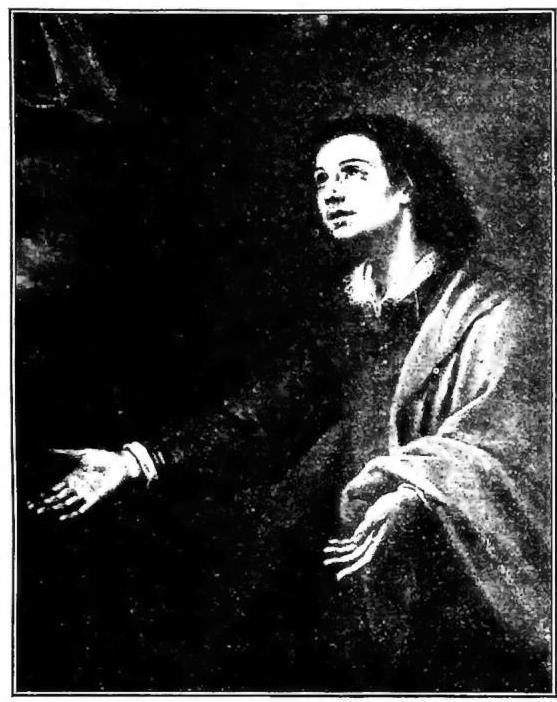
PIETRO FOURIER, saint. — Canon regular, parish priest, founder of the Canonesses Regular of Our Lady, reformer of canonical life, born at Mirecourt in the Duchy of Lorraine on 30 November 1565.
He completed his classical and ecclesiastical studies, in two periods, with the Jesuits at Pont-à-Mousson. In 1586 he professed religious vows at the abbey of Chamoussey and was ordained a priest on 25 February 1589. F.’s exemplary religious observance aroused the envy of his lax confrères, and the abbot assigned him to parish ministry. Of three parishes from which he was free to choose, F. opted for Mattaincourt, where faith and good morals had almost disappeared; they flourished again in a short time, and for forty years F. tirelessly promoted the religious and social well-being of the town. In 1598 Alix le Clerc, the blessed, together with four other young women from Mattaincourt, aspired to the religious life with the aim of providing Christian education and free instruction for poor girls. F. supported their holy initiative, but encountered many grave difficulties. A life of strict enclosure was still considered incompatible with teaching external pupils. As early as 1617 F. had drawn up the rules of life for his fervent daughters, which were approved by Urban VIII in 1628. In the same year, F.’s Constitutions for the reform of canonical life also received papal sanction and were accepted by various abbeys which, united together, formed the new Congregation of Our Saviour. The war for the annexation of Lorraine to France, the plague, and famine devastated the Duchy. F. continued his charitable work until, in order to remain faithful to the reigning house, he was forced into exile. He took refuge at Gray (Haute-Saone), where he died on 9 December 1640. He was one of the