
SHREWSBURY, DIOCESE of. – City and diocese in England. It has a population of 1,331,706 inhabitants (1931 census), of whom 106,000 are Catholics (1950 census), distributed among 81 parishes, served by 138 diocesan and 85 religious priests, 13 male and 27 female religious communities; in 1950 there were 250 conversions, 3,301 infant baptisms, marriages (including mixed marriages)
1,450. The diocese has 106 public churches, 27 private ones, and 42 elementary schools.
It was created by Pope Pius IX in 1850, and comprises the counties of Shropshire and Cheshire. Before 1895 it also included the Welsh counties of Carnarvon, Flint, Denbigh, Merioneth, Montgomery, and Anglesey, which in 1895 were constituted as the apostolic vicariate of Wales, and then, in 1898, as the diocese of Menevia. Its patrons are Our Lady Help of Christians and St. Winefride, whose relics were transferred from Gwytherin in Denbighshire to the Benedictine abbey of S. (founded in 1883) in 1138. It is a suffragan diocese of Birmingham. Since 1949 its bishop has been John A. Murphy, whose predecessors were James Brown (1851–81), Edmund Knight (1881–95), John Carroll (1895–1897), Samuel Webster Allen (1897–1908), Hugh Singleton (1908–34), and Ambrose James Moriarty (1934–49). The Cathedral (1856) is dedicated to Our Lady Help of Christians and St. Peter of Alcantara.
Before the so-called “Reformation,” Shropshire, north and east of the River Severn, and Cheshire formed part of the diocese of Coventry and Lichfield, while Shropshire south
During the persecution, Shropshire gave the Church three martyrs, namely the Bls. R. Johnson (1582), R. Martin, a layman, and E. Campion, both in 1588; and Cheshire six, the Bls. John Shert (1582), Ralph Crockett, Thomas Holford, and Robert Wilcox (all in 1588), and the Ven. John Sandys (1586). Many families remained faithful, for example those of Plowden, Berington, Clough, and Blount. Also worthy of remembrance is the illustrious jurist and confessor Edmund Plowden (1517–84), who, under Elizabeth, refused the office of chancellor because he openly professed the Catholic faith.
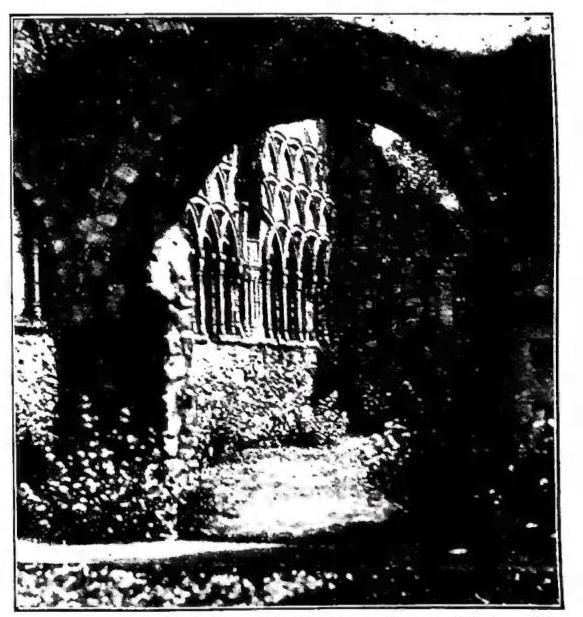
The diocese is rich in historical monuments, such as the churches (now Protestant) of St. Mary at S. Ludlow, Church Stretton, Acton Burnell, Clun, Nantwich, St. Werburgh (Cathedral) and St. John at Chester, Malpas, and many others, as well as the monastic ruins of Buildwas (1135, Cistercian), Wenlock (1080, Cluniac), Haughmond, and Lilleshall (12th century, Augustinian), together with other minor ones. At Wenlock, St. Milburga founded a convent as early as the 8th century, which was destroyed by the Danes in 874. At Sandbach in Cheshire there are two Anglo-Saxon stone crosses. At Acton Burnell in Shropshire, the English Benedictines from Douai found refuge and hospitality from 1795 until 1814, when they went to Downside.
Enrico E. G. Rope