
TRASON, CEMETERY of. - It is mentioned for the first time in the Depositio martyrum on Nov. 29, because the martyr Saturninus (v.) was buried in it in the open air.
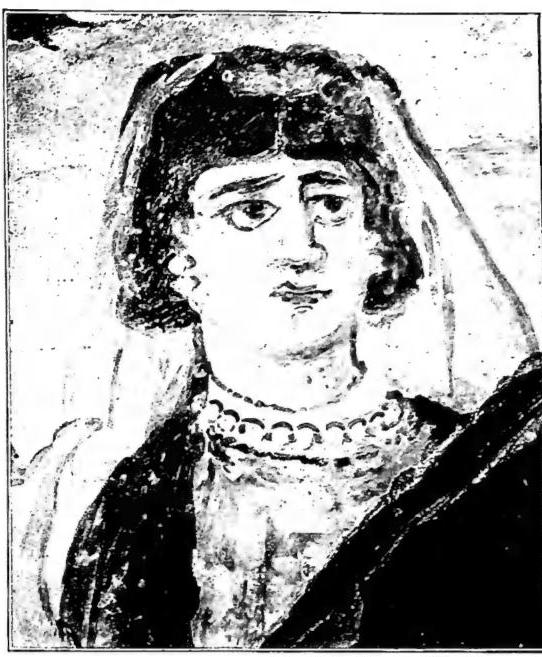
Antonio Bosio recounts that, near the ruins of a church, in the place commonly called S. Citronina for S. Saturnino, on the left of Via Salaria, he found in 1594 "the ancient entrance by which one descended from the said church into the cemetery; where there is a staircase that descends very deep... The said descent has its vault and ceiling entirely of stucco, and worked with various foliage, vines, and grape clusters". Bosio also found another entrance in the vineyard behind the ruins of the church and became convinced "that this cemetery had a great circuit"; he records having found paintings and silver lamps with the sign ✕ and some alabaster columns (Roma sotterranea, Rome 1632, p. 488).
Marangoni distinguished two regions, one consisting of the group of galleries already seen by Bosio, the other discovered by him, where the inscription of Severa from the year 269 was found, which was the origin of Father Lupi's dissertation (v.). Work begun in 1872 to build a small villa led to the discovery of this region; G. B. De Rossi recognized the text of a Greek inscription already read by Lupi near the inscription of Severa; he also found engraved in the mortar of a loculus the inscription of a "Macedonius exorcista de Katolika", read by Marangoni; tombs decorated with paintings, loculi containing graffiti, and a fragment of a metrical inscription were also found; a white glass crater with a crown and in raised Greek letters "...IIIE ZHCAIC"; a large glass disk with birds and fruits. Among the notable epigraphs are those of a "Fortunata vives in Chre(s)to", of a "Sozon Benedictus" with the wish "Berus (for Verus) ✕ ispirum (spiritum tuum accipiat) in pace et pet(e) pro nobis"; of a "Calledrome benedictus in ✕". Among the painted tombs brought to light were those of Marciana, Metilenia Rufina, Grata, two large orants, a charioteer, a warrior, and the arcosolium of Silvestra.
G. Wilpert distinguished by the name of T. that cemetery region on the left of Via Salaria of which a painted arcosolium remains (Pitture, p. 314 and pl. 163, 2; 163, 2) and gave the designation of "catacomb under Vigna Massimo" to the cemetery region on the same road, seen by Boldetti and Marangoni and recognized by G. B. De Rossi (ibid., pp. 314-15, pl. 62, 1, 120; 122, 1; 145; 146, 1; 174-76; 183, 1; 204, 212).
#### TRATTA DEI NEGRI: V. SCHIAVITÙ.