
VIOLLET-LE-DUC, EUGÈNE-EMMANUEL. — French architect and writer, born in Paris on 21 January 1814, son of the writer Emmanuel-Nicolas, died in Lausanne on 17 September 1879.
In 1863 he obtained the chair of Aesthetics and History of Art at the Ecole des Beaux-Arts in Paris, from which he was compelled to resign because of the controversies provoked by his teaching; in 1874 he was elected a Radical deputy for the Montmartre district. V. monuments. In his restoration work he followed the principle of reconstructing missing or endangered parts exactly as they had emerged from the hands of medieval craftsmen. This principle has now been abandoned, but V. deserves the credit for saving France’s most distinguished Romanesque and Gothic monuments from certain ruin and for arousing intense interest in them. His studies and restorations also made a notable contribution to the spread of a taste for the neo-Romanesque and neo-Gothic styles, to which, unfortunately, the construction of so many Romanesque and Gothic churches is owed, even in mission territories. Among the monuments he restored, the following should be mentioned, among others: the Ste-Chapelle in Paris; the church of Vézelay, Notre-Dame in Paris, the Cathedrals of Amiens, Laon, Reims, and Lausanne, the Town Hall of Narbonne, etc. As a writer, always clear and concise, he owes his renown to the Dictionnaire raisonné de l'architecture française du XIe au XVIe siècle (10 vols., Paris 1854–68), adorned with a great many of his own drawings, a work that remains fundamental. Also noteworthy are: Dictionnaire raisonné du mobilier français de l'époque Carlavingienne à la Renaissance (6 vols., ibid. 1872–75); Entretiens sur l'architecture (2 vols., ibid. 1858–72); La Cité de Carcassonne (ibid. 1856). His drawings, published in 1884 (100 plates) and in 1896 (2 vols.), are preserved in the Trocadéro Museum.
He composed all his works in Latin: foremost among them are the Gesta Chuomradi imperatoris, which represent in Germany the first secular biography after that of Ludovico il Pio, and which stand out for their liveliness and warmth, if not for their historical sense, as well as for their fresh and flowing language. He also wrote the Proverbio, dedicated to Enrico III, and works in verse, such as the Lamentation on the death of Corrado II and the Tetralogus, which instead is an auspicious song, rich in interesting admonitions, for the accession to the throne of Enrico III, to whom it was presented at Christmas in 1041. He is mentioned for the last time in 1046.
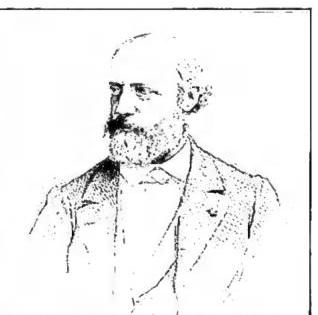
(from V.-L.-D. Diatlon, raisonné de l'archét. française du XIe au XVIe siècle, I, Paris 1881)