ALTMANNO, SANTO

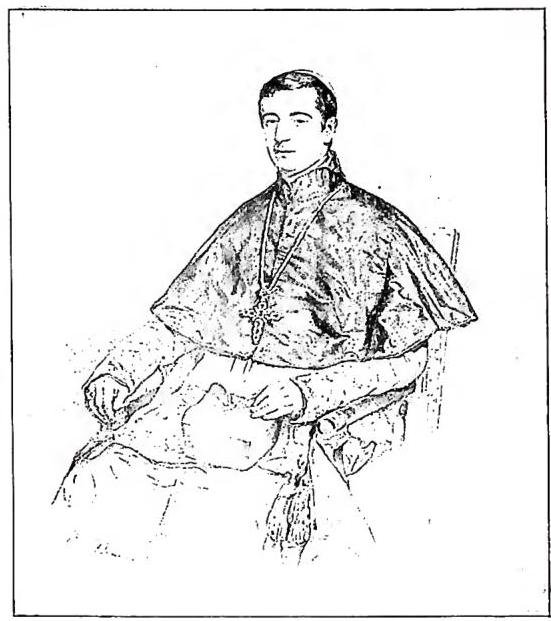
ALTMANN, St. — Born in Westphalia, he studied in Paris, became a professor at Paderborn. He was appointed by Henry III as provost of the chapter of Aquigrana and court chaplain, and in 1605 bishop of Passau. A fearless champion of papal rights and a great reformer of monastic life and the clergy, he was persecuted for this until his death.

He founded (1083) the Benedictine monastery of Göttweig. In 1074 he published the bull of Gregory VII against concubinary clergy, and in 1076, together with Gerard, archbishop of Salisbury, the excommunication of Henry IV. Forced to flee, he saw his see occupied by intrusive bishops. He came to Rome (1079), and the Pope chose him as his perpetual legate for Germany; he then lived in retirement at Göttweig. He died on 8 Aug. 1091 in nearby Zeiselmauer and was placed in the crypt of Göttweig, where he was venerated as a saint. He is missing from the Roman Martyrology; his feast was granted to the dioceses of Linz (1884) and Passau (1890).

ALTO ADIGE — ALTO ADIGE

938

Administratively, the Alto Adige includes a small portion of the Drava basin (San Candido and Sesto), which, in essence, connects it to the region known to the Germans as Deutsch-Südtirol.

The territory, whose northern boundary coincides with the Italo-Austrian frontier, is also well-defined to the south by high mountain barriers (Ortler-Cevedale, Sella, Sassolungo, Catinaccio, Latemar, etc.) that isolate it from the neighboring Trentino region, with which, however, communications remain easy. It is a mountainous region, with over four-fifths of its area above 1,000 m (and two-fifths above 2,000 m), where the rugged landscape of the high mountain edges alternates with the more open scenery of the wide valleys shaped by Quaternary glaciers; areas often well protected from the north (Merano) and with not overly abundant rainfall. As throughout the Alpine arc, in the Alto Adige the major valleys form distinct and well-defined units, usually with proper names (Val Venosta, Val Pusteria, Val Gardena, Val Badia, etc.).

The lower parts of the territory are cultivated (cereals, especially rye, and potatoes; in the better sunlit basins, vineyards and orchards flourish; overall, barely 6% of the total area); the rest is sparsely populated but rich in pastures (37.5% of the total) and extensive woodlands (39%). Industries have recently seen considerable growth, especially due to the development of hydroelectric plants (on the Isarco River is Italy’s most powerful plant); tourism is also significant, with resort and sports centers among the most frequented in the country, benefiting from excellent hotel facilities. The Alto Adige holds commercial importance due to its communication routes, which, following the three major valleys (upper Adige or Venosta Valley; Isarco Valley; Rienza Valley or Val Pusteria), lead through the three great Alpine passes that correspond to them (Resia, Brennero, and Dobbiaco) to transalpine countries. Along these routes are the largest urban agglomerations: Bolzano (75,000 inhabitants), at the confluence of the Adige and Isarco rivers, which is becoming an important industrial center; Merano (26,000 inhabitants), an international health resort; and Bressanone (7,000 inhabitants), center of the eponymous bishopric.

The Alto Adige, now included in the region called Trentino-Alto Adige, corresponds to the province of Bolzano, established in 1927. The German element is prevalent over the Italian one, whose percentage, however, has increased since the separation from Austria (8.7% in 1869; 11% in 1921; about 20%, probably, today). During the recent war, the transfer (Rückwanderung) to Germany of those of German citizenship had been planned; but on 1 Dec. 1942, when the exodus was supposed to have ended, only 72,740 had left the country. The Constituent Assembly of the Republic approved on 29 January 1948 the special Statute for Venezia Tridentina, which safeguards the German element (a minority in the region as a whole) by recognizing a particular provincial autonomy within the region.

Article illustration

The surface area of the province is 7,085 sq. km.; its population grew from 239,940 inhabitants in 1910 to 277,720 in 1936 (289,000 on 31 Dec. 1947; density 41 per sq. km.). The territory of the Alto Adige is under the ecclesiastical administration of three dioceses: Trento, which holds the largest part, Bressanone (eastern section and Ampezzo), and Coira (Val Monastero).

Bibl.: A. R. Toniolo, Gli Italiani nell’A. A., Roma 1917; id., L’A. A., Novara 1919; A. Bruniati, L’A. A., Torino 1919; G. Poli, Venezia Tridentina, 1919-1927; C. Lun, Saggio di una bibliografia geografica dell’A. A.: 1919-40, in Archivio per l’A. A., Bolzano 38 (1943), pp. 127-256; G. P. B., Lo Statuto del Trentino-A., in Relazioni internazionali, 2a serie, 12 (1948), p. 90. Giuseppe Caraci

2. Art

From the Middle Ages, the art of the Alto Adige developed as an integral part of Germanic art, naturally subject to strong influences from Italy. The region’s historical-artistic importance is based on the continuity of fresco painting, especially during the Romanesque and Gothic periods; it is also documented by the typical carved altarpieces, composed of paintings and sculptures, which reached their highest expression in the work of Pacher (q.v.), the most significant in all northern art; finally, the flourishing of secular painting (chivalric themes) at the beginning of the 15th century completes the complex of fundamental motifs of the originality of Alto Adige art. Equally important is the environmental character, the centuries-long formation of a country accustomed to a modest but autochthonous nobility, a wealthy bourgeoisie, and peasants with a long-standing tradition of their own, in mutual balance. Yet all this, while favoring artistic development, did not give rise to grand architecture of more than local importance; the only exception is the bishopric of Bressanone, which, remaining like a kind of small local court until the 18th century under the prince-bishops, constitutes, more than Bolzano, the artistic center of the region, in almost continuous cultural contact with Salzburg.

Still very simple in architecture but important for their frescoes are the two pre-Romanesque churches of Val Venosta: St. Proculus at Naturno, with 9th-century frescoes, and St. Benedict at Malles. Romanesque monuments are very frequent, with typical examples such as the abbey of Montemaria near Burgusio in Val Venosta, with 12th-century frescoes, and the chapel of Castle Appiano in the Adige Valley with sacred paintings (12th century) inside and a *Hunt of Demons* by Theodoricus on the outside. Slightly later are the Byzantine-influenced frescoes of Grissano near Malles and of Lana, in the same artistic tradition as Val di Non (Romeno, Sanzeno); noteworthy are the representations of monsters—Nordic transformations of ancient motifs—beneath the Christ with the Apostles in St. James at Termeno (mid-13th century). In Bressanone there was once a complex of Romanesque architecture: partly transformed (Cathedral) and partly still preserving its original frescoes, such as those in the baptistery, the cloister, and the church of Our Lady, linked to Salzburg’s painting (Nonnberg). Remains of Romanesque sculpture are rarer. Fewer works in stone survive (portal of the Abbey of San Candido, 13th century); more frequent are those in wood, as this material was then preferred (crucifixes and sacred images from San Candido and Castel Tirolo). Illumination also flourished: the 9th-century Evangelary of San Candido (Univ. Library of Innsbruck) is from this period; numerous manuscripts from the 12th, 13th, and following centuries survive, especially in the convents of Bressanone and Bolzano.

Article illustration

From the 12th and 13th centuries also date the first castles, now largely transformed or in ruins: Greifenstein, Stein am Ritten, the Romanesque chapels of the castles of Tiralli, Appiano Alto, Roncolo, Montechiaro of Romanesque origin with Lombard elements; in addition, the churches of Tubre (Val Monasterio), St. Peter near Merano, the cloister of Novacella; noteworthy is the St. George of Siena, with a central plan.

Romanesque art begins to give way to Gothic only in the first half of the 14th century. In painting, therefore, Western and Northern elements prevail, from which the direct Italian influences in the second half of the century stand out clearly. Examples of the first trend: part of the frescoes in St. John’s and in the cloister of Bressanone, in Novacella, in the chapel of Castel Tiralli; sculptures in the parish church of Bolzano; goldsmith works in the treasure of the cathedral of Bressanone. Principal monument of the second trend (Italian-Giottesque): the paintings in the church of the Dominicans in Bolzano (executed by Italians), and, under their influence, those in the churches of St. Vigilius and St. John in Villa in Bolzano, of St. Cyprian in Sarentino, at Campiglio, Terlano, and Nova Ponente. Numerous Gothic churches then arose, beginning with the most important one, the parish church of Bolzano (completed in the 16th century): the churches of the Franciscans, of the Dominicans in Bolzano, the parish churches of Merano, Terlano, Termeno, St. Sigismund, Falzes, St. Valentine, St. Lawrence, Ora, Lana, Silandro, Glorenza, Chiusa, Vipiteno, Brunico, Tubre, etc. Gothic forms were used until the 16th century. At the end of the 16th and in the 17th century, Renaissance, then Baroque forms begin to appear.

Notable are the monuments of knightly painting at Montechiaro (now in the museum of Innsbruck) and at Castel Roncolo, as well as the frescoes from the late 14th and early 15th centuries in the churches of Presule, Riffiano, Termeno, Terlano (Hans Stockinger, 1407), Nova Ponente, Scena, Novacella (Joh. V. INNSBRUCK), and Bressanone (cloister).

Among the sculptures, those in the churches of St. Sigismund in Pusteria (altar of about 1430), of Merano, and of Terlano should be noted. There were also numerous connections with Trentino, with Verona, and with other places where this style flourished (Stefano da Verona painted in the Val di Non; the master of the paintings of the Aquila Tower in Trento worked, in 1414, in the cathedral of Merano). Panel painting, until then of secondary importance, now begins to develop intensively, absorbing, through German mediation, the reflections of the new Flemish realism. The influence of Multscher’s activity in Vipiteno (1450–58) was vast. As native masters who prepared the environment on which Michael Pacher would build and who participated in the described development, the following appear: the “Master of Villa Ottone or d’Utta” (Uttenheimer Meister, Novacella), Jakob Sunter (Bressanone, 1472, etc.), Friedrich Pacher. Some of these predecessors of M. Pacher already anticipate, beyond the German-Flemish component of their style, the Italian-Renaissance one, which later became decisive for the full unfolding of the genius of M. Pacher, who exerted a great influence on all the art of the Alto Adige, determining the most widespread type of altarpiece.

Article illustration

After Pacher’s appearance, the art of the Alto Adige no longer reached such heights. Italian influences (especially Venetian) in the late 16th and 17th centuries on local artists such as Helfenrieder, Th. Polack, Kessler, and M. Stölzl resulted in provincial styles; works from the 18th century include those of M. Günther (Vipiteno, Colle Isarco), and Troger (Bressanone, active also in Vienna), who established schools: while Hauzinger, M. Knoller, and the Unterberger brothers forged an artistic link between Austria and Italy, figures such as Glantschnig, Pussieger, Grassmair, and J. M. Gündter were of only local interest. The connection with southern Germany remained livelier in Bressanone (J. Perger, D. Molling); the same applies to churches built or rebuilt in the 17th century and to sculpture.

However, the variety of altarpieces, goldsmith works, the numerous small castles, and in short the dignity with which the old peasant houses blend with the landscape, make evident a continuity between Romanesque style and 18th-century art; this forms a truly notable culture even if it did not always attain European importance. — V. Tav. LXXII.

BIBL.: Cf. Mitteilungen d. K. K. Centralkommission, 1889 and passim; K. Aitz, Kunstwechsel von Tirol u. Vorarlberg. Innsbruck 1909; J. Weingartner, Die frühgotische Malerei Deutschtirols, in Jahrbuch d. Kunsthist. Inst., 10 (1916), pp. 1–78; id., Die Kunstdenkmäler Südtirols, Vienna 1923 ff.; G. Gerola, Gli affreschi di Naturno, in Dedalo, 6 (1925), pp. 413–40; J. Garber, Die roman. Wandgemälde Tirols, Vienna 1928; O. Pächt, G. Tafelmalerei d. Gotik, Augsburg 1920; C. Th. Müller, Zur Gesch. d. Brixner Plastik, in Zeitschrift f. Bildende Kunst, 64 (1930–31), pp. 225–33; id., Mittelalterliche Plastik Tirols, Berlin 1935; A. Morassi, Storia della Pittura nella Venezia Tridentina, Rome 1934; E. Arslan, Il Museo dell’A. A. a Bolzano, Rome 1942 (with bibliography for prehistoric and Roman epochs); id., Castel Tiralli, Trento 1935; R. Salvini, Una nuova opera di Fed. Pacher, in Le Arti, 1 (1938–39), pp. 187–91; id., Due statue lignee di Hans Multscher, ibid., pp. 404–406; id., Un altare della Pusteria e il suo posto nella storia dell’arte atesina, ibid., 3 (1940–41), pp. 107–17; id., Un ciclo di affreschi trecenteschi a Bolzano, in Rivista dell’Istituto d’Archeologia e Storia dell’Arte, 8 (1941), pp. 228–55. — For more recent studies V. in Archivio per l’A. A., 32 (1937), the articles by: E. Arslan, R. Salvini, C. M. Mayr; 33 (1938); R. Salvini; 35 (1940); N. Rasmio; 36 (1941); N. Rasmio, and passim; V. also, Atesina Augusta, 1939 ff., passim; A. Maurer, Baugesch. d. Bozner Pfarrkirche, Bolzano 1945, in Der Schlern, 20 (1946), 21 (1947); in Cultura Atesina, Trento 1947; N. Rasmio; H. Semper, Die Kunst in Tirol, Innsbruck 1948.