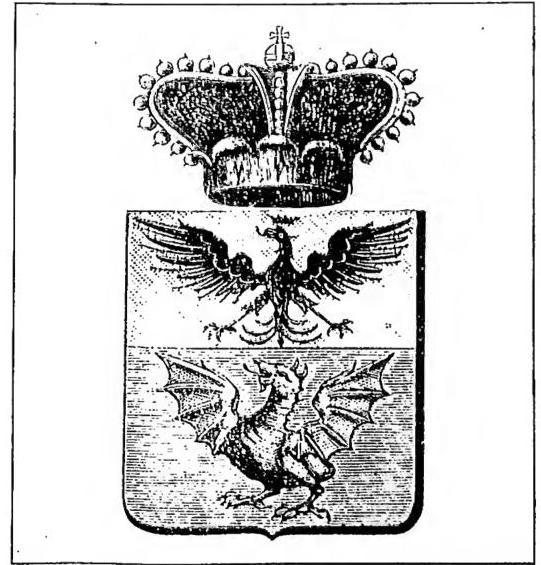
BORGHESE, SCIPIONE. – Son of Ortensia B., wife of Francesco Caffarelli, born in Rome in 1576 and died on 2 October 1633. As soon as he was elected Pope, Paul V made him a member of his own family, granting him his surname and coat of arms; he created him cardinal on 18 July 1605, with the title of S. Grisogono, and kept him at his side as cardinal nephew, according to the custom of the time. His favor with the Pope only increased over the years: in 1607 he was appointed legate of Avignon; in 1608, archpriest of the Lateran, prefect of the S. Congregation of the Council, and commendatory abbot of S. Gregorio al Celio; in 1609, librarian; and in 1610, major penitentiary and archbishop of Bologna. He held the archbishopric only until 1612, when he was appointed camerlengo of Holy Church and prefect of the Apostolic Briefs. His revenues increased in parallel, reaching enormous sums that enabled him to protect the arts, artists, and men of letters and to acquire the finest estates in Latium. He presided over the commission for the acqua Paola aqueduct, and to him is owed the construction of the palace on the Quirinal that now bears the name of the Rospigliosi, which he lavishly adorned with works of art, foremost among them the celebrated Aurora by Guido Reni, as well as the palace serving as a casino for the celebrated Villa Borghese, where he assembled the finest paintings and sculptures then being collected. He built no new religious buildings, but devoted himself to restoring and embellishing those already in existence, as he did at S. Andrea al Celio, where, in addition to the paintings, he had the beautiful staircase and principal façade constructed by G. B. Soria. The façades of S. Maria della Vittoria, S. Grisogono, and S. Sebastiano fuori le mura are also owed to him.