
DRUSI. – A people inhabiting Lebanon and Anti-Lebanon, in the vicinity of Damascus and in the Hawrān massif. The D. are distinguished by a religion of their own and enjoyed a particular administrative status in the Ottoman Empire. They seem also to have possessed distinctive ethnic characteristics even before the foundation of their religion, through the work of Hamzah and Darazi, in the 11th century A.D.; curious is the assertion made by the Druze emirs in the 17th century that they descended from Godfrey of Bouillon.
The religious system has preserved Ismāʿīlite doctrine (v. CARMATI; ISLĀM), according to which God incarnates in humanity in every age: God himself (or at least his creative power) is conceived as composed of several principles emanating one from another, each of which becomes incarnate in a human being. For the D., the Fāṭimid caliph al-Hākim (386–411 of the Hijra) is the representation of God as unity: he is even worshipped and bears the title of « our lord »; he is the last incarnation of God, and it is not admitted that he died; he is merely hidden and will one day reappear. Beneath al-Hākim there are five ministers embodying various principles emanated by God (the universal Intellect, the universal Soul, the Word, the Precedent, the Successor). These are followed by three classes of inferior ministers. The moral system of the Druze religion, which applies to both sexes, consists of seven precepts: truthfulness; the obligation of adherents to watch over their mutual security; renunciation of every other religion; the obligation to distance themselves from the devil and from unbelievers; the obligation to recognize in every age the principle of divine unity incarnate in humanity; approval of al-Hākim’s works, whatever they may be; and submission to his will as represented by his ministers.
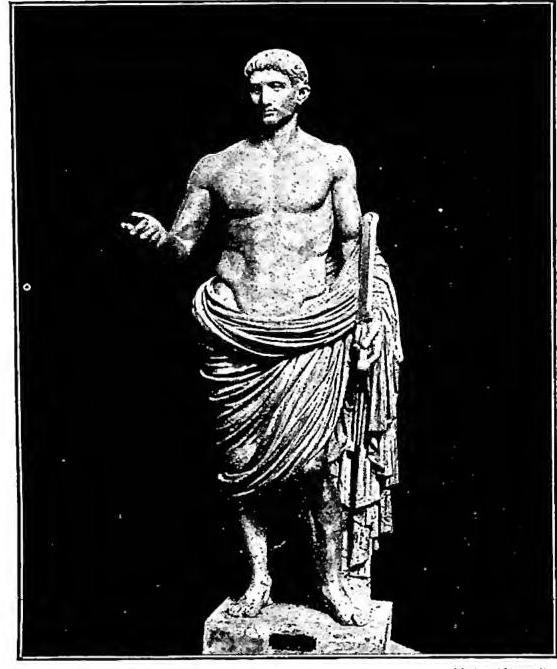
(Int. Alinari)
DRUSO – Heroicized portrait of D. the Elder – Roman art sculpture from the 1st century – Naples, Museo Nazionale.
They take part in religious assemblies, held on the night between Thursday and Friday. The most deserving among them (one in fifty) become the “perfect” and are the religious leaders of the “nation.” The people generally believe in metempsychosis: the good are reborn in the form of children, whereas the wicked are reborn in the form of dogs. Polygamy is permitted and, although the law prohibits it, marriage between brother and sister is apparently sometimes practiced.
The D., a warlike and bold population, have had famous emirs throughout history, such as Fahr ad-din (known in Italy by the name of “Faccardino”), who in the 17th century had relations with the grand duke of Tuscany; and the emir Bašir in the 19th century.