
GERBERT, MARTIN VON HORNAU

GERBERT, MARTIN VON HORNAU. — Benedictine, born at Horn on the Neckar (Württemberg) on 12 August 1720, died at the abbey of St. Blasien (Black Forest) on 13 March 1793. Having entered the aforementioned abbey at the age of sixteen (1736) and been ordained a priest (1744), he taught philosophy and theology there for ten years; at the same time, being assigned to the library, he had the opportunity to deepen his knowledge of sacred and profane history, and especially of medieval music and liturgy. He completed his education through travels in Germany, Italy, and France, collecting a great many documents (1759–62).

Elected prince-abbot in 1764, he cared for the monks as a father and provided them with new constitutions; when a fire destroyed the monastery in 1768, he rebuilt it and endowed it with a beautiful church, transforming it also into a true academy of scholars and establishing there what was called the first German institute for historical research: in fact, he directed the compilation and publication of Germania Sacra (v.). Deeply devoted to the Holy See, he sought to mediate between episcopalism and the papacy, and effectively opposed Josephinism in the Austrian territories placed under his jurisdiction.

He wrote extensively: in addition to the Iter Alemanicum; Accedit Italicum et Gallicum (St. Blasien 1765) and the Historia Silvae Nigrae Ordinis S. Benedicti coloniae (3 vols., ibid. 1783–1784), in which he discusses the numerous Benedictine monasteries spread throughout the Black Forest from the seventh to the eighteenth century, as well as the various episcopal sees and the principal families of the region;
Article illustration
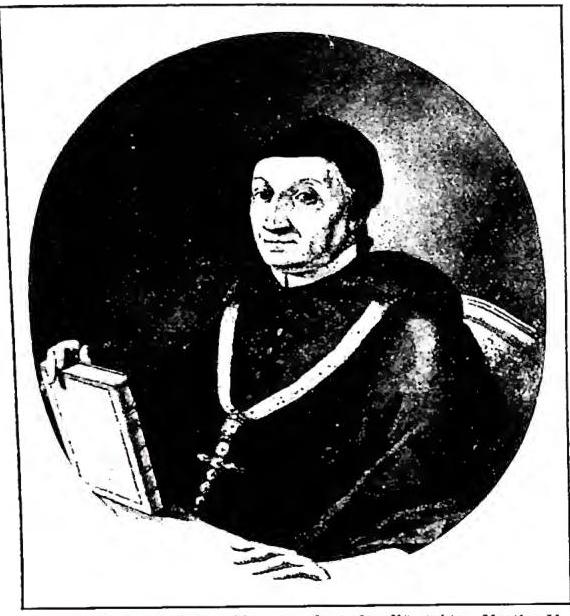
(from G. Pfeilschifter, Korrespondenz des Fürstabtes Martin II. Gerbert von St. Blasien, I. Karlsruhe i. Baden 1931, plate outside the text) GERBERT MARTIN — Portrait (eighteenth century).
he published works on music: De cantu et musica sacra a prima Ecclesiae aetate usque ad praesens tempus (2 vols., ibid. 1774), followed by Scriptores ecclesiastici de musica sacra potissimum ex variis Italiae, Galliae et Germaniae codicibus manuscriptis collecti (3 vols., ibid. 1784; facsimile reproduction, Milan 1931); on liturgy: Vetus liturgia Alemanica (2 vols., ibid. 1776); Monumenta veteris liturgiae Alemanicae (2 vols., ibid. 1777–79); on theology: his Principia theologiae exegeticae, dogmaticae, symbolicae, mysticae, canonicae, moralis, sacramentariae, liturgicae (in as many volumes, ibid. 1757–60) constitute a true and complete ecclesiastical encyclopedia. His extensive correspondence, predominantly historical and scholarly, with a complete bibliography and detailed introductions, was edited by G. Pfeilschifter (3 vols., of which so far I, Karlsruhe 1931; II, ibid. 1934).

BIBL.: Hurter, V, cols. 560–67; V. Bader, Fürstabt M. G. von St. Blasien. Ein Lebensbild aus dem vorigen Jahrhundert, Freiburg im Br. 1875; C. Krieg, Fürstabt M. G. von St. Blasien, ibid. 1896; G. Pfeilschifter, Fürstabt M. G. von St. Blasien, Cologne 1912; id., Korrespondenz des Fürstabtes Martin II. Gerbert von St. Blasien, 2 vols., Karlsruhe i. Baden 1931, 1934; B. Heurtebize, s. V. in DThC. VI (1924), cols. 1204–96.

Celestino Testore

Cite this article

“GERBERT, MARTIN VON HORNAU.” Enciclopedia Cattolica, vol. VI (1951), p. 79. Azione Romana digital edition, https://azioneromana.com/article/gerbert-martin-von-hornau.