
LAMMENS, HENRI. - Jesuit, celebrated Islamologist, b. at Ghent on 1 Apr. 1862, d. at Beirut on 23 Apr. 1937. Having landed in Syria while still sixteen, he subsequently taught at the University of St Joseph in Beirut from 1882 until his death, except for the years 1908–19, during part of which (1911–14) he taught Arabic at the Pontifical Biblical Institute in Rome. L. became widely renowned for his studies on pre-Islamic Arabia, the sirah, and the figure of Muhammad.
His masterpiece, Fátima et les filles de Mahomet (Rome 1912), provided a new, generally accepted solution to the question of the historical value of Islam’s traditional sources. Also fundamental is his work Le berceau de l'Islam, l'Arabie occidentale à la veille de l'hégire, I, Le climat, les Bédonins (Rome 1914). Of a highly popularizing character, but closely adhering to the sources, are the two manuals La Syrie, précis historique (Beirut 1921) and L'Islam, croyances et institutions (ibid. 1926). L. contributed regularly to the Mélanges de l'Université de St-Joseph and to the Encyclopédie de l'Islam. Prof. G. Levi Della Vida called L. “one of the most eminent historians of Islamic origins, a worthy companion of Wellhausen and Caetani.”
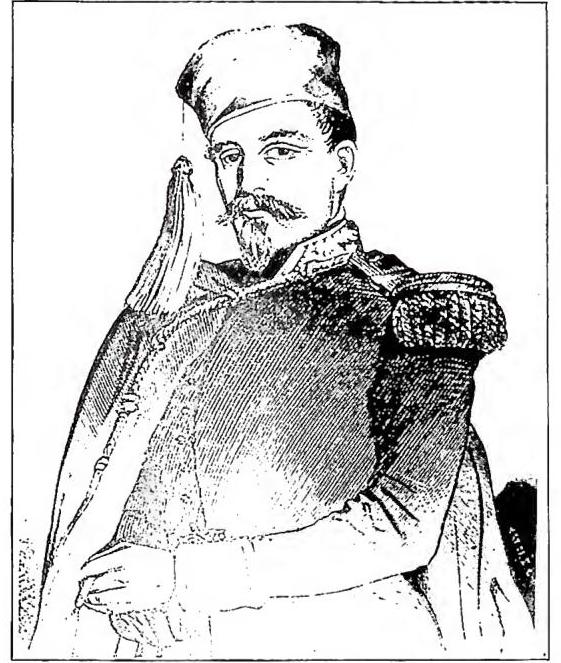
(from C. Spellenzen, Risorgimento e unità d'Italia, Milan 1851, p. 757)
LA MORICIÈRE, LOUIS-CHRISTOPHE-LÉON JUCHAULT de - Portrait. Wood engraving from a drawing made from life.