
MATRIARCHY. – A social institution in which, with regard to membership in the tribe, the name, and property, matrilineal descent is followed.
SUMMARY:
I. Discovery
II. Designation
III. Sociology
IV. Religion
V. Economy and Ergology
VI. Origin
VII. Conclusion.I. DISCOVERY
The discoverer of m. is considered to be Bachofen (v. primitivi), but it would be more accurate to call him its rediscoverer, because, as P. Koppers pointed out, the first to draw attention to it was Fr. Laffiau, a Jesuit missionary who, while studying the culture of the Iroquois of North America, discerned certain similarities between it and that of the Hellenistic peoples, especially the Lycians of Asia Minor.II. TERMINOLOGY
The development of ethnology in the knowledge of the peoples of the various parts of the world has led to the distinction of several forms of m. and to the study of their mutual and genetic relationships. There is a form of pure m. and others of mixed m., that is, interwoven with other characteristic forms of primitive civilization. Pure m. has been called by G. Montandon “paleomatriarchal culture,” in reference to the chronological evaluation of the forms of m.; by Fr. Gräbner, “Papuan cultural cycle”; by B. Ankermann, “West African cultural cycle,” in reference respectively to the geographical regions studied; by Foy-Gräbner, “culture of the two classes”; and by Fr. W. Schmidt, “exogamous matriarchal cultural cycle,” based, more properly, on the internal characteristics of pure m.III. SOCIOLOGY
Pure matriarchy is distinguished, through the division of the tribe, into two groups, the members of which may not marry within their own group but only, respectively, in the other; hence the two groups are called “exogamous marriage classes.” The woman enjoys marked supremacy over the man in the family and in society, a supremacy manifested in the right of ownership of goods, in the affiliation of the offspring, and in marriage (v. primitivi; etnologia), and it may reach the point of a genuine gynecocracy, as will be seen.Because of the great influence acquired by the woman in matriarchy, the initiation of young men falls into disuse, while the initiation of girls after their first menstruation is emphasized. This initiation does not possess the character it has among hunting and totemist peoples, as the transmission of the ancestors’ culture to the younger generation, nor does it have a political character, because it does not signify admission into the tribe; rather, it is solely familial and individual in nature. It is a declaration that the woman is unmarried, while at the same time celebrating the fertility of the future mother of the family, who will perpetuate II. On this occasion the girl must observe certain prescriptions, and this initiation constitutes another clear indication that in that culture the woman is everything and the man is nothing. But this is manifested even more clearly in two typical customs. One is the so-called covada, which is practiced among many matriarchal peoples: at the birth of the offspring, it is not the woman in childbirth who observes the customary rest and other rules,
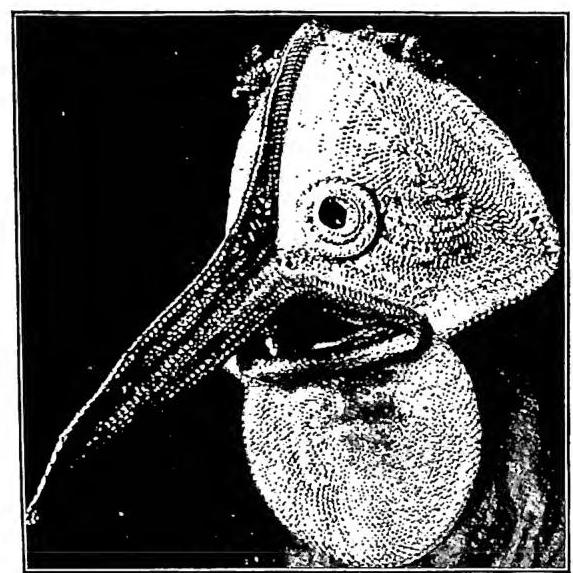
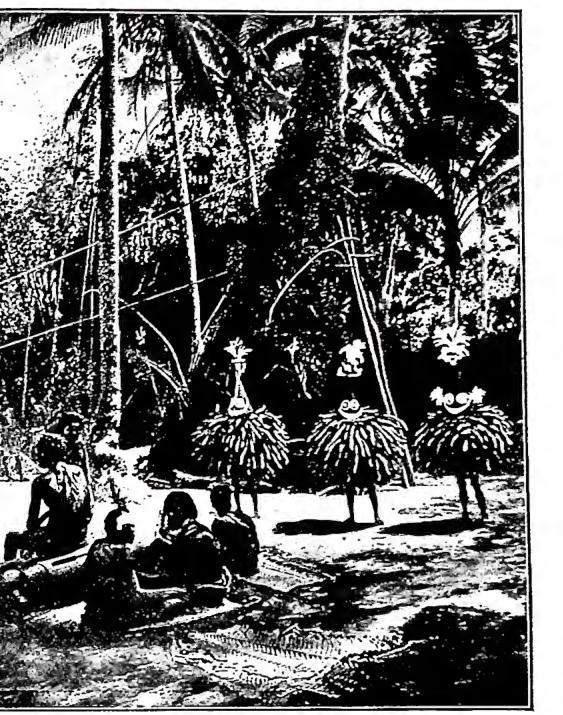
But man subsequently reacted against the supremacy of woman by resorting to the particular male aptitude for organization and founding special secret societies (from the juridical point of view V. DIRITTO, IX. Il d. presso i primitivi), with the corresponding masked dances. These societies are generally antifeminist, both because women are absolutely excluded from them and because it is forbidden to reveal to women, as well as to every uninitiated person, anything that is taught and done in the meetings. The masked dances, in which women cannot recognize the dancers, are performed by men to frighten women and force them to provide them with certain vegetable foods in abundance. These are manifestations that seriously compromise the dignity of women and particularly the authority of the mother. The harm increases, Koppers rightly observes, when access to the secret societies no longer depends on age but on the sum that the candidate, especially the father, is able to pay. Thus boys eventually came to be admitted, and from their earliest youth they underwent an education and an influence hostile to women and to the mother. As a result, m. is transformed into a culture similar to that of totemism, in which woman, instead of being esteemed, becomes the object of deplorable contempt.
When m. intersects with totemism, highly varied developments arise, often appearing as original civilizations. The two matrimonial classes are subdivided into subgroups, totemic clans, and the classes are called phratries. Among the Volgal of southeastern Australia, for example, there are the hawk phratry and the crow phratry. The former includes the totemic clans of the kangaroo, emu, dog, flying squirrel, bat, etc.; the latter those of the wombat, brown snake, bandicoot, echidna, etc. But the organization becomes much more complicated when the tribe is divided into four matrimonial classes and into eight, which through reduction may also number six. To understand the complexity of this organization, one may briefly examine the Nyamai tribe, which consists of four classes: Banaca, Burong, Palyeri, and Caimera. If an individual belongs to the Banaca class, all those whom he calls “brother,” “sister,” and “grandfather,” his father’s father, are likewise Banaca; those whom he calls “father” or “son” belong to the Palyeri class; those whom he calls “mothers” and “uncles,” his mother’s brothers, belong to the Burong class. He may choose his wife among his cousins, the daughters of his mother’s brother, that is, among the Caimera; thus, according to this rule, a Banaca may marry a Caimera, except for Caimera who are his relatives; he is forbidden to take a wife from the other three classes; the bride and groom must belong to the same generation. Raddiffe-Brown summarizes these laws as follows: a Banaca marries a Caimera, and the children will be Palyeri; a Burong marries a Palyeri, and the children will be Caimera; a Caimera marries a Banaca, and the children will be Burong; a Palyeri marries a Burong, and the children will be Banaca.
Marriage is negotiated by the parents, who may make the relevant decisions even before the birth of the future spouses. When the organization of the classes disappears, marriage is regulated by consanguineous kinship. There then emerges Father Schmidt’s “cultural cycle of free m.”, Grabner’s “Melanesian culture,” and Foy-Grabner’s “bow culture.”
At times m. has developed into a gynecocracy, as occurred among the Hurons of North America. An example is provided by what Father Lafita says, emphatically, about the position of women among them: “Nothing is more real than this superiority of woman. Upon women properly rests the nation, the nobility of the blood, the succession of generations, and the preservation of the family. In them resides all true authority; the country, the fields, and all the harvests belong to them. They are the soul of council meetings, the arbiters of war and peace, and have supervision over the public treasury. Slaves are given to them; they arrange marriages; the children depend upon them, and succession is founded upon their blood. Men, on the contrary, are completely isolated and reduced to themselves; the children are strangers to them; with them everything falls to ruin; it is only the woman who maintains the household; whereas, if there were only men in a household, however numerous they might be, the family would become extinct.”
IV. RELIGION
The belief in the Supreme Being has been obscured by lunar mythology and the cult of the dead, which are cultural manifestations proper to matriarchy. The moon is conceived as a woman and as a mother, co-ancestor who gives life to twin sons, one of whom is a wise hero, the full moon, while the other is a foolish and witless one, the dark moon; they are associated with the system of classes. The full moon subsequently took on many characteristics of the Supreme Being. The crescent- or trident-shaped pectoral ornament is related to lunar mythology. Where matriarchy intersects with totemism, lunar mythology combines with the solar mythology proper to totemism. The sun takes the place of the full moon. The solar class has as its emblems solar animals, for the most part birds of prey such as the falcon, the sparrow hawk, and the eagle, but also terrestrial animals such as the lion and the wolf, though less frequently; the lunar class adopts as its distinctive animals lunar animals, such as the hare and the crow, but also the serpent. In matriarchy, the so-called double burial is customary: that is, after a certain time, when the flesh has decayed, the corpse is exhumed, the skull is kept separately in veneration, while the rest of the skeleton is buried again.To give an idea of what is done for the dead in a mixed matriarchal-totemist culture, here is some information from Fr. C. Salerio, a missionary of the Institute for Foreign Missions of Milan, concerning the cult of the dead among the inhabitants of Woodlark Island, east of New Guinea in Melanesia. It is a people organized into eight classes. When the village chief dies, the other villages have the right to plunder the dead man’s village in order to punish the sorcerers who caused that loss. The village generally redeems itself from this plunder by offering a pig or some other substantial gift. The tomb—each family has one—is sacred, kept very clean and adorned with fragrant plants, and is the most inviolable place. They observe mourning for approximately one year; all the villages do so upon the death of a chief. This mourning consists in shaving the head and dyeing the entire body black with coconut charcoal. A woman in mourning dresses less elegantly, but in looser garments reaching down to the feet. They celebrate “the feast of the dead” (Jumalare), which is the most religious feast. Afterwards the yams are planted, preceded by five or six days of general fishing for all the villages of a bay. The food, properly cooked and prepared, is placed at the back of the hut, behind a mat, and the dead are invited with tears and groans. Then each person withdraws, sits on his bench beside the door of the hut, and speaks of the glories of his ancestors, while the dead are presumed to be eating. Then, tired of waiting, they make a din around the hut, dismiss their invited dead, and congratulate them on their temperance (the great ones must eat little). The family does not eat the meal intended for its own dead, but offers it all to friends and relatives. Finally, in the evening, they again make a great noise to drive the souls of the dead (serii) back to their tombs. Thus there is a belief in the immortality of the soul. When someone dies, regardless of any consideration of morality, his soul sets out toward Tum, an animal paradise, a place of delights, thought to be situated on an uninhabited islet west of Muju (Woodlark).
See ECONOMY AND ETHNOLOGY. — In matriarchy, the means of sustaining life come from agriculture, first practiced with the digging stick, then with the hoe, and finally with the plough, drawn by an animal, e.g. the ox (v. SISTEMI ECONOMICI). Agriculture was not practiced in Australia. The hoe is made of stone, fastened to a wooden handle with two bindings. Characteristic of matriarchy are edged weapons and blunt weapons, especially heavy clubs or maces. The flat shield is used, often attached to a grip. The musical instruments of matriarchy are the panpipe and the musical bow, and later also the wooden drum. The boat consists of planks, but without an outrigger, except in Australia, where it is made of tree bark. Baskets, hampers, and other objects used for fishing are made by means of plaited wickerwork. Ceramics are painted with ornaments in rounded forms, meanders, and concentric circles. The house is a square or rectangular wooden hut with a pitched roof. Within this culture, villages also arise, governed according to a democratic system.
VI. ORIGIN
On the basis of the matriarchal cultural complex of the Lycians and the Iroquois, Fr. Lafitau concluded, as has been said, that there was a genetic dependence between them. This conclusion, observes Fr. Koppers, was fundamentally sound, but at that time it was premature to speak, as that missionary did, of dependence between the two peoples. It is right to discern a connection between the Lycians and the Iroquois, but it is impossible to conceive of it as arising through a direct emigration from the pre-Greek territories to North America. Since the Lycians and the Iroquois shared in a matriarchal complex extending over a much broader area, it was justified to conclude that there was a genetic dependence between them, but it was entirely arbitrary to think of relations(from I costumi del mondo, edited by W. Hutchinson. I. Milan 1915, pl. n. 1, 1.)
MATRIARCATO – Ceremony of the secret Duk Duk society for the initiation of young men into marriage. Women and profanes who attempt to penetrate the society’s secrets are punished by death – Bismarck Archipelago.
direct relations between them. Since matriarchy is connected with agriculture, the question of its origins is likewise linked to agriculture. According to one thesis, matriarchy arose in the Near East, in Mesopotamia; according to another, it originated in southeastern East Asia (v. SISTEMI ECONOMICI). Ethnologists and many prehistorians commonly hold that agriculture was a female invention, because women, gathering the spontaneous fruits of the earth every day, were naturally led to observe the life of plants and to conceive the idea of cultivating them. The cultivated field became her property; fieldwork required her presence nearby and a stable dwelling; hence a change in the economic, juridical, and psychological relations between man and woman, between wife and husband (v. etnologia; primitivi).