
PIANA DEI GRECI (degli ALBANESI), DIOCESE of. – Since 1937, the seat of the eparchy or Greek diocese with jurisdiction over the territory of Piana detached from Monreale, and that of S. Cristiana detached from Palermo, as well as personal jurisdiction over the other parishes, churches, oratories, and houses of the Greek Byzantine rite in Sicily. P. is the largest of the Italo-Albanian municipalities (v.): the Tosk Albanian dialect is spoken there, the traditional women’s costume is still worn, and the Greek rite flourishes there, hence the name P. dei G.
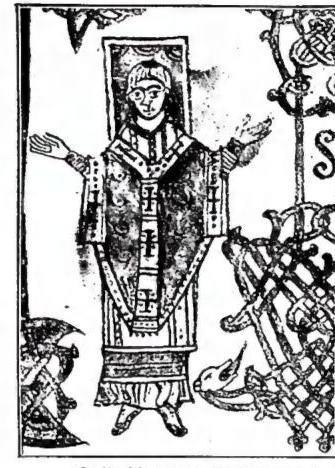
(from La Miniatura del Sacramentario d'Ivrea e di altri Codex Warmendiani, edited by L. Magnani, Vatican City 1921, pl. 3)
PIANETA — Bishop wearing a p. Miniature from the Sacramentary commissioned by the bishop of Ivrea Varmondo (967–1015) — Ivrea, Capitular Library.
and 6 parishes, including that of the Latin rite in the church of S. Vito, ceded to a chaplain of this rite on 18 November 1590 (deed of the notary Pietro Vienna of Monreale). In P., the cult of the patroness Madonna Odigitria and of the co-patrons s. Giorgio and s. Demetrio holds pride of place. Institutions: the Seminary, established through the zeal of p. G. GUZZETTA, GIORGIO (v.) in 1734 and now provided with new premises through the care of the S. Congregation for the Oriental Church; the Collegio di Maria; the house of the Basilian nuns; a university institute in Palermo; the Institute for orphans of peasants entrusted to the Basilians; an infant asylum; a hospital (1626); a poorhouse.